12mm wide-angle lenses deliver expansive perspective for landscapes, architecture, interiors, and astro shots. With options ranging from fast primes to versatile zooms, photographers can prioritize autofocus, weather sealing, and image stabilization to suit their subjects and gear. The following five lenses cover a range of mounts and styles, balancing field of view, brightness, and handling so you can pick a model that fits your creative approach. Use the table below for a quick comparison, then read detailed sections to understand each option’s strengths.
| Product | Brand | Mount / Format | Focal Range | Notable Feature |
|---|---|---|---|---|
| Nikon NIKKOR Z DX 12-28mm PZ VR | Nikon | DX / Nikon Z | 12-28mm | Built-in VR and Power Zoom |
| Samyang 12mm F2.0 AF Ultra Wide Sony E | Samyang | Sony E | 12mm | Fast AF, Weather-Sealed |
| Sony FE 12-24mm F4 G Wide-Angle Zoom | Sony | Full-Frame Sony E | 12-24mm | Constant F4, High Optical Quality |
| OM System Olympus M.Zuiko Digital ED 12mm F2.0 | OM SYSTEM | Micro Four Thirds | 12mm | Bright F2.0, Silent Autofocus |
| 7Artisans 12mm F2.8 Mark II for Sony E | 7Artisans | Sony E | 12mm | Manual Focus, Affordable |
Introduction: The 12mm focal length provides a dramatic field of view that is especially useful for tight interiors, expansive landscapes, and night-sky photography. The right lens depends on your camera system, desired depth of field, and how you plan to shoot—whether you prefer fast primes for low-light performance, weather-sealed options for rough weather, or zooms for flexible framing on the go. This guide highlights five strong choices across popular mounts, offering a mix of autofocus versus manual focus, stabilization, and build quality to suit varied shooting styles.
Nikon NIKKOR Z 12-28mm PZ VR Review

The Nikon NIKKOR Z DX 12-28mm PZ VR is a versatile ultra-wide zoom designed for DX-format Z-series mirrorless cameras. At 12-28mm, it covers immersive 12mm views and more natural 28mm framing, making it a flexible option for landscapes, architecture, and travel. A standout feature is the built-in VR that provides up to 4.5 stops of shake reduction, helping maintain sharp handheld shots in low light or during longer exposures. The power zoom offers 11 speeds, enabling smooth transitions for video work and rapid framing adjustments on the go.
For videographers and photo enthusiasts who want a single, travel-friendly lens, this model delivers a practical balance of range, stabilization, and speed. The PZ mechanism supports steady pulls and pushes during recording, while the lens’ optical performance maintains edge-to-edge sharpness across the frame. Users should note that it is optimized for Nikon’s DX-format Z-mount bodies, making it a strong match for APS-C shooters seeking wide but versatile coverage without swapping lenses mid-shoot.
In summary, the 12-28mm PZ VR provides a unique blend of dramatic ultra-wide coverage, built-in stabilization, and smooth zoom performance, all in a compact package designed for Nikon’s DX-Z ecosystem.
Samyang 12mm F2.0 AF Ultra Wide Sony E
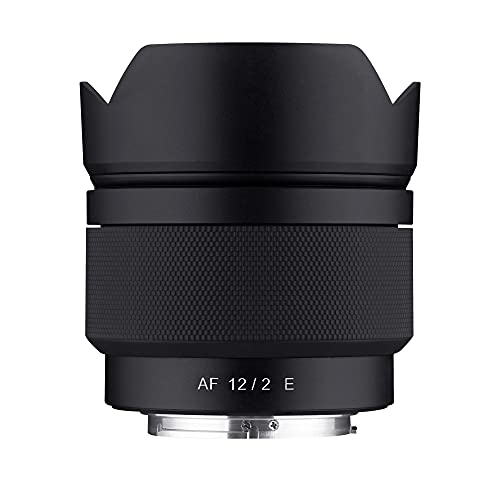
The Samyang 12mm F2.0 AF Ultra Wide for Sony E delivers a bright, ultra-wide prime with autofocus tuned for Sony’s E-mount shooters. The lens offers a fast F2.0 maximum aperture, which is advantageous for low-light scenes, dramatic skies, and shallow foregrounds with clean subject separation. An important build detail is weather sealing, which adds resilience in outdoor environments, along with the Ultra Multi-Coating (UMC) to minimize flare and maintain contrast across challenging light.
With a 98.9-degree angle of view and a 0.2m minimum focusing distance, this lens is well-suited for astrophotography, interior architecture, and expansive landscapes. The 62mm filter thread supports a range of filters for night photography or landscape enhancements, and the autofocus system helps ensure precise, quick focus in dynamic shooting scenarios. This combination makes it a practical all-around choice for Sony E users who want a bright, compact ultra-wide with reliable AF.
This lens is especially popular among photographers who prioritize autofocus performance in an ultra-wide format, alongside weather resistance and filter compatibility for night-sky and landscape applications.
Sony FE 12-24mm F4 G Wide-Angle Zoom

The Sony FE 12-24mm F4 G is a wide-angle zoom designed for full-frame Sony E-mount cameras. As part of Sony’s premium G line, it emphasizes corner-to-corner sharpness and minimal distortion across its 12-24mm range, making it ideal for landscapes, interiors, and architecture. The lens features a constant F4 aperture, enabling consistent exposure and depth of field across the zoom range. Its optical design includes multiple special elements to control aberrations, delivering high-resolution results even at the frame edges.
With a maximum magnification of around 0.14x, this lens offers practical framing flexibility for tight spaces without sacrificing sharpness. It suits photographers who need a reliable, weather-resistant option for travel and documentary work on Sony’s full-frame system. The combination of weather sealing, robust optics, and versatile focal range makes it a strong match for everyday wide-angle shooting in varying lighting conditions.
Overall, the 12-24mm F4 G is a versatile workhorse for Sony shooters seeking consistent performance, reliable rendering across the entire frame, and a practical travel lens for expansive scenes.
OM System M.Zuiko Digital ED 12mm F2.0

The Olympus M.Zuiko Digital ED 12mm F2.0 is a compact, bright prime for Micro Four Thirds cameras. With a 12mm focal length, it offers an effective 24mm equivalent field of view, making it a versatile choice for landscapes, architecture, and travel photography. The fast F2.0 aperture helps capture scenes in lower light and enables a shallow depth of field when desired, while maintaining overall sharpness across the image plane. Autofocus is fast and quiet, which is advantageous for both photography and video work.
Designed for the Micro Four Thirds system, this lens emphasizes optical clarity and precision, ensuring good corner performance and minimal distortion. The build quality is characteristic of Olympus hardware, combining durability with portability for photographers who shoot on the go or at indoor venues. Its compact size pairs well with mirrorless bodies, making it a practical daily lens for cityscapes, interiors, and night photography.
In practice, this lens suits shooters who value a bright, compact wide-angle option with reliable autofocus and a classic 24mm-equivalent view, particularly within Olympus and Panasonic camera ecosystems.
7Artisans 12mm F2.8 Mark II for Sony E

The 7Artisans 12mm F2.8 Mark II for Sony E is a manual focus prime designed for Sony E-mount APS-C bodies. As a manual lens, it emphasizes a straightforward, affordable option for photographers who enjoy hands-on focus control and deliberate composition. The 12mm focal length provides a dramatic ultra-wide perspective, suitable for expansive landscapes, architectural interiors, and creative street photography where depth of field and angle of view matter.
Users should note that this lens is a manual focus design, which can encourage a slower, more deliberate shooting style. The Mark II iteration aims to improve handling and image quality while maintaining an affordable price point. It’s a practical choice for hobbyists and budget-minded shooters who want a wide, character-rich prime without the complexity of autofocus systems.
For Sony E users who value simplicity, compact size, and a classic wide-angle look, the 7Artisans 12mm F2.8 Mark II offers a compelling blend of form, function, and value.
Buying Guide
Mount and Sensor Format Compatibility
12mm lenses come in formats tailored to specific bodies. When choosing, verify whether the lens is designed for DX/APS-C (like Nikon Z DX) or full-frame (like Sony E full-frame). A lens labeled for APS-C won’t deliver the same field of view on a full-frame body without cropping. If you shoot primarily with one system, sticking to native lenses ensures autofocus accuracy, correct framing, and weather sealing aligned with your camera’s capabilities.
Aperture, Low-Light Performance, and Depth of Field
Fast apertures (for example, f/2.0 on Samyang and Olympus lenses) enable brighter performance in low light and the option for shallower depth of field, even at wide angles. However, ultra-wide lenses with such wide apertures can exhibit stronger distortion and coma toward the corners, particularly on wide formats. When night sky or interior photography is a priority, prioritize a bright lens with good edge-to-edge sharpness and consider whether the extra light is worth potential compromises in distortion control.
Autofocus Versus Manual Focusing
Autofocus lenses (such as the Samyang AF and Sony G-series) provide precise, fast focusing in dynamic scenes, which is helpful for landscapes with moving elements or astro tracking. Manual-focus options (like 7Artisans) reward deliberate composition and can be very affordable for budget-conscious shooters. If you shoot video, consider autofocus speed and noise, as some manual lenses require careful focus pulls and may lack silent operation for video work.
Stabilization and Versatility
Stabilization is a crucial benefit if you plan handheld photography or video, especially in low light. Bridges like Nikon’s built-in VR are advantageous for non-tripod work, while some lenses rely on camera-body stabilization or no stabilization at all. If you frequently shoot in dim conditions or long exposures, a stabilized option can dramatically improve sharpness without a tripod.
Image Quality, Distortion, and Build
Wide-angle lenses can introduce distortion, especially at the extremes. Look for glass with aspherical elements and advanced coatings to maintain contrast and reduce flare. Build quality matters for travel or rugged use; weather sealing is a plus for outdoor shoots, while compact, lightweight designs improve portability for street or travel photography.
Practical Purchasing Tips
- Assess your camera system and mount—choose native lenses for best autofocus performance and compatibility.
- Decide between a zoom (e.g., 12-24mm) for framing flexibility versus a prime (e.g., 12mm F2.0) for brightness and simplicity.
- Consider filter compatibility if you plan astrophotography or landscape work (size and filter type matter).
- Balance budget with features such as weather sealing, stabilization, autofocus speed, and weight for long shoots.
- Test handling and focus feel if possible; some manual lenses offer a distinctive tactile experience that suits certain shooting styles.