Chasing a 15mm field of view on full-frame cameras opens up expansive landscapes, dramatic interiors, and immersive architectural shots. This guide highlights five top Amazon picks that balance image quality, autofocus, and value. From ultra-wide primes to versatile zooms, these options cover Sony, Nikon, and other brands. The quick-spec table below helps you compare core specs at a glance.
| Product | Mount | Frame | Focal Length | Max Aperture | |
|---|---|---|---|---|---|
| Laowa 15mm F2 FE Zero-D | Sony E | Full-Frame | 15mm | f/2 | Rectilinear, Zero-D design |
| Nikon 8-15mm Fisheye FX | Nikon F | Full-Frame | 8-15mm | f/3.5-4.5 | Fisheye zoom |
| 7artisans 15mm F4 | Sony E | Full-Frame | 15mm | f/4 | Manual focus |
| VILTROX 15mm F1.7 E | Sony E | APS-C | 15mm | f/1.7 | Auto focus, APS-C coverage |
| Rokinon AF 14mm F2.8 | Sony E | Full-Frame | 14mm | f/2.8 | Ultra-wide, autofocus |
Laowa 15mm F2 FE Zero-D For Sony

Laowa’s 15mm F2 FE Zero-D is purpose-built for Sony’s full-frame E-mount. It delivers a bright f/2 maximum aperture for low-light scenes and shallow depth of field, while the rectilinear Zero-D optical design minimizes distortion—crucial for architecture and interior photography. The lens employs three extra-low dispersion elements and two aspheres to maintain high sharpness across the frame. A dust and water-repellent coating aids outdoor use, and the manual focus design with a de-clickable aperture ring supports cinematic work. Built for durability, it ships with lens caps, a hood, and a multi-year warranty in many markets.
Nikon 8-15mm Fisheye FX Lens

This full-frame Nikon F-mount fisheye zoom covers 8-15mm, offering an extreme wide angle for dramatic landscapes, interiors, and creative cityscapes. The F/3.5-4.5 aperture range provides usable exposure across a variety of lighting conditions. The product listing notes this is a certified refurbished option, refurbished to factory specs with original accessories and a 90-day warranty, making it a compelling choice for budget-conscious shooters who want a true fisheye perspective on full-frame bodies.
7artisans 15mm F4 Full-Frame Manual

The 7artisans 15mm F4 is a compact, fully manual prime designed for Sony E-mount full-frame bodies. It features a broad 114° field of view with near-zero distortion, making it well-suited for landscapes, architectural photography, and environmental portraits. Its optical design incorporates two aspherics, three low-dispersion elements, and five high-refractive elements to minimize coma and chromatic aberration. The fixed aperture of f/4 keeps the size small while delivering pleasing foreground-background separation in daylight settings. A practical option for photographers who prefer manual control and lightweight gear.
VILTROX 15mm F1.7 E For Sony
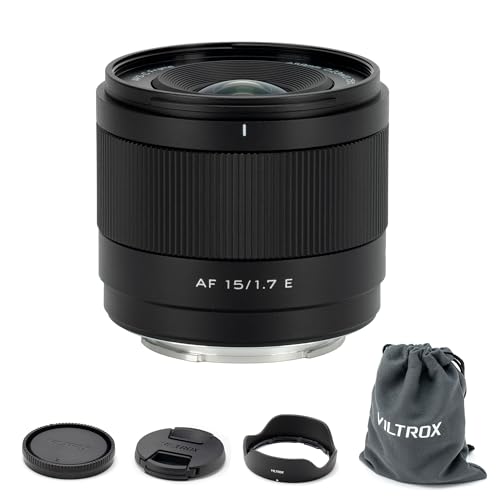
The VILTROX 15mm F1.7 for Sony E-mount delivers a bright f/1.7 aperture and fast autofocus powered by an STM motor. This setup is particularly appealing for low-light street photography and video work on Sony APS-C bodies (such as the a6400, a6500, and a6600). With an 84.9° field of view, it provides a wide perspective while maintaining compact size and affordable pricing. Eye/face-tracking autofocus helps keep moving subjects sharp, while smooth focus transitions support cinematic shots. Note that this lens is optimized for APS-C cameras, delivering a narrower field of view on full-frame bodies.
Rokinon AF 14mm F2.8 For Sony E

The Rokinon AF 14mm F2.8 is a full-frame ultra-wide for Sony E-mount, delivering an expansive perspective ideal for landscapes, interiors, and astrophotography. Its 14mm focal length sits just shy of a true 15mm, offering a broad field of view with strong edge-to-edge sharpness. The autofocus system helps maintain crisp results in dynamic scenes, while the lens construction aims to minimize distortion and chromatic aberration across the frame. This option appeals to shooters seeking a budget-friendly alternative to more premium 15mm glass while still achieving dramatic images.
Buying Guide
Key purchase considerations help buyers choose the right 15mm option for their camera system and shooting style.
- Frame compatibility: Full-frame lenses maintain their wide perspective on compatible bodies. On APS-C bodies, a 15mm lens yields a narrower field of view equivalent to around 22-24mm on full-frame, depending on the crop factor. Consider whether you need true full-frame performance or are comfortable with an APS-C option.
- Lens type and distortion: Rectilinear 15mm primes preserve straight lines, which is ideal for architecture. Fisheye zooms deliver extreme perspective and vignette, best for creative shots. For landscapes and interiors, a rectilinear design is often preferred to avoid curved edges.
- Aperture and low light: Wider apertures (for example, f/1.7 or f/2) excel in low light and help with subject isolation, but can be heavier and more expensive. F/4 options are lighter and smaller but require steadier exposure control in dim scenes.
- Autofocus performance: For action, street, or video, reliable autofocus matters. STM or similar quiet AF is beneficial for video work, while pure manual focus lenses offer tactile control for stills and hyper-detailed landscapes.
- Build quality and weather sealing: Outdoor and travel shoots benefit from robust construction and weather resistance. Check coatings for dust and moisture when shooting in challenging environments.
- Size, weight, and portability: Ultra-wide 15mm lenses vary in bulk. Lighter, compact designs favor travel and handheld shooting, while heavier glass can reduce camera shake and fatigue during long sessions.
- Price and value: Compare features such as distortion control, optical coatings, and warranty. Refurbished options can save money but may come with different warranty terms.
- Use-case alignment: Landscapes and architecture benefit from rectilinear 15mm primes; interiors may favor distortion control; astro photography can benefit from fast apertures for brighter star fields.
Across brands and mounts, the 15mm class offers a spectrum from ultra-wide fixed primes to flexible zooms. When selecting, balance coverage, image quality, and budget against your camera system and primary shooting scenarios.