The 16-35mm zoom range is a staple for landscape, architecture, and event shooters who demand versatility and edge-to-edge sharpness. This guide highlights top options from Sony and Canon, covering fast and variable-aperture formulas, lightweight designs, and professional-grade G Master and ZA coatings. Each pick is evaluated on optical quality, handling, autofocus performance, and suitability for different shooting scenarios. Explore five standout models to help you choose the right 16-35mm lens for your full-frame camera system.
| Product | Brand | Key Strength |
|---|---|---|
| Sony FE 16-35mm F2.8 GM II | Sony | Edge-to-edge G Master image quality |
| Sony FE PZ 16-35mm F4 G | Sony | Lightweight, compact power-zoom with quiet operation |
| Sony FE 16-35mm F2.8 GM (SEL1635GM) | Sony | High-resolution, constant F2.8 with XA elements |
| Canon EF 16-35mm f/2.8L II USM (Renewed) | Canon | Robust build and full-frame performance |
| Canon EF 16-35mm f/4L is USM (Renewed) | Canon | L-series value with solid image quality |
Sony FE 16-35mm F2.8 GM II
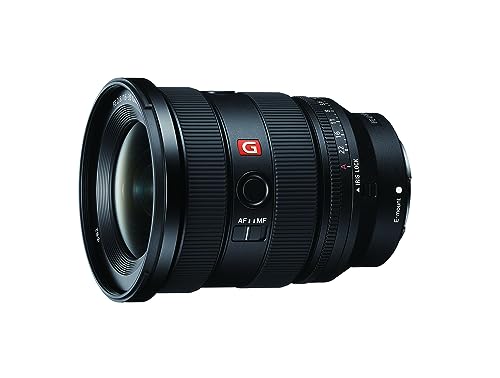
The world’s smallest and lightest full-frame F2.8 wide-angle zoom in its class, the Sony FE 16-35mm F2.8 GM II delivers breathtaking G Master image quality from edge to edge. It combines extraordinary resolution with smooth, natural bokeh across the entire zoom range. This lens is designed for users who require high-resolution landscapes and architectural shots without compromising on portability.
Sony FE PZ 16-35mm F4 G
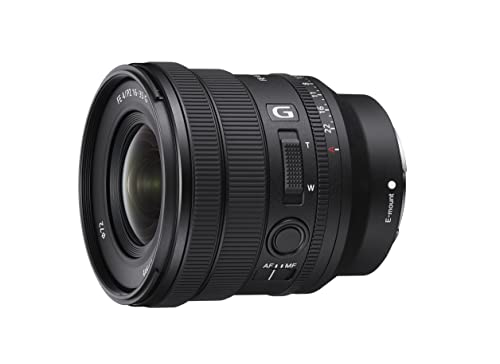
Designed for lightweight and flexible use, this ultralight full-frame F4 wide-angle power-zoom lens emphasizes mobility for video work and stills. Its four XD Linear Motors enable smooth, precise zooms and quiet focus, with a continuously variable zoom lever for slow, controlled zooms. The compact body minimizes angle-of-view shifts during zoom and focus, making it well suited for gimbal setups and on-the-go storytelling.
Sony FE 16-35mm F2.8 GM Wide-Angle Zoom (SEL1635GM)

This G Master lens is engineered for high-resolution performance with extreme aspherical elements to control aberrations. It offers a 0.28 m minimum focus distance and a maximum magnification of 0.19x, ensuring dramatic close-up wide-angle shots. The 11-blade circular aperture aids in smooth bokeh, while the constant F2.8 aperture maintains exposure and depth of field through the full zoom range.
Sony FE 16-35mm F2.8 GM (Renewed)

This certified refurbished lens delivers superb resolution from corner to corner across all zoom settings and focus distances. It produces striking background separation and artistic bokeh, suitable for landscapes and architectural photography where edge-to-edge sharpness matters. A cost-conscious option with solid optical performance for Sony full-frame bodies.
Canon EF 16-35mm f/2.8L II USM (Renewed)

Canon’s flagship 16-35mm f/2.8L II USM provides a robust build, fast autofocus, and responsive performance for Canon EF-mount cameras. The combination of high-quality optics and a sturdy construction makes it a dependable choice for professionals who shoot landscapes, events, or architecture with Canon bodies. Availability in renewed condition offers an economical path to top-tier wide-angle performance.
Canon EF 16-35mm f/2.8L II USM (Non-Renewed)

Another Canon staple, this non-renewed version continues to offer the same extended wide-angle capabilities, with 16-35mm zoom and f/2.8 maximum aperture. The ring-type USM enables fast, quiet autofocus and internal focusing for stable performance across focal lengths, making it suitable for a wide range of shooting scenarios.
Canon EF 16-35mm f/4L USM (Renewed)

Canon’s lighter 16-35mm f/4L is a viable option for shooters prioritizing portability and value. While slower at the wide end, it still delivers solid image quality with the characteristic L-series color and contrast. The USM and internal focusing support smooth and quiet operation, which is beneficial for documentary work and travel photography.
Buying Guide: Key Purchase Considerations
When choosing a 16-35mm lens, consider optical performance, body compatibility, and intended use. For landscapes and architecture, prioritize edge-to-edge sharpness, minimal distortion, and color fidelity across the frame. If you shoot video, weigh the benefits of a power-zoom design (as seen in the Sony PZ 16-35mm F4 G) for smoother focal changes and reduced gear swaps. Fast apertures (f/2.8) are advantageous for low-light scenes and subject isolation, but they add cost and weight; a constant f/4 option can be a strong, lighter alternative for travel and documentary work.
Autofocus performance matters depending on your camera system. Sony’s GM lenses typically pair with high-speed AF on Sony bodies, delivering reliable tracking for moving subjects. Canon’s L-series options provide robust construction and consistent performance on compatible Canon bodies, while renewed or refurbished models offer an affordable path to premium glass without compromising basic optical quality.
Size, weight, and handling influence on-set usability. Lighter options reduce fatigue on long shoots, while heavier, pro-grade L and GM lenses can justify their bulk with superior image quality. Weather sealing and build quality should be weighed against your climate and shooting conditions. Availability and resale value may also factor into the decision, especially for professionals who rotate lenses seasonally.
Ultimately, align your lens choice with your camera system, typical focal-length needs, and whether your priority is stills, video, or hybrid work. If possible, test a few options with your body to compare how each lens handles distortion, perspective, and micro-contrast in your common scenes.