Travelers, hobbyists, and everyday shooters can benefit from a single versatile zoom that covers wide to telephoto. An 18-200mm lens delivers broad framing options without frequent lens swaps, making it a popular choice across brands. This guide spotlights five widely compatible, all-in-one zooms from Nikon, Canon, Sony, and Tamron. Each entry highlights practical strengths, typical use cases, and design notes to help you compare performance for common shooting scenarios.
Use the table below to compare focal range, mount type, and a standout feature at a glance before diving into the in-depth sections.
| Product | Brand | Focal Range | Mount | Notable Feature |
|---|---|---|---|---|
| Nikon AF-S DX Nkr 18-200mm VR II (Renewed) | Nikon | 18-200mm | Nikon DX | VR, two ED elements, three aspherical elements |
| Canon EF-S 18-200mm f/3.5-5.6 IS Standard Zoom (Renewed) | Canon | 18-200mm | Canon EF-S | IS, 28.8-320mm equivalent, 72mm filters |
| Sony Alpha SEL18200 E-Mount 18-200mm F3.5-6.3 OSS | Sony | 18-200mm | Sony E-mount | Compact all-in-one with broad range |
| Tamron Auto Focus 18-200mm f/3.5-6.3 Di II XR Di II LD Aspherical (IF) Macro Zoom Lens for Canon (A14E) | Tamron | 18-200mm | Canon EF-S | 62mm filter thread, flower hood, 6-year warranty |
| Tamron AF 18-200mm F/3.5-6.3 Di-II VC All-in-One Zoom for Nikon APS-C (B013HXY21E) | Tamron | 18-200mm | Nikon F DX | VC, faster autofocus |
Nikon 18-200mm VR II Zoom Lens

Covering 18-200mm, this all-in-one zoom offers flexible framing for travel and everyday shooting. It’s designed as a single-lens solution that reduces the need to constantly change lenses, making it a popular choice for travel, street, and documentary work. The built-in VR (Vibration Reduction) helps stabilize handheld shots, improving sharpness at longer focal lengths or in dim light. This Renewed version provides tested performance with a proven Nikon design.
Optical design includes two extra-low Dispersion (ED) elements and three aspherical elements that help minimize chromatic aberration and distortion across the zoom range. The minimum focus distance is roughly 1.6 feet, enabling closer compositions at mid- to telephoto settings. Compatible with Nikon DX-format bodies, this lens remains a practical choice for enthusiasts seeking broad versatility in a single optic that covers landscapes, portraits, and travel moments with ease.
Canon EF-S 18-200mm f/3.5-5.6 IS Zoom Lens (Renewed)
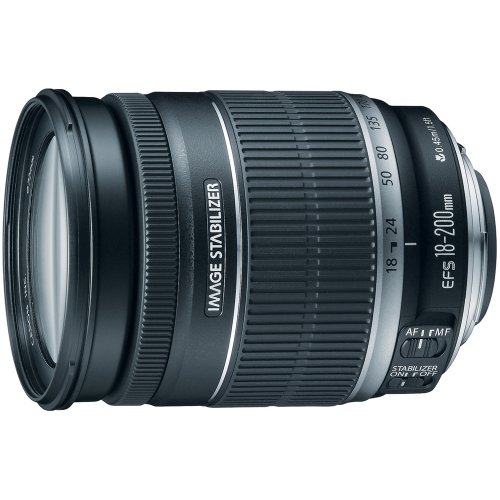
Canon’s EF-S 18-200mm f/3.5-5.6 IS is an all-in-one zoom designed for Canon APS-C DSLRs. The 18-200mm range spans wide-angle to telephoto, enabling versatile framing for travel, events, and everyday shooting. The built-in Image Stabilization (IS) helps counter camera shake, especially at longer focal lengths or in low light, improving handheld sharpness. On Canon APS-C bodies, the lens offers a 28.8-320mm equivalent range, capturing scenes from broad landscapes to distant details without swapping lenses.
The lens accepts 72mm filters and provides a close focus distance around 1.48 ft (0.45 m) with a maximum magnification of about 0.24x. At f/3.5-5.6, it balances brightness with portability, making it a convenient choice for beginners and travelers who want a single, walk-around option. The bundled optics and range make this a practical all-in-one zoom for Canon enthusiasts seeking seamless coverage from wide to telephoto in one glass.
Sony Alpha SEL18200 18-200mm Lens for E-mount

For Sony mirrorless shooters, the SEL18200 18-200mm covers a broad range from wide to telephoto in a compact package. The lens is designed to be a flexible all-in-one solution for everyday photography, travel, and street shooting on Sony’s E-mount. The listing highlights practical package dimensions and weight, underscoring its travel-friendly character. This model targets photographers who want to minimize lens changes without sacrificing reach, making it a convenient all-in-one option for Sony APS-C and compact full-frame bodies used in crop mode.
With a focal span of 18-200mm and a relatively compact build, the lens supports versatile framing from landscapes to portraits. It brings broad reach in a single lens and provides a practical balance between weight, size, and performance for enthusiasts who value convenience while maintaining adequate image quality across the zoom range. For Sony users seeking one versatile zoom, this option positions itself as a straightforward, all-in-one solution.
Tamron 18-200mm f/3.5-6.3 Di-II for Canon A14E

The Tamron 18-200mm f/3.5-6.3 Di-II for Canon is an all-in-one zoom designed for Canon APS-C bodies. It’s optimized to cover a broad range from wide to telephoto, accommodating travel, portraits, and everyday scenes with a single optic. The lens ships with a 62mm filter thread, a flower-shaped lens hood, and a 6-year warranty, reflecting Tamron’s confidence in durability and value. Its Macro-capable design provides closer-focusing options without changing lenses, enhancing versatility for everyday shooting.
Included accessories such as the 62mm filter kit and a lens hood help protect and extend the lens’s usefulness. The Di-II construction balances reach and weight for Canon DSLR owners who want dependable, all-in-one zoom performance without adding extra gear to their kit. This option combines practicality with a broad reach, making it a solid pick for travelers and hobbyists alike.
Tamron 18-200mm Di-II VC for Nikon APS-C (B013HXY21E)

Tamron’s 18-200mm f/3.5-6.3 Di-II VC All-in-One Zoom for Nikon APS-C bodies emphasizes Vibration Compensation (VC) for sharper handheld shots across the zoom range. The autofocus system is designed to be faster, quieter, and more precise than earlier iterations, helping keep up with dynamic scenes while remaining a portable option for Nikon enthusiasts with APS-C cameras. The lens’ design prioritizes a balance of reach, speed, and handling in a compact package, making it a practical travel companion within Nikon’s DX ecosystem.
With a maximum diameter around 75mm, this Tamron optic balances reach and handling in a compact form. The VC system stabilizes shots at slower shutter speeds, supporting smoother photos and video when shooting in casual or documentary contexts. The Di-II design ensures compatibility with modern Nikon DX bodies, offering a versatile, all-in-one zoom that reduces lens swaps without sacrificing sharpness or reach.
Buying Guide
Key purchase considerations
- Mount compatibility: Ensure the lens matches your camera’s sensor size and mount (Canon EF-S, Nikon DX, Sony E, etc.).
- Versatility vs. image quality: 18-200mm zooms offer convenience but may compromise edge-to-edge sharpness at certain focal lengths compared with prime lenses.
- Stabilization: VR (Nikon), IS (Canon), and VC (Tamron) help with handheld shots; consider whether stabilization is essential for your shooting style.
- Aperture and light: Variable apertures of f/3.5-5.6 to f/3.5-6.3 mean slower shutter speeds in low light; plan for higher ISO or lighting when needed.
- Autofocus behavior: Some lenses prioritize speed and quiet autofocus, while others emphasize manual feel or macro performance; check autofocus reviews for your camera body.
Brand ecosystem and lens compatibility
- Canon: EF-S lenses are designed for APS-C bodies; compatibility with full-frame bodies is limited to using a crop-mode crop.
- Nikon: DX-format lenses are tailored for Nikon’s APS-C bodies; results differ when used on full-frame bodies in crop mode.
- Sony: E-mount lenses provide compact form factors for mirrorless bodies; compatibility with aps-c and full-frame modes varies by model.
- Tamron: Di-II and VC coatings offer cross-brand versatility, often delivering cost-effective all-in-one options across Canon and Nikon mounts.
All-in-one zoom trade-offs
- Versatility vs. image quality: A single lens reduces weight and gear swaps but can introduce optical compromises compared to specialized primes.
- Size and weight: All-in-one zooms tend to be heavier than typical standard zooms; consider balance with your camera body.
- Close focusing and macro: Some models include macro-like close focus, but macro performance is usually modest compared with dedicated macro lenses.
Stabilization and autofocus performance
- Stabilization systems (VR, IS, VC) help with handheld shooting at slower shutter speeds; test in field conditions to gauge real-world benefits.
- Autofocus speed and accuracy vary by brand and body; reading model-specific reviews can reveal how well a lens tracks moving subjects.
Practical considerations and care
- Filter sizes: Check the filter thread to ensure you have the right size for your filters and accessories.
- Build quality and weather handling: Some all-in-one zooms are more rugged than others; assess your typical shooting environment.
- Maintenance: Regular cleaning and proper storage help preserve optical coatings and smooth AF performance over time.