The 24-70mm f/2.8 standard zoom is a versatile workhorse for photographers across stills and video. This guide highlights notable 24-70 lenses from Canon, Sony, and Sigma, drawing from available Amazon listings to help you compare image quality, autofocus performance, image stabilization, and overall handling. Whether you shoot portraits, weddings, events, or travel, a fast constant aperture zoom at 24-70mm can be a decisive tool in achieving sharp, cinematic results in varied lighting.
Summary of chosen products:
| Product | Brand | Key Features |
|---|---|---|
| Canon RF24-70mm F2.8 L IS USM Lens | Canon | Bright f/2.8, Optical IS up to 5 stops, Nano USM autofocus |
| Sony SEL2470GM E-Mount | Sony | Fast AF, high resolution, natural imagery, high aspherical elements |
| Sigma 24-70mm F2.8 DG DN II Art (Sony E) | Sigma | Flagship design, compact for its class, high resolving power |
| Sony FE 24-70mm F2.8 GM II | Sony | Lightest in class, excellent AF, superb bokeh and resolution |
| Canon EF 24-70mm f/2.8L II USM | Canon | Professional build, sharp throughout, reliable USM AF |
Canon RF24-70mm F2.8 L IS USM Lens Review

The Canon RF24-70mm F2.8 L IS USM is designed for Canon’s EOS R mirrorless system. It combines a bright constant f/2.8 aperture with optical image stabilization offering up to 5 stops of shake correction. The lens features fast, quiet Nano USM autofocus and a robust L-series build aimed at professional use in weddings, events, and documentary work. Its image quality remains highly consistent across the zoom range, delivering sharp corners and pleasing subject isolation when shot wide open or stopped down.
Canon RF24-70mm F2.8 L IS USM: Design and Handling
The RF mount incorporates weather-sealing and a sturdy feel appropriate for fieldwork. Its focus performance benefits from Nano USM, delivering reliable autofocus in a range of lighting scenarios. The built-in image stabilization helps maintain sharpness in handheld shoots at slower shutter speeds, while the constant f/2.8 aperture allows for consistent depth of field when zooming. This lens is well-regarded for its balance of resolution, contrast, and color rendering, particularly for professionals who rely on a single versatile zoom.
Sony SEL2470GM E-Mount Lens: G Master 24-70mm

The Sony FE 24-70mm f/2.8 GM is a hallmark of Sony’s G Master line, emphasizing top-tier resolution and creamy bokeh. It uses a Direct Drive Super Sonic Wave Motor for fast, precise AF and features multiple aspherical and ED elements to minimize distortion and chromatic aberration. While the lens excels in stills with high-detail performance, it is also appreciated for its video stability and smooth focus transitions. Note that the model does not include optical stabilization, so pairing with a stabilized body or careful handholding is advisable in low-light conditions.
Sony SEL2470GM: Performance and Image Quality
In practice, this lens delivers striking sharpness across the frame, with the ability to hold fine detail at both ends of the zoom. The natural color rendition and controlled aberrations contribute to a refined look in portraits, landscapes, and events. While the autofocus is fast and reliable, it is worth noting that the absence of optical stabilization means it relies on camera stabilization or faster shutter speeds to maintain sharpness in handheld shoots, especially at 70mm and in dim lighting.
Sigma 24-70mm F2.8 DG DN II Art: Sony E Version

The Sigma 24-70mm F2.8 DG DN II Art for Sony E-Mount is designed to be compact yet high-performing. It aims to deliver sharpness across the entire zoom range, with a focus on improved resolving power and a solid build. The Art line is known for prioritizing image quality and color rendition. The design balances weight and performance, making it a practical option for travel and documentary work where a single lens covers a wide range of scenarios.
Sony FE 24-70mm F2.8 GM II: Advanced G Master Standard Zoom

The GM II marks Sony’s evolution in the 24-70mm category, touting the world’s lightest full-frame F2.8 standard zoom among competitors in its class. It features significantly improved AF performance, excellent contrast at high spatial frequencies, and a durable, compact design. Its optical construction includes multiple XA and ED elements to control aberrations, yielding sharp results at all focal lengths and apertures. The lens is widely praised for its combination of speed, image quality, and portability for both stills and video work.
Canon EF 24-70mm f/2.8L II USM: Canon’s Pro Standard Zoom

The EF 24-70mm f/2.8L II USM remains a staple in Canon’s professional lineup for DSLR users. It delivers strong optical performance with minimal distortion and robust build quality. The Ring-type ultrasonic AF motor ensures quiet, fast focusing, and the constant f/2.8 aperture provides reliable subject separation in portraits and events. This lens integrates well with Canon’s older DSLR ecosystems, offering a familiar control layout and a long-standing reputation for durability on location shoots.
Canon EF 24-70mm f/2.8L USM: Renewal and Core Capabilities
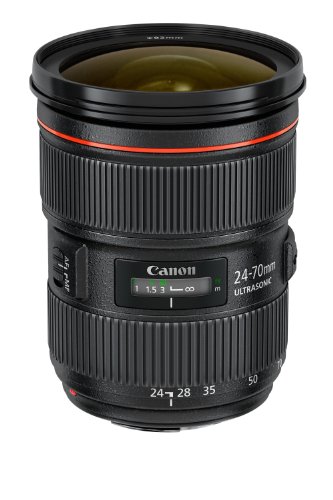
Canon’s EF 24-70mm f/2.8L USM combines professional-grade optics with a robust build, designed to perform in demanding environments. It provides sharpness across the frame with pleasing color rendition and contrast. While it is older than some newer RF-mount options, the lens remains highly regarded for its reliability, weather sealing on higher-end variants, and compatibility with a broad range of Canon camera bodies. Photographers transitioning from DSLR to mirrorless may appreciate this model for its proven performance and compatibility with existing Canon glass stacks.
Buying Guide: Key Factors for Choosing a 24-70mm Lens
- Camera system compatibility: Align the mount (Canon RF, Sony E, Canon EF) with your body. Mirrorless options save weight and improve autofocus speed, while DSLR-focused lenses remain valid for established rigs.
- Maximum aperture: A constant f/2.8 is standard for this class, enabling shallow depth of field and better low-light performance. Some versions may offer image stabilization (IS/OIS) or rely on body stabilization.
- Autofocus performance: Consider Nano USM, DDSSM, or other AF systems for speed, accuracy, and quiet operation, especially for video work or fast-action shots.
- Optical stabilization: Lenses with IS or OSS help in handheld shooting at slower shutter speeds. Weigh the benefit against additional weight and cost a factor in travel or documentary work.
- Optical design and aberration control: Look for aspherical and low-dispersion elements to minimize distortion and color fringing, ensuring consistent performance across the frame.
- Size, weight, and handling: A lighter, more compact 24-70mm zoom improves mobility for travel or street photography. Balance with build quality for field use.
- Video performance: Par-focal design, smooth continuous AF, and breathing control matter for cinematic work. Some lenses are optimized for video with minimal focus shift during zoom.
- Price and ecosystem: Consider existing lenses in your kit, compatibility with adapters, and overall ownership cost when selecting between brands.
Across brands, the 24-70mm f/2.8 standard zoom remains a versatile core lens for professionals and enthusiasts. When choosing, assess whether you prioritize autofocus speed, stabilization, or size and weight for your typical shooting environment. Mirrorless options often provide the most cohesive experience with modern bodies, while established DSLR-focused lenses offer proven optical performance and compatibility with a wide range of bodies.