If you’re digitizing 35mm negatives and slides, this guide points you to reliable scanners that fit common at‑home workflows. The best options aim for simple setup, good image quality, and straightforward editing straight from the device or a connected app. Ideal buyers include hobbyists digitizing old family collections, students archiving vintage film, and seniors who want a quick, no‑PC solution. Below is a quick overview of five top picks, followed by detailed product sections and a practical buying guide.
| Product | Best For | |
|---|---|---|
| KODAK Slide N SCAN | All‑in‑one home use | Large 5″ LCD for direct viewing |
| KODAK SCANZA Digital Film & Slide Scanner | Versatile film types | Comprehensive adapters for 35mm to 8mm |
| DigitPro 35mm Film & Slide Scanner | Simple, standalone use | 5″ LCD with easy one‑touch scanning |
| DigitConvert Mobile Film Scanner | On‑the‑go digitizing | Smartphone app integration |
| DGODRT Mobile Film Scanner | Beginner friendly | One‑device solution for 35mm and slides |
KODAK Slide N SCAN Film & Slide Scanner

KODAK Slide N SCAN is a dedicated film digitizer with a built‑in 5″ LCD for direct viewing and editing. It supports 135, 126, and 110 film formats, including slides, and saves files as JPEGs to an SD card (not included). This device is best for users who want a built‑in display, fast workflow, and direct sharing from the unit itself. A potential limitation is reliance on SD storage and Compatibility with older film formats that may require adapters.
35mm Film & Slide Scanner With 2.4″ LCD

This DigitPro model is a compact, all‑in‑one scanner designed for 135 negatives and slides. It’s a standalone unit—no computer required—and includes a 2.4″ LCD for instant preview and a TV‑out option to view on a larger screen. It supports Positive, Negative, and B&W modes for 35mm film archiving. Best for: users who want a small, self‑contained scanner with quick, straightforward operation. Limitation: smaller screen may require additional viewing on a TV for detailed checks.
DigitPro Film And Slide Scanner: 22MP 35mm to Digital

This all‑in‑one device digitizes 35mm, 126, 110 film negatives and slides with a 5″ LCD for immediate viewing. It supports saving to built‑in memory or an external SD card (up to 64GB). It is best for families and hobbyists who want a single scanner to manage a broad range of old film formats. Caution: external memory card compatibility depends on card formatting (not included).
Mobile Film Scanner For 35mm Slides & Negatives

DGODRT’s portable scanner converts 35mm slides and negatives directly into JPEGs on a connected smartphone. It’s ideal for on‑the‑go digitizing, sharing memories, and quick backups. Best for: travelers or casual users who want a mobile, app‑driven workflow. Limitation: dependent on a smartphone app for editing and saving, which may vary by OS and device compatibility.
DIGITNOW! 135 Film Negative Scanner

DIGITNOW offers a standalone scanner with a rapid slide feeder and 1800DPI resolution. It can save JPGs to an SD card up to 32GB or a computer via USB. Best for: users digitizing large batches of 35mm slides efficiently. Limitation: the included resolution and feed mechanisms may be basic compared to high‑end models.
Photo Scanner And Film Digitizer With 5” Screen
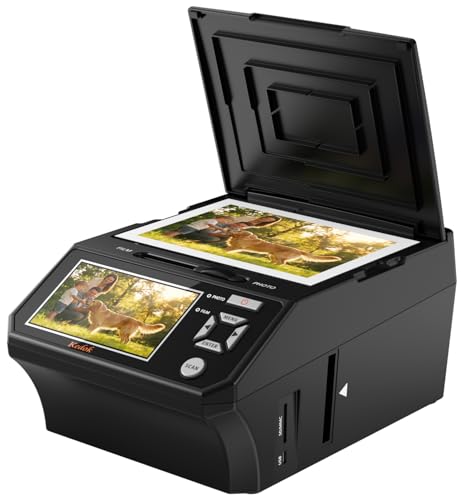
This DigitPro unit supports 35mm slides, 135 and 110 negatives, and printed photos, with a built‑in 8GB card and a 5″ LCD. It’s best for families who want a comprehensive all‑in‑one scanner for a mix of formats. Caution: external SD expansion is optional and may require formatting for compatibility.
Buying Guide
What should you consider when selecting a 35mm negatives to digital scanner?
- Compatibility: Check supported formats (35mm, 126, 110, slides, Super 8) and whether adapters are included or sold separately.
- Display: A larger LCD makes it easier to preview and crop before saving. Consider models with 5″ to 3.5″ displays and options to view on a TV.
- Storage: Determine whether the device uses internal memory, SD cards, or requires USB transfer. SD card capacity matters for large archives.
- Standalone vs. PC‑dependent: Standalone scanners are plug‑and‑play; PC‑connected models may offer more editing options but need a computer.
- One‑touch vs. manual controls: One‑touch scanning speeds workflow but may limit color/tone adjustments; more control is beneficial for archival work.
- Quality and resolution: Look for devices offering at least 14–22 MP JPEG outputs, with optical quality suitable for long‑term viewing and printing.
- Portability: For on‑the‑go digitizing, consider mobile scanners with smartphone apps and lightweight design.
Frequently Asked Questions
- What does 22MP mean for film scanning? It refers to the potential resolution of digital JPEG outputs, influencing detail in preserved images.
- Are 3.5″ LCD screens enough for archiving? They’re convenient for quick previews; larger screens can help with precise cropping and color checks.
- Do I need a computer to use these scanners? Some models are standalone; others require a computer or mobile app for saving and editing.
- Is it better to buy a dedicated film scanner or a general photo scanner? A dedicated film scanner often provides better film‑to‑digital accommodations and simpler slide feeding.
- Can I scan Super 8 or 8mm film with these devices? Some models include adapters for Super 8 and 8mm; verify format support before buying.
- What about file formats and software? Most devices save JPEGs; some offer optional software or app options for color adjustments and organization.