Choosing a 400 mm camera lens involves balancing reach, weight, and versatility. This guide highlights five solid choices across brands and formats, from all-in-one super-zooms to prime-like zoom ranges, with notes on image stabilization, focusing speed, and compatibility. Whether you shoot wildlife, sports, or travel scenes, these options aim to deliver sharp detail at long distances while staying practical for handheld use.
| Product | Brand | Focal Range | Key Benefit |
|---|---|---|---|
| Nikon NIKKOR Z 28-400mm f/4-8 VR | Nikon | 28-400mm | Broad range in a compact form with VR for handheld shooting |
| Tamron 18-400mm F/3.5-6.3 | Tamron | 18-400mm | All-in-one zoom with VC for stable telephoto performance |
| Canon RF 100-400mm f/5.6-8 IS USM | Canon | 100-400mm | Compact, lightweight telephoto with IS for EOS R bodies |
| COSULAN 400mm Telephoto Lens (Phone) | COSULAN | 400mm | Long-distance phone lens with coating for clarity |
| Tamron 50-400mm f/4.5-6.3 Di III | Tamron | 50-400mm | Fast AF with high-quality optics for Sony full-frame |
Nikon NIKKOR Z 28-400mm f/4-8 VR Lens

The Nikon NIKKOR Z 28-400mm f/4-8 VR offers a wide 28-400mm zoom range with built-in Vibration Reduction, letting photographers cover everything from landscapes to close wildlife without swapping lenses. At roughly 725 g, it remains relatively light for its class, enabling handheld shooting for extended sessions. It also features a close focusing distance of 0.2 m at wide angle and a magnification up to 0.35x at 28mm for expressive close-ups. The lens is designed for Nikon’s Z-mount mirrorless bodies, balancing reach with portability.
Tamron 18-400mm F/3.5-6.3 Di-II VC
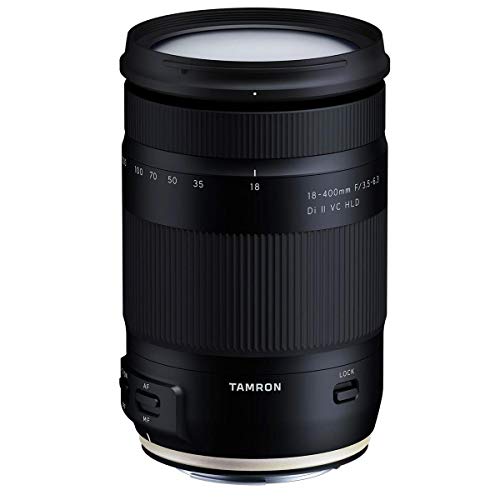
Tamron’s 18-400mm All-In-One zoom combines an expansive focal range with Vibration Compensation (VC) to stabilize shots across long telephoto settings. The design focuses on versatility for Canon APS-C DSLRs, offering the convenience of covering from wide-angle to ultra-telephoto without swapping lenses. Its 222x zoom claim emphasizes its all-in-one capability, while a relatively compact diameter helps travelers who need to pack light. The lens aims to balance reach, image quality, and cost for everyday telephoto work.
Canon RF 100-400mm f/5.6-8 IS USM

This Canon RF zoom offers a compact, lightweight option for EOS R series cameras, with an Optical Image Stabilizer providing up to 5.5 stops of shake correction (and up to 6 stops with IBIS). The 100-400mm reach, combined with modern RF optics, makes it a practical choice for wildlife and travel photography who prioritize portability without sacrificing telephoto reach.
COSULAN 400mm Telephoto Lens for Phone
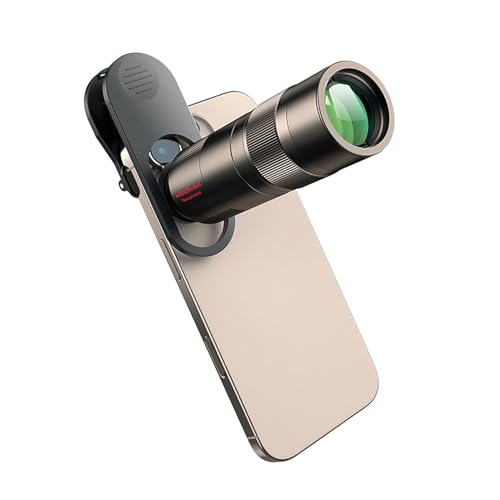
COSULAN brings a 400mm fixed telephoto option for mobile photography, designed to extend reach for wildlife, sports, and travel moments when carrying bulky gear is impractical. The lens emphasizes a bright aperture and a multi-layer FMC coating to minimize chromatic aberration and preserve color fidelity, while a universal clip and included eyepiece support quick setup across devices.
Tamron 50-400mm f/4.5-6.3 Di III for Sony
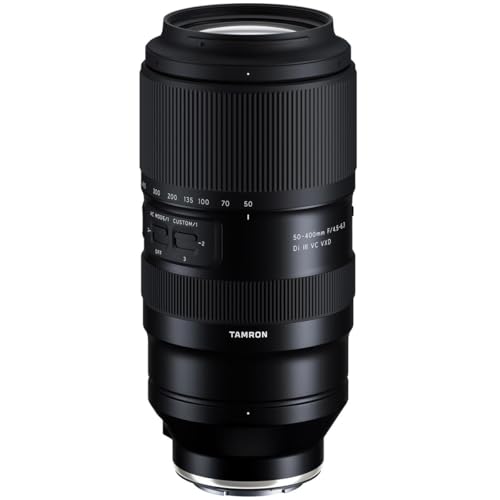
The Tamron 50-400mm f/4.5-6.3 Di III Di III for Sony full-frame mirrorless cameras delivers an impressive 8x zoom range with a high-performance AF system powered by a VXD motor. Its optical design includes multiple specialized elements to control aberrations and colors, while built-in coating reduces reflections. The lens is noted for quiet operation, making it suitable for wildlife, sports, and travel projects that require fast, smooth focusing and minimal noise in recording contexts.
Buying Guide: Key Purchase Considerations
- Camera system compatibility: Ensure the lens mount matches your camera (Nikon Z, Canon RF, Sony E, etc.) and check if there is an adapter option if needed.
- Zoom range vs. weight: All-in-one Zooms save lens changes but can be heavier or slower in aperture; consider fixed telephotos if you prioritize brightness and speed.
- Image stabilization: Lenses with VC/IS help stabilize handheld telephoto shots, especially in low light or when using longer focal lengths.
- Autofocus performance: For action and wildlife, fast and reliable AF with tracking is essential. Look for lenses with swift motors (e.g., USM, VXD) and compatibility with your camera’s AF system.
- Optical quality and coatings: Multi-element designs and coatings mitigate chromatic aberration and flaring; higher-end variants generally yield crisper, more color-accurate results.
- Size and portability: If you travel or shoot handheld for long periods, lighter lenses with balanced weight distribution are advantageous.
- Budget versus value: All-in-one zooms offer convenience and cost savings, while dedicated telephoto primes or high-end zooms may deliver better sharpness and contrast at specific ranges.
- Usage scenarios: Wildlife, sports, travel, and portrait work each benefit from different focal ranges; prioritize focal length, close-range performance, and working distance.
- Warranty and support: Consider brands with strong regional service networks and long warranty terms, especially for professional or frequent travelers.