Discover the best 500 mm camera lens options for achieving stunning telephoto shots. This guide highlights five reliable choices across Canon, Nikon, Sony, and more, helping you pick the right reach for wildlife, sports, landscapes, or astrophotography. Suitable buyers include professionals seeking top performance, enthusiasts needing solid image quality at a fixed super-telephoto length, and travelers who want versatile, long-range options without swapping lenses.
| Product | Brand | Best For |
|---|---|---|
| Canon RF100-500mm F4.5-7.1 L IS USM | Canon | Canon EOS R-series mirrorless shooters needing versatile zoom with stabilization |
| Tamron 150-500mm F/5-6.7 Di III VC VXD (Sony E-mount) | Tamron | Sony full-frame mirrorless users seeking flexible telephoto reach |
| Nikon AF-S FX NIKKOR 200-500mm f/5.6E ED VR (Renewed) | Nikon | Nikon DSLRs needing strong VR and long reach at a good value |
| Nikon AF-S FX NIKKOR 200-500mm f/5.6E ED VR | Nikon | DX/FX Nikon shooters wanting solid telephoto performance |
| Tamron 150-500mm F/5-6.7 Di III VC VXD (Nikon Z Mount) | Tamron | Nikon Z-mount mirrorless users needing a lightweight 500mm option |
Canon RF100-500mm F4.5-7.1 L IS USM Lens

Best for Canon EOS R-series mirrorless photographers who want a versatile zoom with stabilized performance. The lens provides Optical Image Stabilization with up to 5 stops of shake correction and offers three image stabilization modes (Standard, Panning, and exposure-only) for creative flexibility. This makes it suitable for wildlife, sports, and event photography, especially when you need flexible focal length without swapping lenses.
Tamron 150-500mm F/5-6.7 Di III VC VXD For Sony

Better for Sony full-frame mirrorless users seeking a compact, versatile ultra-telephoto zoom. The lens includes Vibration Compensation with multiple modes (Standard, Panning, and Framing Priority) to stabilize handheld shooting at the 500mm position. It also features XLD, LD, and GM optical elements to minimize color fringing and distortion for clearer images across the zoom range.
Nikon AF-S FX NIKKOR 200-500mm f/5.6E ED VR (Renewed)
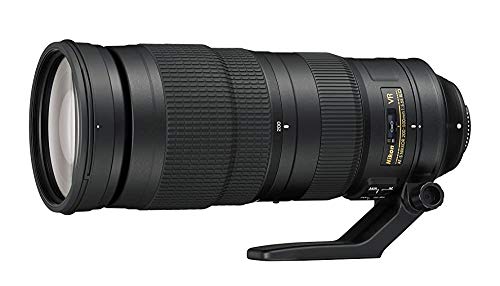
Best for budget-minded Nikon DSLR shooters needing substantial reach with stable VR performance. It offers a 500 mm zoom power on FX-format DSLRs and a 750 mm equivalent on DX-format bodies, with four stops of VR and specialized modes for tripod use and sports. Use this if you prioritize long reach at a more accessible price point.
Nikon AF-S FX NIKKOR 200-500mm f/5.6E ED VR

Best for Nikon DSLR users who want a compact, versatile telephoto zoom that delivers 200-500 mm for wildlife, motorsports, and travel photography. It provides a fast constant aperture of f/5.6 and reliable VR for handheld shooting at longer focal lengths. Choose this if you need a balanced mix of reach, weight, and image quality.
Tamron 150-500mm F/5-6.7 Di III VC VXD (Nikon Z Mount)

Best for Nikon Z-series mirrorless shooters needing a lightweight, long-reach option. This lens delivers a compact 500 mm solution with VC image stabilization and a fast autofocus drive (VXD). It’s a good pick if you want a shorter overall lens length for travel and handheld use, while still achieving strong telephoto performance. Consider this if your camera system is Nikon Z and you value portability.
Buying Guide
- System compatibility: Confirm your camera mount (Canon EF/M, Canon RF, Nikon F, Sony E, Nikon Z) and whether you need a full-frame or crop-sensor lens.
- Reach and versatility: Decide between a fixed 500 mm and a zoom range (200-500 mm, 150-500 mm) based on subject distance and shooting style.
- Image stabilization: Look for VC/L, IS, or VR with multiple modes to avoid shake at long focal lengths.
- Weight and portability: A lighter lens improves handheld usability, while heavier models offer potentially better optical performance and durability.
- Optical elements: L-series or high-dispersion elements reduce chromatic aberrations and flare, improving image clarity.
- Budget and condition: Renewed or third-party options can offer good value but check return policies and warranties.
FAQ
- What is the advantage of a 500 mm lens? It provides pronounced magnification for distant subjects, allowing close-up framing without proximity. Good for wildlife, sports, and astrophotography.
- Do telephoto zooms outperform prime 500 mm lenses? Telephoto zooms offer flexibility of focal length, while primes often deliver marginally higher sharpness in some conditions. Choose based on your typical shooting distance.
- Is image stabilization essential at 500 mm? Yes, stabilization helps reduce camera shake, especially for handheld shots at longer focal lengths and in low light.
- Can I use a 500 mm lens on a crop sensor? Yes; DX or APS-C bodies effectively extend focal length due to crop factor, increasing reach but reducing the field of view.
- Should I buy a lens with built-in stabilization? Built-in stabilization is beneficial for handheld use, but consider compatibility with your camera body’s stabilization system for maximum effect.