Answering the common buyer question: which 70-200mm telephoto lens should you choose for your camera system? This guide highlights five strong options across Canon, Sony, and Panasonic, focusing on image quality, stabilization, and versatility for landscapes, portraits, and sports. It targets enthusiasts and professionals seeking reliable, high-performance telephoto zooms.
The following summary table helps compare key details at a glance.
| Product | Mount / System | Max Aperture | Best For |
|---|---|---|---|
| Canon RF70-200mm F2.8 L IS USM | Canon RF (Mirrorless) | f/2.8 | Sports, fast-action, low-light |
| Sony FE 70-200mm F2.8 GM OSS II | Sony E-mount (Full-frame) | f/2.8 | Professional video and stills, fast AF |
| Canon EF 70-200mm f/4L IS USM | Canon EF (DSLR) | f/4 | Lightweight travel, everyday telephoto |
| Canon EF 70-200mm f/2.8L USM (Renewed) | Canon EF (DSLR) | f/2.8 | Professional pro-grade image quality |
| Panasonic LUMIX S PRO 70-200mm F4 | L-Mount (Panasonic S Series) | f/4 | Full-frame mirrorless, stabilized zoom |
Canon RF70-200mm F2.8 L IS USM Lens

The Canon RF70-200mm F2.8 L IS USM is a bright telephoto zoom designed for Canon’s RF-mount mirrorless cameras. It offers a fast f/2.8 aperture across the entire zoom range and optical image stabilization that can compensate up to 5 stops of shake. This combination makes it ideal for fast-action sports, wildlife, and portrait work in variable lighting. The lens is described as compact and lightweight for its class, which is helpful for handheld shooting over long sessions. Best for professionals and enthusiasts who prioritize image brightness and stabilization in a light, travel-friendly package.
Selected for: superior low-light performance and robust build for sports photographers and wedding/event shooters who need reliable autofocus and stabilization in dynamic environments.
Caution: As a high-end zoom, it may feel heavier than consumer options; ensure your camera body supports the lens’ weight and balance for extended shoots.
Sony FE 70-200mm F2.8 GM OSS II
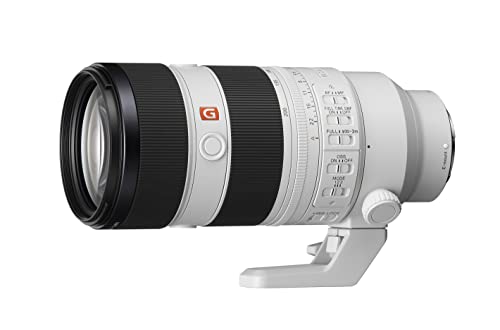
The Sony FE 70-200mm F2.8 GM OSS II is a flagship G Master telephoto that emphasizes high resolution across the entire zoom range. It uses multiple aspherical and low-dispersion elements to minimize aberrations and chromatic blur, with Nano AR coatings to reduce flare. The lens is paired with Sony’s XD Linear Motors for fast, quiet AF and smooth zoom tracking, making it well suited for action, wildlife, and cinema-style footage. Best for professional Sony shooters who need top-tier image quality, fast autofocus, and reliable stabilization.
Selected for: advanced autofocus performance and image quality, especially when tracking fast subjects through the frame. Choose this if your work includes video or fast-moving wildlife.
Caution: The lens is built for high-end systems; price and weight are considerations for travel-heavy workflows.
Canon EF 70-200mm f/4L IS USM

The Canon EF 70-200mm f/4L IS USM delivers a more budget-friendly option in a compact, lighter package. It offers a constant f/4 aperture and Canon’s Fluorite UD elements for sharpness and contrast. The image stabilization system helps steady handheld shots, with a closest focusing distance around 3.94 feet. This lens is best for travel, portraits, and everyday telephoto work where weight and cost are major considerations, while still benefiting from professional-grade image quality.
Selected for: users who want a lightweight, affordable telephoto zoom without sacrificing essential image quality and stabilization. Avoid this if you need superior low-light performance in dim environments.
Canon EF 70-200mm f/2.8L USM (Renewed)

The Canon EF 70-200mm f/2.8L USM is a professional-grade telephoto zoom with constant f/2.8 brightness, designed for Canon DSLR systems. Its inner focusing mechanism and USM provide quick, quiet autofocusing, with a minimum focus distance around 4.9 feet. This option suits photographers who prioritize fast autofocus and shallow depth of field for portraits, sports, and event coverage on Canon DSLR bodies. Best for: established Canon DSLR users who require reliable, consistently bright performance. Caution: Renewed status means purchasing from a reputable seller and verifying warranty terms.
Canon EF 70-200mm f/2.8L IS III USM

The Canon EF 70-200mm f/2.8L IS III USM is a classic, high-grade telephoto zoom for Canon DSLRs. It maintains a constant f/2.8 aperture throughout the zoom range and includes Canon’s Air Sphere Coating to minimize ghosting and flare. Optical stabilization supports up to 3.5 stops of shake correction. This lens is best for shooters who rely on consistent, proven optical performance on Canon DSLR bodies, particularly in challenging lighting or high-motion scenarios. Consider this if you already own Canon EF glass and want a trusted workhorse. Caution: The black-and-white branding note in some listings may indicate a non-original finish; verify product condition when purchasing renewals or refurbished units.
Panasonic LUMIX S PRO 70-200mm F4

The Panasonic LUMIX S PRO 70-200mm F4 telephoto zoom is designed for full-frame L-Mount cameras. Its F4 constant aperture pairs with Optical Image Stabilization and Dual I.S. 2 to achieve up to approximately six stops of stabilization when used with compatible bodies. The lens emphasizes a compact, weather-sealed build for travel and outdoor work. It also features a considerable optical design with multiple specialized elements to suppress chromatic aberration and maintain sharpness across the zoom range. Best for Panasonic S-series shooters who need a sturdy, stabilized tele-zoom with travel-friendly weight. Caution: F4 brightness is less forgiving in low light compared to f/2.8 options, which may impact handheld performance in dim scenes.
Buying Guide: Key Considerations for 70-200mm Telephoto Lenses
- Camera system compatibility: Ensure mount type (Canon EF/RF, Sony FE, Panasonic L-Mount) matches your camera.
- Aperture and light conditions: f/2.8 offers brighter performance in low light and shallow depth of field; f/4 is lighter and often more affordable.
- Image stabilization: Consider lens IS versus camera-body stabilization, and the number of stops of correction.
- Autofocus performance: Look for fast, reliable AF for action or wildlife; consider lenses with XD Motors or equivalent for speed.
- Weight and balance: Heavier lenses require sturdy support and handling considerations for long sessions.
- Image quality across zoom range: Look for low distortion, aberration control, and coating technologies that reduce flare.
- Build and weather sealing: For outdoor or travel use, a robust build and sealing are beneficial.
FAQ
- What makes a 70-200mm lens a good choice for sports photography?
It provides a versatile focal length range that can capture action from a distance while offering a bright aperture (often f/2.8) for fast shutter speeds and subject isolation. - Is a f/2.8 lens significantly better than f/4 for telephoto work?
Yes, f/2.8 yields more light and shallower depth of field, which helps in low-light conditions and subject separation; however, it usually comes at higher cost and weight. - Should I buy a Canon EF or RF 70-200mm lens if I own a Canon camera?
If you own a Canon mirrorless camera, RF-mount lenses are recommended for best autofocus and compatibility. EF lenses fit DSLR bodies and may require adapters for some current Canon cameras. - Are there advantages to Sony’s GM versus non-GM telephoto zooms?
GM lenses typically offer superior sharpness, contrast, autofocus speed, and coatings designed for professional video and stills, though at a premium price. - What is the significance of built-in stabilization in telephoto zooms?
Stabilization helps compensate for camera shake, enabling steadier shots at longer focal lengths and slower shutter speeds, especially when shooting handheld. - Do these lenses work well for travel photography?
Lenses like the f/4 variants are lighter and more portable, making them more suitable for travel while still providing strong image quality and reach.