For aspiring and seasoned astrophotographers alike, 80mm refractors offer a balanced mix of portability, light gathering, and image quality. This guide highlights five 80mm refractor kits designed for astro imaging, focusing on optical precision, color accuracy, and practical features that matter on the trail and in the studio. Each pick below is chosen for its ability to deliver sharp, high-contrast views of the Moon, planets, and deep-sky targets without overwhelming weight or setup complexity. Read on to compare technologies, mounts, and imaging-oriented design elements.
Summary of chosen products
| Product | Aperture / Design | Highlights |
|---|---|---|
| Explore Scientific ED80 Essential Series | 80mm Triplet Refractor | ED glass, air-spaced triplet, portable 480mm focal length |
| Explore Scientific FCD100 80mm | 80mm Triplet Refractor | Hoya FCD100 ED glass, high-contrast, compact for astrophotography |
| SVBONY SV503 80mm F7 | 80mm Refractor OTA | ED glass, dual-speed focuser, CNC craftsmanship |
| Askar 80ED | 80mm ED Refractor OTA | Retractable hood, dual-speed focusing, lightweight tube |
| SVBONY SV550 80mm F6 APO Triplet | 80mm APO Triplet OTA | APO triplet, field flattener compatibility, magnesium alloy seat |
Explore Scientific ED80 Essential Series 80mm Triplet Refractor
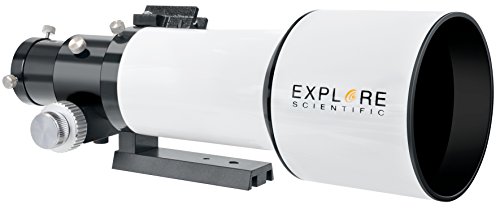
The ED80 Essential Series uses genuine ED glass and enhanced multi-layer coatings to deliver high-contrast, detail-rich views. Its 80mm aperture and f/6 focal ratio suit both visual observing and imaging needs, while an air-spaced triplet design helps minimize chromatic aberration across a broad spectrum. The 480mm focal length keeps the setup compact, supporting easy transport and quick field use for astrophotography sessions. The retractable dew shield enhances portability and helps maintain optical alignment during rapid deployments.
In imaging setups, this refractor benefits from its light-gathering efficiency without a heavy footprint. The combination of ED glass with high-contrast coatings yields crisp star fields and faithful color rendition, which can simplify post-processing. The design balances performance and practicality, making it a popular option for researchers and hobbyists who want reliable deep-sky results with a manageable scale.
Explore Scientific FCD100 Series 80mm Triplet Refractor

The FCD100 version uses high-performance Hoya FCD100 ED glass and enhanced coatings to maximize contrast and detail. With an 80mm aperture and f/6 focal ratio in an air-spaced triplet, it’s well-suited for imaging faint deep-sky objects while keeping chromatic aberration low. The 480mm focal length provides a compact configuration that travels well for field work. The design emphasizes bright, crisp images of the Moon, planets, nebulae, and star clusters, making it a robust choice for both astrophotography and visual use in varied observing conditions.
Photographers will appreciate the balance of light transmission and portability. The ED glass helps reduce color fringing around bright stars and nebulae, which can translate into cleaner calibration and stacking results. Whether mounted on a small Equatorial or a modern astro-imaging rig, this telescope offers a dependable imaging platform with strong field performance.
SVBONY SV503 Refractor Telescope, 80mm F7
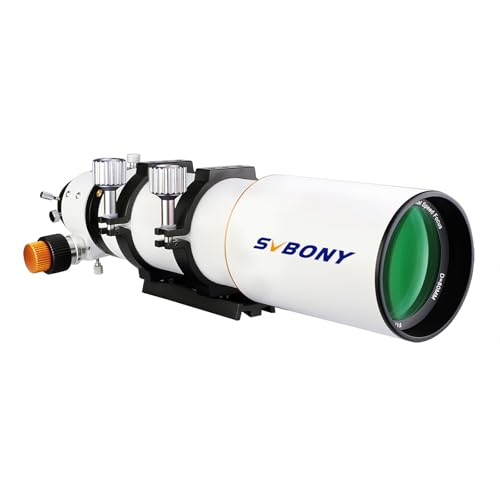
The SV503 80ED-style refractor emphasizes color fidelity and contrast. An ED glass design yields a bright, true-to-color image suitable for deep-sky targets and planetary imaging. The dual-speed 2-inch focuser (1:10 gear ratio) allows precise focusing, which is essential for sharp stars and accurate guide star alignment in longer exposure imaging. CNC-machined components contribute to consistent mechanical performance, while the overall build supports stable imaging sessions and reliable field use.
For astrophotography, the telescope’s optical quality translates into well-corrected fields with minimal lateral color, reducing the need for aggressive post-processing. The combination of optical precision and robust mechanical elements makes the SV503 a practical choice for entry- to mid-level imaging rigs that aim to capture galaxies, nebulae, and star clusters with clarity.
Askar 80ED Telescope for Astrophotography
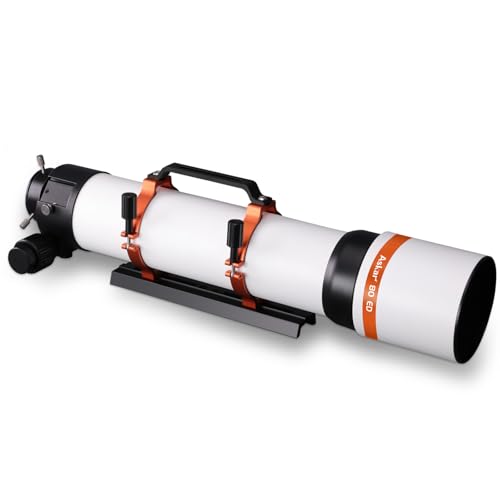
The Askar 80ED delivers a compact, capable imaging platform with a retractable lens hood that minimizes stray light when compact storage is a priority. Its dual-baffle inner tube design reduces stray light and enhances image contrast. The tube is lightweight, but sturdy, and is compatible with a wide range of equatorial mounts via a 200mm Vixen-style dovetail. The focus mechanism is a dual-speed rack-and-pinion system, offering precise coarse and fine adjustment for sharp star fields. Additional screw holes support optional electronics for automated focusing during long imaging runs.
Askar emphasizes practical imaging ergonomics, including the ability to mount accessories and balance the rig for extended exposures. This makes it suitable for astrobin-worthy imaging of bright and faint targets alike, provided the user has stable tracking and a good calibration workflow. The overall design supports a versatile imaging setup with room to grow into more advanced configurations.
SVBONY SV550 80mm F6 APO Triplet Refractor

The SV550 combines an 80mm APO triplet design with a built-in field flattener option and a magnesium alloy-focused structure for strength with reduced weight. The 180mm dovetail plate supports straightforward mounting on compatible mounts, while the hollow design of the tube simplifies balance and stability. The instrument is designed to deliver flat field performance with minimized chromatic aberration, which is advantageous for wide-field astrophotography and imaging with sensitive cameras. This setup appeals to users seeking high-contrast, color-accurate images with reliable field correction across a broad spectrum.
With the SV550’s focus on both optical performance and a practical build, it is well-suited for both visual observing and astrophotography. The combination of lightweight yet sturdy components helps reduce fatigue on longer sessions, while the optical design supports a broad range of imaging targets, from planetary detail to expansive nebulae and galaxies.
Buying Guide: Key Considerations For 80mm Astrophotography Refractors
- Optical design and glass: ED and APO triplets reduce chromatic aberration and color fringing. Compare ED glass types (e.g., Hoya FCD) and coatings to understand contrast improvements and light transmission.
- Focal ratio and field performance: An f/6 to f/7 range balances light gathering with practical coma control. Consider whether you want a dedicated field flattener or a built-in correction for flat fields across the image circle.
- Portability vs. rigidity: Lightweight tubes are easier to transport but may require careful mounting and balancing. Look for retracable dew shields and robust, smooth focusing mechanisms to support long imaging sessions.
- Focuser quality: Dual-speed focusers enable precise focusing critical for sharp stars. Check gear ratios (e.g., 1:10) and focusing travel to ensure compatibility with your imaging accessories.
- Mechanical design: CNC-machined components, magnesium alloy seats, and sturdy dovetails contribute to repeatable alignment and long-term reliability in field conditions.
- Field correction options: If planning wide-field astrophotography, verify whether a field flattener is included or available as an accessory and whether the assembly yields a flat, edge-to-edge sharp image.
- Mount compatibility: Ensure your mount and balance capabilities align with the refractor’s weight and dovetail style. Small dual- or single-axis mounts may benefit from lighter tubes, while longer sessions may demand sturdier tripods and mounts.
- Accessories and camera integration: Consider camera backfocus requirements, dew control, and available adapters for your imaging camera, guiding setup, and filters. A good kit often includes easy access to these elements for rapid field deployment.
In selecting among these 80mm refractors, consider your imaging goals, preferred targets, and travel needs. If you prioritize ultra-clean star fields and minimal post-processing, an APO/ED design with a proven field correction path may be advantageous. If portability and quick deployment are paramount, look for retractable dew shields and compact tubes without sacrificing essential optical quality. Finally, pairing any of these refractors with a reliable mount and a calibrated workflow will help you maximize image quality and repeatable results across sessions.