Photographers, videographers, and plant growers often rely on precise light measurements to achieve consistent results. An affordable light meter helps you monitor ambient brightness, adjust exposure settings, and optimize locations for shoots or growth environments. This guide highlights five reliable, budget-friendly options that cover common use cases—from film and digital photography to indoor gardening. Each option emphasizes accuracy, ease of use, and practical features like auto power-off, data hold, and wide Lux ranges. Use these picks to compare performance and pick a meter that fits your workflow and budget.
Below is a quick snapshot of the five products featured in this guide, showing their brands, key capabilities, and how they fit into typical photography or horticulture setups. This table is designed to help you compare at a glance and decide which meters deserve deeper consideration in the product sections that follow.
| Brand | Product | Key Range | Notable Features |
|---|---|---|---|
| URCERI | Light Meter Digital Illuminance Meter | 0–200,000 Lux | Ambient temperature, 4-digit LCD, MIN/MAX, data hold |
| Mcbazel | Digital Illuminance Light Meter | 0–200,000 Lux | Large range, LUX/FC switch, backlit LCD |
| UNI-T | UT383 Light Meter | 0–199,900 Lux | High accuracy, auto shutdown, backlit display |
| Ohcans | Digital Illuminance Light Meter | 0–200,000 Lux | 180° rotating sensor, backlit LCD, multi-scene use |
| Lightray | Mobile Light- and PAR Meter | PPFD, DLI with Lux capabilities | Smartphone app integration, compatibility notes |
URCERI Light Meter With Lux And Temperature
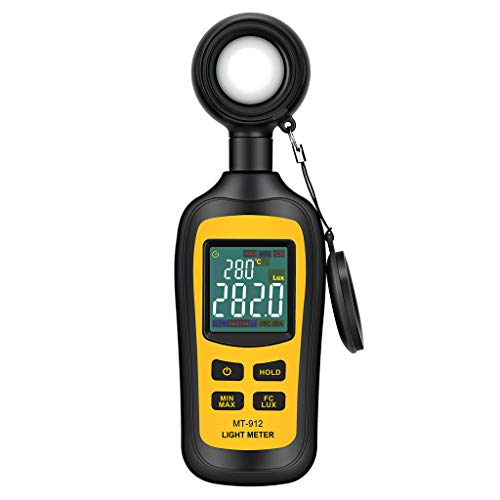
The URCERI light meter measures luminosity from 0 to 200,000 Lux and also records ambient temperature. Its accuracy is rated at ±3% rdg with a 4-digit color LCD screen for clear readings. Features include MIN/Max readings, data hold, auto power off, and a low battery indicator, making it suitable for both photography work and indoor environmental checks. The combination of wide range and quick responsiveness supports photographers calibrating exposure and gardeners tracking light intensity for plant health.
Mcbazel Digital Illuminance Light Meter

The Mcbazel illuminance meter offers a broad measurement range up to 200,000 Lux with accuracy typically around ±3% and ±10 digits for low light. It supports switching between LUX and FC units, and the LCD is backlit for readability in dim environments. The device also provides a fast sampling rate and an easy-to-use interface, which makes it a popular choice for photographers and growers who need reliable, rapid measurements without fuss.
UNI-T UT383 Lux Meter

The UNI-T UT383 is a compact, professional digital illuminance meter that reads 0 to 199,900 Lux (0 to 18,500 FC). It emphasizes accuracy with a typical rating of ±4% and ±8 digits. A large backlit LCD screen, 0.5-second sampling, and data hold enhance usability in busy shooting or lab environments. Includes auto shutdown to conserve battery life and over‑load indication for safe operation. It’s a solid pick for photographers who value portability and dependable performance.
Ohcans 180° Rotating Lux Meter

The Ohcans digital illuminance meter features a wide 0–200,000 Lux range with high accuracy (±4% +10 digits). A distinctive 180° rotating sensor enables measuring light from difficult angles, while a backlit LCD ensures readability in darker environments. It supports multi-scene applications—ideal for photography, studios, classrooms, and horticulture. The meter’s versatility makes it a strong option for users who require flexible placement and quick, clear readings.
URCERI MT-92H Split-Sensor Light Meter
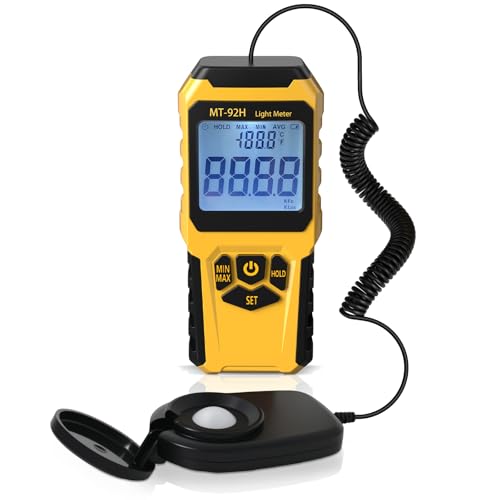
The URCERI MT-92H offers a split-sensor design for flexible measurement placement while delivering a Lux measurement range up to 200,000 with a stated accuracy of ±3% and a 0.1 Lux resolution. It supports dual measurement units (Lux and Fc) and temperature readings in Celsius or Fahrenheit. The device emphasizes fast refresh rates (about 500 ms) and a temperature-friendly operation profile, which is helpful for precise lighting setup in varying environments.
Buying Guide: Key Purchase Considerations
When selecting an affordable light meter for photography or indoor growing, consider these factors to find the best fit:
- Measurement range and accuracy: Look for meters that cover 0–200,000 Lux or more with a reasonable accuracy (±3%–±4%). Higher accuracy reduces exposure guesswork in tricky lighting.
- Display and readability: A backlit LCD or color display helps in low-light conditions. A rotating sensor or flexible probe can improve measurement angles for product shoots or plant canopies.
- Units supported: Ensure the meter can switch between Lux and FC, depending on your preferred workflow or region.
- Data features: MIN/MAX, data hold, auto power off, and low battery indicators are practical for field work and longer sessions.
- Sensor design: Split sensors or rotating probes offer placement versatility, reducing the need to reposition lights repeatedly.
- App and integration: Some meters, like smartphone-based options, rely on companion apps for advanced features; verify compatibility with your device and workflow before purchasing.
- Portability and build: A compact, lightweight device with durable housing is ideal for travel or location shoots.
- Power considerations: Auto-off helps conserve batteries for extended shoots; consider rechargeable options if available.
Usage Scenarios And Comparison Points
Photography studios benefit from meters with fast sampling and backlit displays to quickly adjust lighting for portraits or product shots. Gardeners and plant growers rely on wide Lux ranges to ensure consistent photosynthesis lighting and growth conditions. Cinematographers may prefer meters with dual Lux and Fc units and a precise 0.5-second sampling rate for real-time lighting changes on set. For home or educational use, value-focused meters that offer clear displays and straightforward data hold functions provide the best balance of cost and utility.
All five meters featured here aim to deliver dependable measurements without complicated setups. The best choice depends on your primary use—whether you prioritize portable form, sensor flexibility, or enhanced readability in dim environments. By aligning your selection with these considerations, you can achieve reliable brightness readings that support accurate exposure, consistent color, and healthy plant development.