Looking for budget-friendly lenses that unlock stellar night-sky shots? This guide highlights five affordable options, each paired with who it’s best for and why. Whether you shoot with Canon, Sony, or general telescope adapters, these lenses and accessories offer strong value for wide, low-light, and creative astrophotography work.
| Product | Best For | Why It Stands Out |
|---|---|---|
| Rokinon FE14M-C 14mm F2.8 | Canon EF Mount Enthusiasts | Ultra-wide 115.7° view and fast f/2.8 for wide-field nightscapes. |
| SVBONY 5X Barlow Lens (1.25″) | Planetary and deep-sky imaging with existing eyepieces | Boosts magnification without buying new eyepieces |
| AstrHori 6mm F2.8 Circular Fisheye | Creative night-sky & Milky Way shots | Extremely wide 220° field for immersive visuals |
| SVBONY T Ring & Adapter (Canon EF) | Telescope photography with Canon | Direct-to-telescope prime focus setup |
| Rokinon AF 12mm F2.0 (Sony E) | Sony APS-C wide-angle astrophotography | Fast F2.0, silent AF, compact and weather-sealed |
| Astromania 2 Inch Diagonal | 2-inch eyepiece users seeking wider views | High reflectivity dielectric coatings for bright images |
Rokinon FE14M-C 14mm F2.8 Ultra Wide Lens
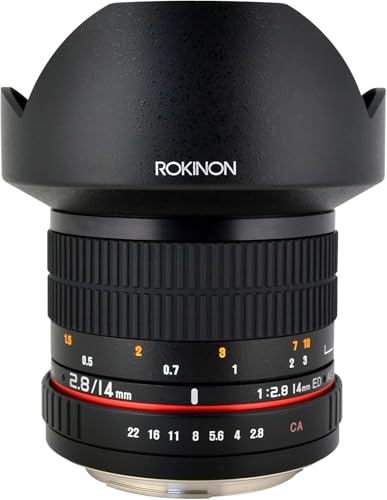
Best for Canon EF mount users who want a true ultra-wide perspective. This 14mm lens provides a 115.7° angle of view, ideal for expansive night skies, star trails, and landscape astrophotography. The fast f/2.8 aperture helps in low-light conditions, delivering brighter stars with reduced noise relative to slower lenses.
Who it’s for: casual and semi-pro shooters with Canon gear seeking dramatic, edge-to-edge sharpness across the frame. Why selected: strong optical design with a wide field and bright aperture at a budget-friendly price.
Caution: Edge performance can vary with extreme corners at wide angles; consider stopping down slightly for astronomical stacking to reduce aberrations.
SVBONY 5X Barlow Lens 1.25 Inch

Best for those who want to extend their existing eyepiece collection without buying new equipment. This 5x Barlow lens increases the effective focal length of any 1.25″ eyepiece, enabling closer views of planets or deep-sky targets when attached to a telescope. It uses a multi-coated optical design for crisper results.
Who it’s for: astronomy hobbyists who already own 1.25″ eyepieces and want higher magnification options. Why selected: value-added magnification without a full upgrade, keeping setup simple.
Caution: Multiplication of aberrations may occur at high magnifications; use with stable mounts and careful focusing to minimize blur.
Rokinon AF 12mm F2.0 for Sony E

Best for Sony APS-C shooters who need an ultra-wide, fast prime with modern features. The lens offers a 99.1° rectilinear view on Sony E-mount APS-C cameras, delivering broad framing for interiors, landscapes, and starry skies. The bright f/2.0 aperture assists in astrophotography and low-light night scenes.
Who it’s for: Sony enthusiasts prioritizing speed, light weight, and weather sealing for outdoor shoots. Why selected: combines a wide field with reliable autofocus and rugged construction.
Caution: For full-frame Sony bodies, image circle may not cover entire sensor; intended primarily for APS-C users.
Astromania 2 Inch Star Diagonal

Best for observers using 2-inch eyepieces who want better field views and brighter images. This diagonal features 93% reflectivity dielectric coatings and a 1/10 wave mirror to deliver clear, bright images across a wide spectral range. It fits Schmidt-Cassegrain telescopes with a 2-inch focuser and supports broader viewing opportunities.
Who it’s for: astrophotographers expanding their optical path with larger-diameter eyepieces for astrophotography and visual observing. Why selected: quality coatings and compatibility with common 2-inch setups.
Caution: Ensure your telescope’s rear cell accepts 2-inch diagonals; adaptors may be required for certain models.
Buying Guide: Key Considerations for Budget Astrophotography Lenses
- Field of view versus magnification: Ultra-wide lenses like 14mm and 12mm provide sweeping sky views, while Barlow and prime lenses offer tighter framing. Match your target to your lens class.
- Low-light performance: Fast apertures (f/2.0–f/2.8) improve exposure in dark skies but may increase aberrations at the edges. Consider stopping down slightly or using stacking to optimize results.
- Mount compatibility: Check your camera mount (Canon EF, Sony E, etc.) and whether an adapter is needed for telescope work or 2-inch diagonals.
- Image quality versus budget: Budget lenses often compromise on edge sharpness and distortion. Evaluate if creative effects (fisheye, ultra-wide) align with your goals.
- Accessory synergy: Barlow lenses and diagonals expand capabilities without heavy expenditures, but plan for stability and proper focus control.
Frequently Asked Questions
- What lens is best for Milky Way photography on a budget? A fast ultra-wide lens with a wide aperture (around f/2.0–f/2.8) on your mount is typically best for capturing the Milky Way with minimal noise.
- Do budget wide-angle lenses suffer from coma or distortion? Some budget ultra-wide lenses may show edge softness or coma; stacking and careful autofocus or manual focus can mitigate this.
- Is a Barlow lens useful for astrophotography? Yes, a Barlow lens can multiply magnification using existing eyepieces, making it a cost-effective addition when starting telescope-based imaging.
- Should I buy a diagonal for astrophotography? A star diagonal improves optical paths and comfort for visual observing; for photography, ensure the diagonal supports 2-inch eyepieces or is suitable for prime focus setups.
- Is autofocus necessary for astrophotography? Some lenses offer quiet autofocus, which helps for daytime shoots or video, but many astrophotographers prefer manual focus for precise star sharpness.
- Can these budget lenses work with full-frame cameras? Some are designed for APS-C or specific mounts; verify sensor coverage and mount compatibility before purchasing.