Finding the right C-mount cine lens adapter depends on your camera system, desired focus behavior, and how essential infinity focus is for your workflow. This guide highlights five practical adapters, each suited to different shooter needs—from budget-friendly micro four thirds setups to Nikon Z and Canon RF ecosystems. Read on to see which adapter matches your camera, plus clear notes on limitations and ideal use cases.
| Product | Camera Compatibility | Best For | Key Limitation |
|---|---|---|---|
| Fotodiox Lens Mount Adapter for C-Mount to Fuji X | Fuji X-Mount Mirrorless | Users with Fuji X-series who want to reuse C-mount cine lenses | Limited image circle; infinity focus may not be achievable on some lenses |
| Fotodiox C-Mount to Micro Four Thirds Adapter | Micro Four Thirds | Budget-friendly MFT setups needing a simple C-mount transfer | Close focus only; no electrical contacts |
| Fotasy 16mm C Mount to Nikon Z Adapter | Nikon Z Mount | 16mm Cine lenses on Nikon Z cameras | Infinity focus and manual operation rely on lens behavior |
Fotodiox C-Mount to Fuji X Adapter

The Fotodiox adapter is designed to mount C-mount CCTV and Cine lenses onto Fuji X-mount mirrorless bodies. It features an all-metal, hardened anodized aluminum construction and precision tolerances. Best for: Fuji shooters who want to explore vintage glass with their modern sensor. Limitation: some lenses may not reach infinity focus due to the adapter’s fixed image circle and mounting geometry.
Why it’s selected: It’s a straightforward, durable solution for users prioritizing mechanical reliability and a solid metal build, especially when expanding a Fuji kit with older C-mount glass.
Care tips: Check each lens’s image circle and flange distance to ensure compatibility with infinity focus on your specific Fuji model.
Fotodiox C-Mount to Micro Four Thirds Adapter

This adapter is aimed at Micro Four Thirds bodies, offering a quick and economical way to adapt C-mount lenses. Best for: photographers and videographers who want a budget-friendly entry into C-mount glass on MFT bodies. Limitation: close focus only, and there are no electrical contacts to drive lens data.
Why it’s selected: It provides a lightweight, affordable option for experimenting with vintage cine lenses on MFT bodies, ideal for learners or occasional shooters.
Practical note: Manual focus and exposure adjustments are required since there are no electronic connections.
Fotasy 16mm C Mount to Nikon Z Adapter

The Fotasy C to Z adapter enables 16mm C-mount cine lenses to be used on Nikon Z mirrorless cameras. Best for: Nikon shooters who want to preserve the look of older 16mm glass with modern Z bodies. Limitation: infinity focus and manual operation depend on the lens design; some users report the need to verify flange compatibility for their exact lens model.
Why it’s selected: It expands Nikon Z use with affordable 16mm cinema optics, combining a durable metal mount with a simple, no-frills approach.
Tip: Use with lenses that handle manual focus well at your intended distance to avoid surprises in focus drift.
Fotasy 16mm Cine Lens to Canon RF Adapter
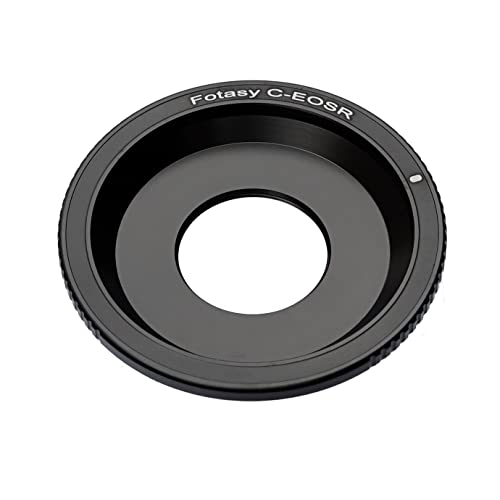
The Fotasy adapter allows 16mm C-mount cine lenses to fit Canon EOS R mount cameras. Best for: Canon RF users who want to reuse vintage cinema glass with easy mount compatibility. Limitation: the adapter is not compatible with EF/EF-S mounts, so this is specific to RF bodies.
Why it’s selected: It supplies a sturdy copper lens mount and a straightforward path to integrating classic 16mm optics with Canon’s modern mirrorless lineup.
Note: Infinity focus feasibility depends on the lens and camera combination; verify with your specific lens before shooting critical scenes.
Fotasy C to E Mount Adapter for Sony NEX Series

The Fotasy C to E Mount Adapter enables 16mm C-mount lenses to be used on Sony E-mount bodies, including several popular NEX and Alpha cameras. Best for: Sony shooters seeking to expand their cine lens options with minimal cost. Limitation: no electrical contacts; rely on manual focus and exposure control.
Why it’s selected: It broadens the range of usable 16mm glass for Sony users without adding electronics, which keeps the workflow simple and affordable.
Tip: Check your Sony camera’s flange distance and lens characteristics to ensure reliable focus across your shooting range.
Buying Guide
- Mount compatibility: Ensure the adapter matches your camera’s mount (Fuji X, Micro Four Thirds, Nikon Z, Canon RF, Sony E).
- Infinity focus: Some adapters cannot achieve infinity focus with certain lenses; verify the lens’s image circle and mount geometry.
- Electrical contacts: Most adapters are purely mechanical; if you need iris control or EXIF data, you’ll need an adapter with electronic coupling, which is less common for C-mount adapters.
- Build quality: All-metal constructions tend to offer better durability and steadier alignment for cine lenses.
- Focal considerations: 16mm lenses and CCTV optics have distinct coverage and registration distances; confirm that your chosen lens works with your camera’s sensor size and crop factor.
- Manual operation: Be prepared to manually adjust focus and exposure; planning your shot with the lens’s characteristics is essential for consistent results.
- Use case and lens selection: Choose adapters based on whether you prioritize budget, vintage look, or the ability to reuse specific glass lines you already own.
Frequently Asked Questions
- What is a C-mount adapter used for?
It allows C-mount Cine or CCTV lenses to be mounted on non-C-mount cameras, enabling archival optics or distinctive image aesthetics on modern bodies.
- Do these adapters preserve infinity focus?
Infinity focus depends on the lens and adapter combination. Some may not reach infinity on certain camera bodies due to flange distance and image circle limitations.
- Are there adapters with electronic control?
Most C-mount adapters are mechanical with no electronic contacts. If you need iris control or metadata, check for models that specifically advertise electronic support.
- Which adapter is best for beginners?
Adapters that target familiar camera ecosystems (for example, Micro Four Thirds or Sony E) and offer straightforward, all-metal builds are typically easier for new users.
- Can I use any 16mm lens with these adapters?
Not all 16mm C-mount lenses are compatible with every camera, due to image circle, flange distance, and mount compatibility. Always verify lens compatibility with your exact camera model.
- Do these adapters affect image quality?
Mechanical adapters themselves usually do not introduce heavy optical flaws, but alignment and lens characteristics will influence sharpness, falloff, and distortion.