Looking for a reliable camera track dolly slider to elevate your video and time-lapse work? The right slider blends stability, precise motion control, and versatility for various setups. This guide highlights five top options to suit different budgets and shooting styles, from compact travel-friendly models to full-featured motorized systems. Ideal buyers include aspiring filmmakers, vloggers needing steady parallax moves, and professionals seeking repeatable tracking shots.
Summary table of selected products:
- GVM 48″/120cm Motorized Camera Slider (Carbon Fiber) — Best for: versatile motorized motion and panoramic shooting.
- Zecti 24″/60 cm Adjustable Carbon Fiber Slider — Best for: portable travel and quiet movement.
- NEEWER 3 Wheels Wireless Video Dolly — Best for: remote control and quick, three-speed setups.
- GVM 31″/80 cm Electric Track Slider — Best for: fixed-point and 120-degree panorama with built-in controls.
- GVM 27” Aluminum Alloy Motorized Slider — Best for: sturdy rigs with time-lapse and round-trip shooting.
GVM 48/120cm Motorized Carbon Fiber Slider

Best for: filmmakers who need a long sliding track with multiple shooting modes, including tracking, panoramic, time lapse, and auto loop. The carbon fiber build enhances rigidity while remaining lightweight, and the 6-in-1 functionality supports varied shot workflows.
- Supports: tracking, panoramic, time lapse, video capture, programmable start/end points, adjustable motor torque, speed, interval, and auto loop.
- Connectivity: multiple 1/4″ and 3/8″ mounting ports for versatile tripod, stand, or rig integration.
- Included cables: six shutter-release cables and an extension, designed to handle extended setups.
Best for: established shooters needing a feature-rich, all-in-one slider that can adapt to complex shot sequences. Limitations: the setup may be more involved due to its size and motorized controls, which require careful cable management.
Zecti 24″/60 cm Adjustable Carbon Fiber Slider

Best for: travelers and creators needing a compact, quiet slider with solid stability and portability. The four bearings and double carbon fiber rail system provide smooth motion with low noise. A carrying bag aids transport between locations.
- Weight: light at 654g/23oz with travel-friendly dimensions.
- Compatibility: supports standard ball-head connections and general photographic gear.
- Note: users have reported occasional noise due to tight screws; loosening them slightly can improve movement.
Best for: on-the-go shoots where whiplash-free footage and quiet operation are essential. Limitation: may require occasional adjustment for perfectly silent runs in certain rigs.
NEEWER 3 Wheels Wireless Dolly
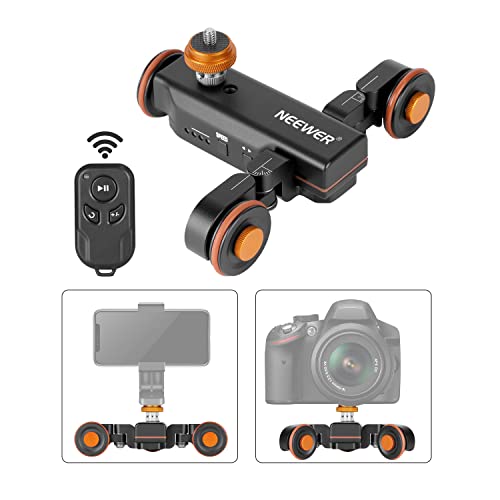
Best for: shooters who want quick setup and remote control. The wireless remote supports speed, direction, and pause with a 6m range, plus three adjustable speeds for varied motion sequences.
- Wheel arrangement: three-wheel design with adjustable angles for curved or straight routes.
- Mount compatibility: includes 1/4″ to 3/8″ screw adaptors to fit many cameras and accessories.
- Limitation: may require more space for full 3-wheel turns and could need balance adjustments on uneven surfaces.
Best for: dynamic run-and-gun shoots or when remote operation saves time. Better for: quick, repetitive moves on level floors or studio environments.
GVM 31″/80 cm Electric Track Slider
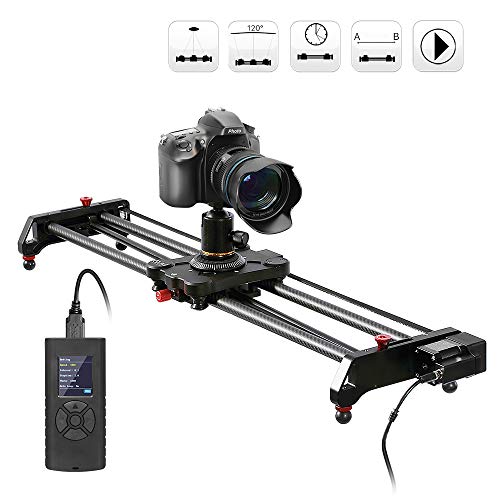
Best for: fixed-point shooting and 120-degree panorama work. This model offers built-in shot controls and a compact form suitable for studio use or tight spaces.
- Key features: 6-in-1 capabilities, flexible starting/ending point settings, and dual-sides red knobs for precise panorama control.
- Panorama: 120-degree panorama shooting enables creative wide-angle coverage.
- Limitation: shorter length may limit long tracking shots compared to larger models.
Choose this if your workflow prioritizes reliable fixed-point shots with smooth panoramic options in a small footprint.
GVM 27” Aluminum Alloy Motorized Slider

Best for: pocket-friendly motorized motion with time-lapse and round-trip shooting features. The aluminum alloy body provides rigidity without excessive weight, making it suitable for small studios or field work.
- Usage: time-lapse shooting, standard video, and auto round-trip functions.
- Mounting: multiple 1/4″ and 3/8″ screw holes for side and middle mounting; works with tripods and ball heads.
- Limitation: may have fewer extension options than longer tracks; optimum for shorter moves.
Best for: budget-conscious professionals or hobbyists who still need reliable motorized motion. Choose this if you want a compact, versatile slider without sacrificing essential features.
Buying Guide
What should you consider when choosing a camera slider? Here are practical questions and answers to help guide your decision.
- What length do I need? If you plan long, cinematic moves, choose 80–120 cm (31–48 inches) tracks. Shorter tracks are great for tight spaces and quick pans.
- Do I need motorized control? For repeatable moves, time-lapse, or complex sequences, a motorized model with programmable start/end points and speed control is beneficial.
- Which mounting options matter? Look for multiple 1/4″ and 3/8″ screw holes on sides and middle to fit different rigs, tripods, or light stands.
- Carbon fiber vs. aluminum: Carbon fiber rails offer lighter weight and stiffness, while aluminum is typically more budget-friendly with adequate durability.
- Noise and smoothness: Bearings, rail alignment, and screw-tightness influence movement quietness. If quiet operation is essential, consider models with four or more bearings and low-friction rails.
- Portability: For travel shooters, look for a compact size, included carrying bags, and lighter weight without sacrificing stability.
- Compatibility: Confirm that the slider supports your camera type and accessories, such as ball heads or clamps. Adapters may be needed for non-standard mounts.
Frequently Asked Questions
- What is a camera slider used for? It creates smooth horizontal or angled motion to enhance video and time-lapse sequences, adding parallax and professional tracking shots.
- Why choose a motorized slider? It enables repeatable moves, precise timing, and complex shot patterns that are difficult to achieve manually.
- Can I use a slider with a smartphone? Yes, many sliders feature 1/4″ and 3/8″ mounts compatible with phones via clamps or adapters; always check weight limits.
- What maintenance helps keep movement smooth? Regularly check and loosen tight screws if noise occurs, clean rails, and ensure bearings are properly lubricated or replace worn components.
- Is carbon fiber worth the extra cost? For portability and rigidity, carbon fiber offers a noticeable weight reduction and stability, beneficial for field shoots.
- How do I set up a panoramic shot on a slider? Use symmetric end stops and coordinate both sides’ red knobs to achieve a 120-degree or similar panoramic path, as described by the product instructions.