Discover affordable Micro Four Thirds lenses that balance performance and price. This guide highlights budget-friendly options across prime and zoom ranges, helping you expand your MFT kit without breaking the bank. Each lens offers practical features for everyday photography, from bright fast primes to versatile zooms suitable for travel, portraits, and video.
| Product | Brand | Focal Length | Max Aperture | Notes |
|---|---|---|---|---|
| Panasonic LUMIX G 25mm | Panasonic | 25mm | f/1.7 | Compact prime with natural 50mm equivalent view |
| OM SYSTEM M.Zuiko Digital 40-150mm | OM SYSTEM | 40-150mm | f/4-5.6 | Travel zoom with MSC for smooth focusing |
| Sigma 30mm f/1.4 Contemporary | Sigma | 30mm | f/1.4 | Compact, strong bokeh, great value |
| Meike 35mm f/1.4 Large Aperture | Meike | 35mm | f/1.4 | Bright prime with wide compatibility |
| Olympus M.Zuiko 45mm f/1.8 | OM SYSTEM | 45mm | f/1.8 | Portrait-friendly prime with sharp rendering |
The following sections explore each lens in detail, including real-world use cases, build notes, and what you should consider when choosing an affordable Micro Four Thirds lens for your system.
Panasonic LUMIX G 25mm F1.7 ASPH

The Panasonic LUMIX G 25mm F1.7 ASPH is a compact, lightweight prime designed for Micro Four Thirds cameras. With a bright F1.7 aperture and a natural 50mm equivalent field of view, it excels in low-light conditions and portrait work. Its eight-element, seven-group optical construction includes aspherical elements to reduce aberrations, delivering sharp images from edge to edge. Weighing only about 125 grams, this lens is well-suited for travel and all-day shoots. Its combination of brightness, portability, and reasonable price makes it a popular choice for budget-conscious shooters.
Key considerations:
- Pros: fast aperture for low-light performance and background separation; small and light; good optical quality for its price.
- Cons: fixed focal length limits framing flexibility; no weather sealing or image stabilization.
- Best used for: street photography, portraits, and everyday carry.
OM SYSTEM M.Zuiko Digital 40-150mm F4-5.6 R

The Olympus/OM System 40-150mm f/4.0-5.6 is a flexible telephoto zoom designed for Micro Four Thirds bodies. It covers a practical range equivalent to 80-300mm, making it ideal for travel, events, and sports. The lens features a multi-coated optical design to minimize ghosting and flare, a Near Silent MSC AF system for smooth video and stills, and a compact build that travels well. Its optical stabilization can help capture steadier handheld shots in dim light.
Key considerations:
- Pros: versatile focal range; lightweight for a tele-zoom; reasonable price for a stabilized zoom option.
- Cons: variable maximum aperture limits shallow depth of field at longer focal lengths; not the sharpest tele option in class.
- Best used for: travel, wildlife snaps at a distance, and casual sports footage.
Sigma 30mm f/1.4 Contemporary DC DN

The Sigma 30mm f/1.4 Contemporary DC DN lens provides a bright, practical prime for Micro Four Thirds systems. While marketed for smaller sensor formats, its compact design and solid optical performance suit Micro Four Thirds bodies well. The nine-blade circular aperture helps deliver pleasing bokeh, and the lens is noted for a good balance of performance and price. This lens is especially appealing for portraits, street photography, and low-light shooting where a larger aperture is beneficial.
Key considerations:
- Pros: fast f/1.4 aperture; compact; strong general-use focal length for MFT users.
- Cons: designed with APS-C lineage in mind; may require care with forestalling vignetting on certain bodies at wide angles.
- Best used for: portraits, low-light street photography, and general purpose everyday shooting.
Meike 35mm f/1.4 Large Aperture
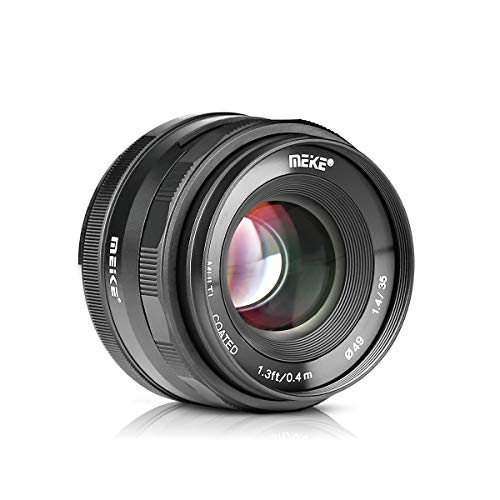
The Meike 35mm f/1.4 Large Aperture is a budget-friendly fast prime designed for Micro Four Thirds cameras. It supports a broad compatibility range and offers a bright f/1.4 aperture that enables low-light shooting and strong subject separation. Lens design emphasizes a wide aperture for smooth background blur and portrait-friendly rendering. The manual focus design requires your camera to be set to M mode or to use lens release as specified for certain bodies, but it remains a compelling option for those seeking affordable speed.
Key considerations:
- Pros: exceptionally bright at a low price; compact and lightweight for a fast prime; broad compatibility with MFT bodies.
- Cons: manual focus only; requires camera setup adjustments on some models; build quality varies by batch.
- Best used for: indoor photography, portraits, and creative night shots on a budget.
Meike 35mm f/1.7 Manual Focus

This Meike 35mm f/1.7 is a manual focus prime designed for Micro Four Thirds cameras. It lists compatibility with a broad range of Olympus and Panasonic bodies and features a fast f/1.7 aperture suitable for indoor and low-light photography. The lens design focuses on a compact footprint with a 35mm equivalent focal length that’s versatile for street and portrait work. As with other manual lenses, accurate focusing relies on technique and camera settings adjustments.
Key considerations:
- Pros: affordable fast prime; compact for travel; broad camera compatibility.
- Cons: manual focus only; potential for alignment and focusing challenges for beginners; some model variations exist.
- Best used for: creative portraits, street scenes, and travel photography with a flexible price point.
Sigma 56mm f/1.4 DC DN | C for Micro 4/3

The Sigma 56mm f/1.4 DC DN | C is a compact prime designed for Micro Four Thirds with a bright focal length that’s ideal for portraits and close-up work. The lens emphasizes high image quality and a smooth autofocus experience, which can be advantageous for video and stills alike. The design focuses on delivering sharp detail and strong subject isolation with a natural perspective for portraiture on MFT bodies.
Key considerations:
- Pros: excellent portrait-friendly focal length; strong optical performance for its class; compact for a fast prime.
- Cons: mid-tele range may be less flexible for wider scenes; autofocus performance depends on body integration.
- Best used for: head-and-shoulders portraits, fashion detail, and creative close-ups.
Olympus M. Zuiko Digital 45mm f/1.8

The Olympus M. Zuiko Digital 45mm f/1.8 is a compact, portrait-oriented prime with a field of view close to 90mm on full-frame terms. Its bright f/1.8 aperture enables strong subject isolation and attractive background blur, while delivering crisp image quality with good contrast. The lens suits travel, street, and portrait photography, offering a light footprint for daily carry. Optical performance is enhanced by modern lens elements and coatings that control flare and aberrations.
Key considerations:
- Pros: compact and lightweight; attractive bokeh; good sharpness across the frame.
- Cons: fixed focal length limits flexibility; plastic construction may feel less premium than higher-end options.
- Best used for: portraits, street photography, and general-purpose prime work on a budget.
Buying Guide: Key Purchase Considerations for Budget Micro Four Thirds Lenses
-
<liFocal length and use case: Prioritize focal lengths that match your photography style. For portraits, primes around 25-45mm (in MFT terms) are common; for travel and versatility, a mid-zoom like 40-150mm covers a broad range without changing lenses often.
- Aperture performance: A fast aperture (f/1.4–f/1.8) helps in low light and creates shallow depth of field. Budget lines often trade some sharpness wide open for price, so check sample images in reviews.
- Autofocus versus manual: Budget options may lean toward manual focus or basic AF performance. For video or fast action, prioritize lenses with reliable AF and quiet operation.
- Build and weight: Compact lenses are ideal for travel, but verify durability. Weather sealing is rare in budget lines; handle with care in challenging conditions.
- Optical stabilization: Lenses with built-in stabilization help in low light and handheld video, but check body stabilization compatibility to avoid redundancy.
- Compatibility and availability: Ensure the lens is widely supported on your camera body, and consider future upgrades to bodies without changing lenses.
- Value proposition: Compare price-to-performance. A slightly pricier lens with better image quality and focus behavior can be a better long-term value than the cheapest option.
In summary, the lenses listed provide a range of budget-friendly choices for Micro Four Thirds users, from fast primes to versatile zooms. When selecting, weigh your primary shooting scenarios—portraits, street photography, travel, or video—against the constraints of manual focus or slower AF. With careful choice, you can assemble a capable, affordable MFT lineup that covers most common photographic needs.