If you’re looking to turn cherished 35mm slides into accessible digital files, this guide highlights five reliable scanners and viewers designed for different needs. The best options vary by whether you want a built‑in screen, standalone operation, or phone integration. This selection targets buyers who want quick, practical conversions for family memories, school projects, or hobbyist archives. The following table summarizes each product’s core strengths to help you decide at a glance.
| Product | Best For | Key Benefit | Limitations |
|---|---|---|---|
| KODAK Slide N SCAN | All‑in‑one digitizing with a big display | 5” LCD for immediate preview | Requires SD card (not included) |
| DIGITNOW! 135 Film Negative Scanner | Standalone, no computer needed | High‑resolution 1800DPI | Manual feeder may slow batch work |
| Wolverine Titan 8‑in‑1 | Multi‑format versatility | HDMI output for TV viewing | Basic built‑in screen, HDMI output adds setup |
| ION Slides 2 PC | Budget, quick transfers | 5MP with simple software | Requires PC access |
| DGODRT Mobile 35mm Scanner | Phone‑centric editing on the go | App editing and sharing | Mobile‑only workflow |
KODAK Slide N SCAN Film & Slide Scanner

The KODAK Slide N SCAN is designed for rapid digitization of 135, 110, and 126 film types, including their slides. It offers a built‑in 5” LCD screen for on‑device viewing and editing, plus direct saving to an SD card (card not included). This makes it well suited for collectors who want to preview and curate memories without a computer. The 1422MP digital film scanning capability is a broad description of its image pipeline, aimed at straightforward digitization rather than ultra‑premium results. Best for households that want a simple, all‑in‑one unit with a viewable gallery on the device. Caution: SD card compatibility is required to store files, and a separate card is needed to complete the workflow.
Who it’s best for: Families preserving old color and black‑and‑white slides; casual users who value a built‑in display and easy sharing. Why chosen: It’s one of the few options offering a large screen that doubles as a digital frame and gallery mode, which aids quick selection before saving or sharing.
DIGITNOW! 135 Film Negative Scanner

The DIGITNOW scanner is a compact, standalone unit designed for quick digitization of 35mm negatives and slides. It includes a slide feeder and supports up to 1800DPI, transferring files to an SD card or computer. This is a strong choice for users who want a straightforward, on‑device scanning process without needing to connect to a PC for basic operations. A potential limitation is the feeder’s capacity and the reliance on the stand‑alone workflow, which can be slower for large batches.
Who it’s best for: Hobbyists and casual users who want a simple, no‑frills device for occasional slide scanning. Why chosen: Its adjustable rapid slide feeder helps keep the process moving, and JPEG outputs make file handling easy for sharing or archiving.
Wolverine Titan 8‑in‑1 High Resolution Converter
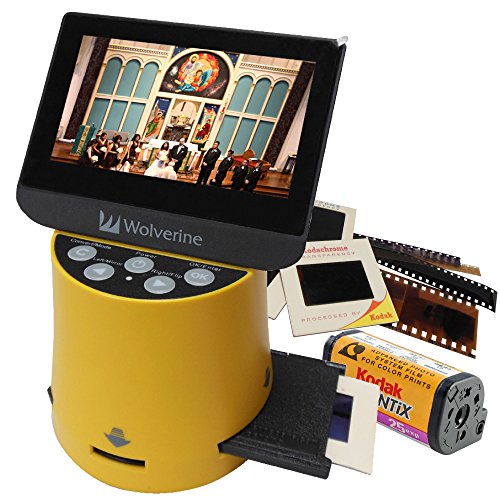
The Wolverine Titan 8‑in‑1 handles 35mm, 127, 126, 110, and APS formats, delivering a quick three‑second conversion to digital. It features a 4.3″ color display, with HDMI output enabling higher‑resolution viewing on a television or monitor. This device is better for users who want broad format support in one unit and the option to view photos on a larger screen. A caveat is that the built‑in screen is basic; for detailed edits, you’ll likely rely on a larger display via HDMI.
Who it’s best for: Archivists who own mixed film formats or want a single device for multiple slide sizes. Why chosen: Its wide compatibility and external HDMI output provide flexible viewing options, useful for family gatherings or exhibitions.
Ion Audio SLIDES 2 PC

ION Slides 2 PC focuses on transferring 35mm negatives and slides to a PC with simple software for editing, archiving, and printing. It delivers 5MP high‑resolution scans and is designed for straightforward workflow with a quick, one‑step scan process. The main limitation is the dependence on PC software for the editing and management tasks, which may slow users seeking a standalone option.
Who it’s best for: Computer‑oriented users who want a fast connection to their PC for batch processing and editing. Why chosen: Its direct transfer to a computer and included software make it convenient for organized digital archives.
Mobile Film Scanner 35mm (DigitPro)

The DigitPro Mobile Film Scanner emphasizes one‑touch digitization and direct smartphone saving. It’s compatible with all 35mm film types and uses a built‑in battery, making it highly portable for on‑the‑go digitization without external power. The built‑in LED backlight improves clarity for difficult negatives. A limitation is that the scanning workflow relies on a mobile app for editing and saving, which may require additional steps on some devices.
Who it’s best for: On‑the‑go digitizers and travelers who want a compact device that feeds directly into a smartphone gallery. Why chosen: Portable, battery‑powered use with a straightforward, app‑driven workflow suits quick memory preservation anywhere.
Mobile Film Scanner for iPhone and Smartphone
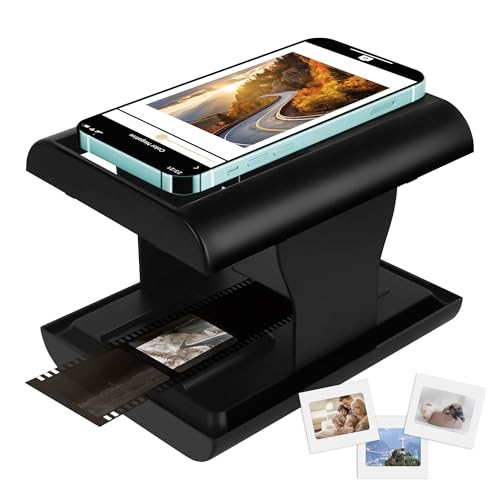
This DGODRT model caters to iPhone and Android users looking to convert slides to JPG with the help of a dedicated app. It emphasizes photo editing features like cropping and color adjustments, and enables easy sharing on social platforms. A practical limitation is the reliance on an app ecosystem for core editing tasks, which may affect performance on older devices.
JJC 50‑Pack 35mm Slide Mounts

These slide mounts are designed to hold 35mm slides securely during scanning or viewing. They are helpful when digitizing batches where the slides need to stay flat and aligned. The two‑piece snap‑in design reduces handling risk, and the ABS plastic construction keeps the mounts durable. Limitation: Mounts require careful alignment to avoid edge distortion during scanning.
JJC 35mm Slide Mount, Glassless

This glassless 35mm slide mount from JJC keeps slides flat and aligned with a 36x24mm viewing window. Designed to fit standard projectors, scanners, and viewers, it minimizes the risk of breakage and reduces preparation time. It’s ideal for those who want quick, tool‑free loading and reliable alignment for digitization. Limitation: Glassless design means less protection for the slide itself during handling.
Buying Guide: How To Choose The Right 35mm Slide To JPG Solution
- What format range do you own? If you have a mix of 35mm negatives and various slide formats, a multi‑format unit (like the Wolverine Titan) may offer the most flexibility.
- Is a built‑in screen important? If you want to preview and curate on device, a model with a display (like the KODAK or Wolverine) can streamline decision‑making before saving.
- Do you prefer standalone scanning or PC workflow? Standalone machines suit quick archiving on their own, while PC‑based options are helpful when you want scrupulous editing and organized catalogs.
- How important is HDMI or TV viewing? If you plan to show slides to others on a bigger screen, HDMI output enables high‑definition playback from the scanner.
- What batch size do you expect? Feeder throughput and card storage limits determine how quickly you can digitize larger collections. Consider accessories like additional slide mounts to keep slides stable during scans.
FAQ
- What file format is produced by most of these devices? A: JPEG is the common output format for these scanners, making it easy to edit and share on most devices.
- Do I need a computer to use these scanners? A: Some models are standalone and do not require a PC, while others transfer files to a computer or rely on a companion app.
- Will these work with both color and black‑and‑white slides? A: Most models support both color and grayscale slides, but check the device’s specifications for any restrictions.
- Is a higher DPI always better for digitization? A: Higher DPI can capture more detail, but may result in larger file sizes. Choose a resolution that fits your archival needs and storage capacity.
- Are replacement components like SD cards included? A: Cards are commonly not included, so you’ll need to supply a compatible SD/SDHC card for storage.
- Can I view scanned images on a TV? A: Several models offer HDMI output, enabling direct viewing on a television or monitor.