When you want reliable deer monitoring without WiFi, these no-WiFi trail cameras deliver sharp day and night footage, quick triggers, and rugged durability. This guide highlights five strong picks ideal for hunters, wildlife observers, or property owners who prefer offline data capture. Each option is chosen for clear images, solid battery life, and a stable, non-cellular setup that minimizes distractions for wildlife. The table below summarizes the five best no-WiFi models to help you compare at a glance.
| Product | Brand | Key Benefit | Best For |
|---|---|---|---|
| Meidase P70 | Meidase | 64MP photos, 1296p video, no-glow night vision | Wildlife observers needing high detail |
| Meidase 2 Pack P70 | Meidase | Two cameras, same 64MP/1296p setup | Property monitoring with dual angles |
| WOSODA Mini Trail Camera 4 Pack | WOSODA | Compact, 24MP/1080p, four-pack value | Budget-friendly multi-site use |
| GardePro E5S | GardePro | 64MP photos, 1296p video, IP66 rugged | Harsh weather environments |
| KJK Trail Camera | KJK | 36MP/2.7K, fast trigger, 130° view | Wide-area coverage and clear nighttime captures |
Meidase P70 Non-Cellular Trail Camera
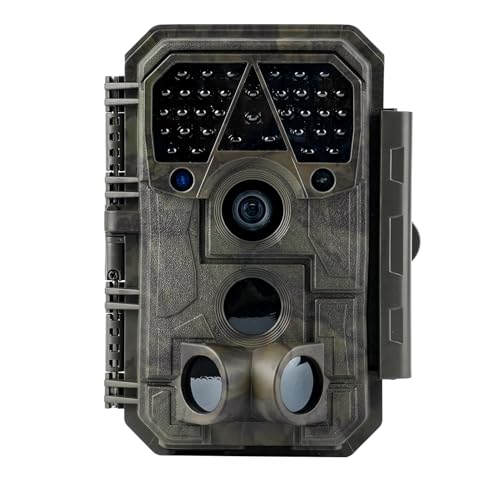
The Meidase P70 offers crystal-clear 64MP photos and 1296p HD video with a fast 0.1-second trigger. Non-cellular operation and No-Glow infrared night vision minimize disturbance to wildlife. This model is best for wildlife watchers and hunters who prioritize high image detail and nighttime clarity without cellular features.
Best for: Wildlife observers and hunters who want extremely detailed daytime and nighttime footage without relying on cellular networks.
Why chosen: Combines high-resolution stills with smooth video, a bright f/1.6 aperture, and a 100-foot no-glow night vision system for clear nighttime activity.
Caution: Non-cellular cameras require SD card access; ensure you have a plan to retrieve footage.
Meidase 2 Pack P70 Non-Cellular Trail Cameras

This 2-pack provides twice the monitoring capability with the same 64MP/1296p setup. The pair is ideal for covering different trail approaches or securing opposite sides of property lines. No WiFi means straightforward operation and fewer things to manage in the field.
Best for: Property owners or hunters needing two cameras for broader coverage on a budget.
Why chosen: Two identical units simplify deployment, and the no-glow night vision keeps nighttime activity discreet.
Caution: Ensure both cameras have enough SD storage for extended trips; plan for regular data retrieval.
WOSODA Mini Trail Camera 4 Pack

WOSODA’s compact mini cameras deliver 24MP photos and 1080p video. The 0.3-second trigger and four-camera bundle offer solid value for multi-site surveillance or scouting across a wide area. The cameras run on AA batteries, with SD cards included.
Best for: Budget-conscious buyers seeking multiple units for broad coverage, or quick field scouting without WiFi.
Why chosen: The fast trigger ensures events are captured, and the small form factor makes concealment easier.
Caution: The device requires SD card access to view files; no direct phone viewing.
GardePro E5S Trail Camera

The GardePro E5S captures 64MP photos and 1296p HD videos with a no-glow night vision system and a 100-foot effective range. It’s non-cellular and emphasizes rugged reliability with IP66 weather resistance. The model is positioned for users who need durable field performance in challenging weather.
Best for: Outdoor enthusiasts in exposed environments who require weather resistance and clean daytime/nighttime footage.
Why chosen: The combination of high-resolution imaging, no-glow night vision, and rugged build suits long-term outdoor use.
Caution: As a non-cellular camera, data retrieval still requires manual SD card access.
KJK Trail Camera 36MP 2.7K

The KJK Trail Camera delivers 36MP photos and 2.7K videos with a fast 0.1-second trigger and a wide 130-degree field of view. Its low-glow 850nm LEDs support better stealth in the dark, while a built-in 2.0” TFT screen helps in quick on-site reviewing. This is a practical pick for wide-area monitoring without cellular features.
Best for: Hunters or landowners needing broad coverage and quick on-site viewing without network features.
Why chosen: The combination of strong daytime clarity and effective nighttime visibility makes it a versatile no-WiFi option.
Caution: The 2.0” screen is handy but relatively small for detailed on-site reviews; plan for SD card transfers if you need larger previews.
Buying Guide: No-WiFi Deer Cameras
- What to look for in a no-WiFi trail camera: High-resolution images (prefer 64MP or higher), reliable low-light performance, and a fast trigger time to avoid missed moments.
- Night vision quality matters: No-glow infrared helps capture nocturnal behavior without startling animals. Look for 940nm LEDs and a bright aperture.
- Trigger speed and recovery: A 0.1–0.3 second trigger is typical for responsive wildlife capture. Ensure the camera can rebound quickly between captures.
- Power and durability: Non-cellular cameras rely on batteries and SD storage. Check battery life, sleep modes, and IP-rated housings for outdoor conditions.
- Storage and data retrieval: Since there’s no cellular transmission, plan for regular SD card checks or removable storage strategies.
- Field setup: Consider lens type, mounting options, and weather resistance. IP66 or IP66+ ratings indicate strong durability in rain and dust.
- Coverage planning: For multi-site setups, a two-pack or four-pack option can maximize area coverage and reduce blind spots.
Frequently Asked Questions
- Q: Do no-WiFi trail cameras require a cellular plan? A: No. These models operate without cellular connectivity, saving on data plans.
- Q: How do I retrieve footage without internet? A: Footage is stored on an SD card and accessed by removing the card and viewing on a computer or card reader.
- Q: What is “No-Glow” night vision? A: No-Glow uses infrared LEDs that illuminate without producing visible light, reducing wildlife disturbance.
- Q: Are these cameras weatherproof? A: Many models carry IP-rated housings (such as IP66 or IP66+), suitable for rain and dust.
- Q: Can I use multiple cameras on the same property? A: Yes, combining two or more no-WiFi cameras helps cover more trails and angles.
- Q: What’s the typical trigger speed for wildlife cameras? A: Trigger speeds commonly range from 0.1 to 0.3 seconds in modern no-WiFi models.