When you need to digitize old memories, a dedicated film scanner with a large screen and easy loading is ideal. These models are best for everyday collectors, families digitizing old photos, and hobbyists who want a quick, standalone solution without a computer. The following selections prioritize clear displays, reliable slide/negative handling, and straightforward saving to SD cards or internal memory. A quick buyer’s guide and FAQ follow to help you choose confidently.
| Product | Best For | Key Benefit | Limitations |
|---|---|---|---|
| KODAK Slide N SCAN | Families and hobbyists | 5″ LCD, quick-load tray | Requires SD card (not included) |
| DigitPro Photo Scanner | Non-tech users | One-Touch scanning, stand-alone | Limited built-in memory |
| DigitPro 35mm/Slide Scanner | Archivers | Supports multiple formats, easy transfer | External SD card needed |
| Magnasonic All-in-One | Comprehensive kit users | Built-in memory and HDMI output | Screen not the largest |
| KODAK Slide N Scan Max | Heavy slide collections | 7″ tiltable LCD, rapid feeding | Pricing varies by model |
KODAK Slide N SCAN Film & Slide Scanner

The KODAK Slide N SCAN is a compact, all-in-one option designed for quick digitization of 135, 110, and 126 film and slides, with a built-in 5” LCD for on-device viewing and editing. It’s best for casual users who want an independent scanner capable of direct SD card saving. The 1422MP capture spec emphasizes high resolution for preserving color and detail, while the large display helps with immediate review before sharing. A caution: SD card (not included) is required to store scans, and some users may prefer a larger screen for precise color work.
Who it’s best for: Families preserving a mix of color and black‑and‑white slides, and hobbyists who value an integrated viewing screen over a PC workflow. Why selected: It combines ease of use (quick-feed tray, included adapters) with a reasonably large display, making it a practical all-in-one device for quick digitization at home.
DigitPro Photo Scanner and Film Digitizer
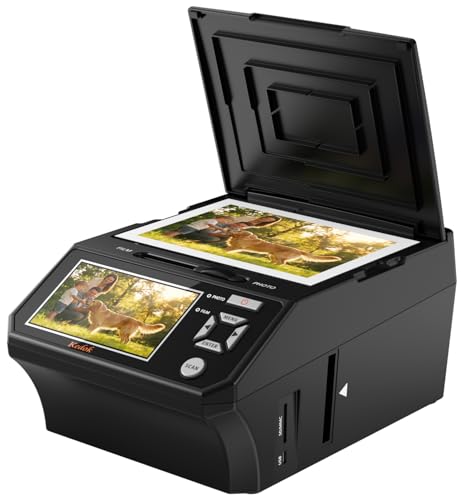
DigitPro’s 5” screen model targets users who want a straightforward, standalone scanning experience. It supports 35mm/110 negatives, 135 and 110 slides, and 3R–5R prints, with an 8GB SD card included in some listings. The large display simplifies live review, while the One-Touch approach keeps the process simple for parents and grandparents digitizing photo collections. Limitation: built-in memory can be modest, so you may need a sizable SD card for many scans.
Who it’s best for: Beginners and non-tech users who want a single device for multiple formats. Why selected: Its all-in-one focus, large LCD, and intuitive controls make it a strong first scanner for mixed media archives.
DigitPro Film And Slide Scanner – 22MP

This all-in-one DigitPro model emphasizes 22MP output with a broad format range, including 35mm, 126, 110 negatives, and 50mm slides. It also supports Super 8 film in some listings and offers an internal memory with the option to expand via SD card (up to 64GB, not included). Its 5” LCD makes real-time preview and quick edits accessible, reducing the need for a computer. Caution: ensure you have an SD card ready for large batches, as built-in memory is limited.
Who it’s best for: Archivists digitizing mixed media collections where 35mm and older formats coexist. Why selected: Strong format compatibility and a large screen facilitate efficient conversion and quick sharing.
Magnasonic All-in-One 24MP Film Scanner

Magnasonic’s model concentrates on high resolution with 24MP output and a 5″ LCD for direct viewing. It supports 35mm, 110, 126, and Super 8, plus 135/126/110 slides, with built-in memory and an SD card slot (up to 128GB). The HDMI output option allows you to view scans on a television or monitor, which is helpful for flagging issues before saving. Limitation: while the built-in memory is convenient, larger archives benefit from external storage.
Who it’s best for: Users who want a high-resolution standalone device with flexible viewing options, including TV display. Why selected: The combination of 24MP output and HDMI connectivity enables versatile viewing and sharing outside the device.
KODAK Slide N Scan Max Digital Film Scanner

The Slide N Scan Max is engineered for larger slide libraries, featuring a tiltable 7” LCD for comfortable viewing and a 13MP sensor for capture. The 7-inch screen helps with careful editing and quick previews, while the quick-feed tray streamlines processing. This model is best for those with curated slide collections who want easy previewing and a built-in gallery mode. Caution: the 7” screen adds weight and size, so it may be less portable than smaller units.
Who it’s best for: Serious slide collectors and educators digitizing sizable slide decks. Why selected: Large tiltable screen and efficient feed system support high-volume digitization with quality previews.
PORTTA Film Scanner with 5″ LCD

PORTTA’s model combines 16MP or 22MP output with a 5″ LCD for real-time review and alignment. It can digitize 135, 126, 110 film plus Super 8 (photo only) and supports SD cards for storage. The ability to choose between 16MP and 22MP offers flexibility for budget-conscious users who want adjustable resolution. A limitation is the potential variability in color accuracy across different batch scans; color calibration may be necessary.
Who it’s best for: Home archivists seeking a versatile scanner with optional higher resolution output and easy SD storage. Why selected: Dual resolution options and a bright screen make it adaptable to different project needs.
Buying Guide: Key Considerations For Choosing A Digital Film Scanner
- Format compatibility: Ensure the scanner supports the film sizes you own (35mm/135, 110, 126, and slides). Some models also handle Super 8 prints.
- Display size and usability: A larger, tiltable, or high-contrast LCD simplifies framing, cropping, and color checks, reducing post-processing time.
- Storage options: Look for built-in memory plus SD card support. Card capacity matters for large archives; check FAT32/EXFAT compatibility.
- One-Touch vs. software-driven: Stand-alone scanners with one-touch scanning are easiest for quick work; PC-connected options may offer more editing features but require a computer.
- Output quality: Resolution specs (MP) indicate potential detail, but processing, color fidelity, and noise handling affect final results. Consider models with better dynamic range for color slides.
- Ease of loading: Quick-feed trays and adapters reduce handling time and minimize frame repositioning during digitization.
- Connectivity: HDMI output is helpful for large-screen previews; USB allows transfer to a computer or other devices.
- Price vs. volume: For large collections, a mid- to high-resolution model with efficient feeding and reliable previews helps justify cost through time savings.
- Future-proofing: Check whether models offer firmware updates or compatibility with newer SD formats to extend usefulness.
Frequently Asked Questions
- What resolution is enough for digitizing old negatives?
12–22MP is generally sufficient for standard photo-size prints; higher MP can improve detail for larger prints or archival purposes. - Do I need a computer to use these scanners?
Some are standalone with internal memory and SD card options; others require a computer for editing or transfer. - Can I view scans on a TV or monitor?
Several models offer HDMI output or TV-out features for bigger viewing without a PC. - Is a larger screen always better?
A larger screen helps with framing and color checks, but portability may be reduced. Choose based on your desk setup and workflow. - Are all formats supported by one model?
No; check each model’s exact format support (35mm, 110, 126, slides, and Super 8 where applicable) before buying. - What storage capacity should I plan for?
If digitizing large archives, pair a scanner with a high-capacity SD card (64GB or more) and consider external backup for long-term preservation.