Answer: For converting 8mm and Super 8 film to digital, stand-alone digitizers with built-in screens are the simplest, most reliable option. They let you scan frame-by-frame without a computer and save to SD cards. The top picks below suit different needs—from big-screen viewing to compact, portable use. This guide highlights five stand-alone digitizers that support 3″, 5″, 7″, and 9″ reels, with options for 1080p output and easy transfer to TVs or SD cards.
Buyer profile summary:
– Best for easy, computer-free digitizing on large reels: Kodak REELS 8mm & Super 8 Films Digitizer Converter with a 5” screen.
– Best value with a built-in screen and simple SD saving: eyesen 8mm & Super 8 Film to Digital Converter (2.4″ screen).
– Best for compact, portable setup with frame-by-frame HD: eyesen Pro Film Digitizer (2.4″ screen).
– Best for budget-friendly stand-alone digitizing with direct SD export: Magnasonic Super 8/8mm Film Scanner (2.3″ screen).
– Best for budget-friendly, all-in-one stand-alone option with broad reel support: USHNIH 8mm & Super 8 Film to Digital Converter (2.4″ screen).
| Product | Reel Range | Output | Screen | Storage |
|---|---|---|---|---|
| KODAK REELS 8mm & Super 8 Films Digitizer | 3”–9” | 1080p MP4 | 5” | SD Card |
| 8mm & Super 8 Film to Digital Converter (eyesen) | 3”–9” | 1080p MP4 | 2.4” | 32GB SD |
| eyesen 8mm & Super 8 Reels to Digital MovieMaker Pro | 3”–9” | 1080p MP4 | 2.4” | 32GB SD |
| Magnasonic Super 8/8mm Film Scanner (FS81) | 3”–7” | 1080p MP4 | 2.3” | SD Card up to 32GB |
| USHNIH 8mm & Super 8 Film to Digital Converter | 3”–9” | 1080p MP4 | 2.4” | 32GB SD |
KODAK REELS 8mm & Super 8 Films Digitizer

The Kodak REELS Digitizer is a stand-alone device that converts film strips into digital MP4 files with a simple frame-by-frame process. Best for filmmakers who want to transfer 3″, 5″, 7″, 8″, and 9″ reels directly to an SD card without a computer. It features an 8.08-megapixel sensor and a 5” onboard LCD for live preview, with oversize controls for frame alignment and exposure adjustments. It’s suited for users who value a large built-in display and straightforward operation. A potential limitation: the output is video-only (no audio), so it’s best for silent archival or video projects.
8mm & Super 8 Film to Digital Converter (eyesen)

Eyesen’s digitizer offers a fully automated frame-by-frame transfer up to 9″ reels with 1080p output. It has a built-in 2.4″ LCD and saves directly to a 32GB SD card included with the package. This model is best for users who want a compact screen and a ready-out-of-the-box SD card solution. The built-in display assists with precise frame alignment, but like most standalone devices, users should be mindful of potential slight color shifts compared to original film stock.
eyesen 8mm & Super 8 Reels to Digital MovieMaker Pro

The Eyesen MovieMaker Pro is a more feature-rich variant of eyesen’s stand-alone digitizers, with a 2.4″ screen and 1080p output. It supports reels from 3″ to 9″ and includes a 32GB SD card for immediate saving. It’s ideal for enthusiasts who want reliable frame-by-frame transfers with straightforward TV viewing via an included cable. Caution: ensure the SD card capacity is not exceeded during long sessions.
Magnasonic Super 8/8mm Film Scanner (FS81)
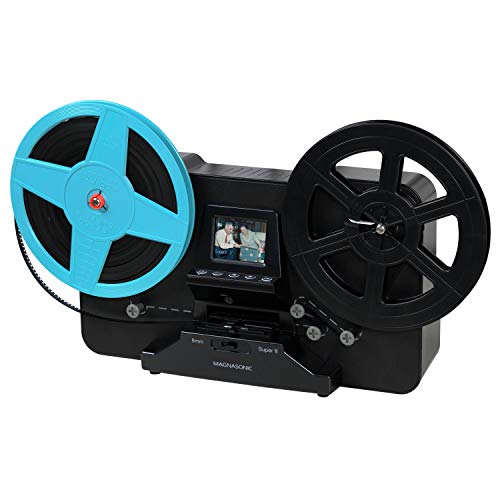
Magnasonic’s FS81 offers a budget-friendly way to convert 3″, 5″, and 7″ reels into digital MP4 video. It includes a 2.3″ LCD screen and RCA output for TV viewing, with SD card storage up to 32GB. Best for casual archiving or quick digitization without extra accessories. Limitations include a smaller screen versus competitors and no sound capture, which may affect some archival needs.
USHNIH 8mm & Super 8 Film to Digital Converter

USHNIH’s stand-alone digitizer supports 3″–9″ reels with a 2.4″ screen and saves to SD cards up to 32GB. It is a practical option for families seeking a straightforward, no-computer workflow for preserving memories. A possible caveat is that some users may prefer a larger display for easier frame-by-frame edits, depending on their viewing setup.
Buying Guide
What to consider when digitizing Super 8 film:
- Standalone vs. computer connection: Standalone devices save directly to SD cards, avoiding software setup. If you want to edit on a computer later, consider models that support transfer to PC via USB.
- Reel compatibility: Ensure the device supports your reel sizes (3″, 5″, 7″, 9″).
- Output format and quality: Most devices record 1080p MP4; confirm if you need higher resolution or different formats.
- Screen size for live viewing: A larger built-in display helps with frame alignment and exposure during scanning.
- Storage capacity: Check SD card class and maximum size; many devices include a 32GB SD card, which is often adequate for short reels.
- Sound handling: If your original film has sound, verify whether the device preserves audio or if the film is silent in output.
- Ease of use: Look for simple on-device controls and auto-scan features to minimize manual adjustments.
FAQ
- Q: Do these devices require a computer to digitize film? A: Most listed models are stand-alone and save to SD cards, with optional computer transfer if needed.
- Q: Can I digitize up to 9″ reels with all models? A: The Kodak REELS, eyesen, and USHNIH models support up to 9″ reels; others may vary by model.
- Q: Is audio preserved in the digital files? A: Some devices digitize video without sound; check product notes for each model.
- Q: What media do I store the digital files on? A: SD or SDHC cards are standard; many models include a 32GB card.
- Q: Which device is best for beginners on a budget? A: Magnasonic FS81 offers a cost-effective option with essential frame-by-frame digitizing features.
- Q: Can I view the saved files on a TV? A: Yes, most units provide RCA or HDMI outputs or direct viewing via SD cards on compatible TVs.