Wide-angle lenses expand perspective, framing landscapes, interiors, and architectural scenes with dramatic depth. For Nikon’s DX-format (APS-C) bodies, choosing the right wide-angle or ultra-wide zoom can boost scene capture, perspective, and overall image quality. This guide highlights five top DX-friendly options, spanning Z-series DX lenses and traditional F-mount DX zooms, plus a versatile prime. Each option balances field of view, image stabilization, and autofocus performance to suit different shooting styles—from travel and landscapes to street photography and video work.
To help you compare at a glance, the table below lists the chosen lenses, their mount type, and general focal ranges. Note that some options use Nikon’s Z-mount for DX-series mirrorless bodies (with native DX-wide coverage), while others are F-mount DX lenses designed for Nikon’s DSLR line. All selections are optimized for DX sensors, delivering effective focal lengths that match the DX field of view on your camera.
| Product | Brand | Focal Range | Mount |
|---|---|---|---|
| Nikon NIKKOR Z DX 12-28mm PZ VR Ultra-Wide Zoom | Nikon | 12-28mm | Z DX |
| Nikon NIKKOR Z DX 24mm f/1.7 Prime | Nikon | 24mm | Z DX |
| Nikon NIKKOR Z DX 18-140mm VR All-In-One Zoom | Nikon | 18-140mm | Z DX |
| Nikon AF-S DX NIKKOR 10-24mm f/3.5-4.5G (Renewed) | Nikon | 10-24mm | F-mount DX |
| Nikon AF-S DX NIKKOR 18-105mm VR (Renewed) | Nikon | 18-105mm | F-mount DX |
Nikon NIKKOR Z DX 12-28mm PZ VR Ultra-Wide Zoom

The Nikon NIKKOR Z DX 12-28mm PZ VR is a native Z-mount lens designed for DX-format Nikon Z-series cameras. Its ultra-wide 12-28mm range covers dramatic landscapes, architecture, and interiors while maintaining a compact footprint. A standout feature is the Power Zoom (PZ) with multiple zoom speeds—ideal for smooth, cinematic video and quick framing changes during shoots. The lens relies on built-in VR to stabilize handheld footage and stills, helping you keep scenes clean in low light or when shooting at slower shutter speeds. It’s well-suited for creators who want flexibility without swapping lenses frequently.
Constructed for the Z DX ecosystem, this lens delivers reliable autofocus performance and solid edge-to-edge sharpness across its range. While its primary strength is wide coverage, you’ll find the 28mm end useful for more natural street and architectural views. The lens isn’t designed for macro work, but its wide angle adds dramatic perspective to landscapes and cityscapes. If you shoot travel vlogs or scenic footage on a Z-series DX body, the 12-28mm PZ VR offers a compelling blend of speed, stabilization, and cinematic control.
Nikon NIKKOR Z DX 24mm f/1.7 Prime

The Nikon NIKKOR Z DX 24mm f/1.7 is a compact prime designed for Nikon Z DX bodies. With a fast f/1.7 aperture, it excels in low-light situations and offers a shallow depth of field when needed, while still delivering a natural perspective close to a classic 35mm lens on DX sensors. Its short minimum focus distance (about 4.7 inches) enables close-up framing with a sharp, distortion-free field of view. The lens is optimized for video use, providing smooth autofocus and minimal focus breathing. It’s an excellent everyday prime for street, documentary, and travel photography on Z-series DX cameras.
Performance benefits include bright brightness, crisp center sharpness, and pleasing bokeh when shooting subjects at closer distances. While not a zoom, it pairs well with other DX zooms in a travel kit to give you a fast, lightweight option for landscapes, cityscapes, and environmental portraits. If you’re prioritizing low-light capability, color rendition, and compact form, this prime is a strong candidate for a DX Z-mount setup.
Nikon NIKKOR Z DX 18-140mm VR All-In-One Zoom

The Nikon NIKKOR Z DX 18-140mm VR is a versatile all-in-one zoom tailored for DX-format Z-series cameras. With a broad focal range from wide-angle to telephoto, it covers landscapes, architecture, portraits, and travel shots without changing lenses. Built-in VR helps stabilize handheld photography and video, while the zoom’s reach makes it a compelling travel lens that can replace several other lenses. The lens balances performance and convenience, though it remains a bulkier choice compared with lighter primes. It’s particularly well-suited for photographers who want a single-lens solution for diverse DX Z-mount shooting scenarios.
When shooting at wider angles, expect some barrel distortion in extreme ends, which is typical for ultra-wide angles. The 18-140mm range reduces the need to carry multiple lenses, and the VR helps in low light or slower shutter speeds. For everyday shooters, travelers, and videographers on a DX Z-mount body, this lens offers robust flexibility with dependable autofocus and optical stabilization.
Nikon AF-S DX NIKKOR 10-24mm f/3.5-4.5G (Renewed)

The AF-S DX NIKKOR 10-24mm f/3.5-4.5G is a classic ultrawide zoom designed for Nikon’s DX-format DSLRs. With a 10-24mm range, it delivers expansive views ideal for landscapes, interiors, and architectural photography. The internal focusing mechanism and the AF-S Silent Wave Motor contribute to smooth, quiet autofocus, which is beneficial for both stills and video projects. Being a Renewed product, it includes original accessories and a 90-day warranty, offering a cost-effective way to access a proven ultra-wide option with Nikon electronics and build quality.
Consider this lens if you shoot with a Nikon DX DSLR and want serious wide-angle capability without stepping up to a dedicated prime. The notable trade-off is that it is bulkier and may require more careful handling in tight spaces. Overall, it remains a strong choice for landscape and architectural shooters who value a dedicated wide-angle perspective on a traditional DSLR body.
Nikon AF-S DX NIKKOR 18-105mm VR Lens (Renewed)
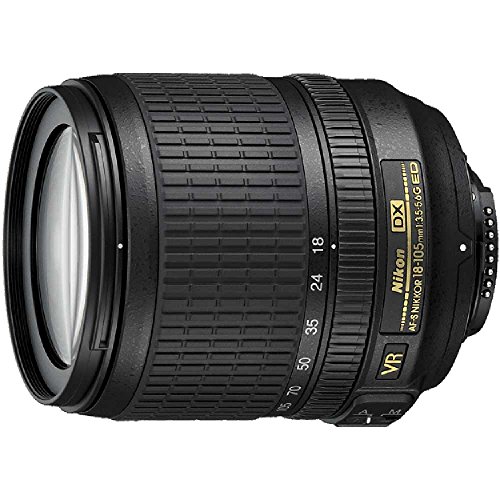
The AF-S DX NIKKOR 18-105mm VR is a versatile all-around zoom for Nikon DX DSLRs, covering a broad focal range from wide to short telephoto. It includes Vibration Reduction (VR) to help stabilize handheld photography in low light and at longer focal lengths. The 18-105mm range makes it a practical travel lens, capable of landscapes, portraits, and everyday scenes without swapping lenses. As a Renewed product, it provides a cost-effective path to a reliable zoom with the benefit of a warranty. It’s particularly suitable for casual shooters who want one lens to cover most subjects.
When framing wide scenes, expect some distortion at the extremes, a common trait of kit-like zooms. The lens’s weight and balance are reasonable for day-long shoots, and its autofocus performance aligns well with mid-range DX bodies. If you prioritize flexibility and value in a single-zoo solution for Nikon DX DSLRs, this lens delivers dependable performance for a wide variety of shooting scenarios.
Buying Guide: How to Choose the Best DX Wide-Angle Lens for You
Choosing the right DX wide-angle lens depends on your camera system, shooting style, and where you shoot most often. Here are key considerations to help you decide among DX and Z-DX options, plus practical trade-offs to weigh before purchasing.
- Mount compatibility: Nikon offers two main paths for DX lenses—F-mount DX zooms for DSLRs and Z-mount DX lenses for Nikon’s mirrorless DX cameras. If you shoot on a DSLR, prioritize F-mount DX lenses like the 10-24mm or 18-105mm. If you are on a Z-series DX body, consider native Z DX lenses (12-28mm, 24mm f/1.7, 18-140mm VR) for optimal autofocus and stabilization performance.
- Focal length range and use case: Ultra-wide zooms (10-24mm, 12-28mm) excel at landscapes, interiors, and real estate. Versatile all-in-one zooms (18-140mm, 18-105mm) reduce lens swaps and cover wide to moderate telephoto. A prime (24mm f/1.7) offers excellent low-light performance and compact size but lacks zoom flexibility.
- Aperture and low-light ability: Fast prime lenses (like f/1.7) provide better low-light performance and subject isolation but require more planning for composition. Slower zooms can still deliver sharp images in bright daylight but may struggle in dim scenes without higher ISO.
- Image stabilization: VR in Nikon’s DX lenses helps stabilize shots in low light or at slower shutter speeds. If you shoot a lot of handheld video or night landscapes, stabilization is a valuable feature to prioritize.
- Autofocus performance: For video and action, faster and quieter AF is beneficial. Z-mount lenses are designed with modern contrast-detection and AF systems in mind, providing smooth video focus transitions on newer cameras.
- Distortion and image quality: Wide-angle optics can exhibit barrel distortion at the extremes. Some lenses include better corrections in-camera or in post, while others require minor perspective adjustments in processing tools.
- Macro capability: If macro close-ups are important, consider lenses with macro compatibility or use dedicated macro attachments. Some wide-angle adapters offer macro portions, but results vary and add complexity to the optical chain.
- Weight, size, and portability: Travel and street shooters often prefer compact, lightweight lenses. Ultra-wide zooms and primes vary in heft; balance with your camera body to maintain comfortable handling.
- Budget and value: Renewed or refurbished lenses can offer significant savings while still delivering reliable Nikon optics. Compare warranty terms and included accessories to gauge overall value.
In practice, a mixed kit often works best: a native Z-DX wide or standard zoom for landscape and video on Z-series bodies, plus a compact prime for low-light street work, and a reliable F-mount zoom for DSLR bodies or if you already own F-mount glass. This approach balances image quality, flexibility, and cost, ensuring you’re prepared for most DX-format shooting scenarios without unnecessary gear.