Finding the right equipment to digitize 8mm film helps you preserve memories without a computer or complex setup. This guide highlights five reliable machines designed to convert 8mm and Super 8 reels into digital MP4 videos. The best-for buyers are cataloged to match needs such as stand-alone operation, LCD viewing, reel size support, and ease of use. Each option is evaluated for who benefits most and practical trade-offs to consider before purchase.
| Product | Best For | Reel Sizes Supported | Format |
|---|---|---|---|
| eyesen 8mm & Super 8 Film to Digital Converter (B097RMKXR1) | All-in-one stand-alone digitizing | 3”–9” | MP4 (1080P) |
| Magnasonic FS81 | Quick, screen-based previews | 3”–7” | MP4 (1080P) |
| eyesen FilmMaker Pro (B09SHJF767) | Frame-by-frame stand-alone capture | 3”–9” | MP4 (1080P) |
| USHNIH 8mm & Super 8 Film Digitizer | Frame-by-frame conversion with SD save | 3”–9” | MP4 (1080P) |
| Kodak SCANZA Digital Film & Slide Scanner | Versatile film formats and slides | 8mm, Super 8, 35mm, 126, 110 | JPEG (still frames) |
eyesen 8mm & Super 8 Film to Digital Converter

Reference features: Fully Automated Digitizer; converts 8mm and Super 8 reels to digital videos; supports up to 9″ reels at 1080P; built-in 2.4″ LCD or TV monitor viewing via TV cable; no computer required; saves to SD/SDHC up to 32GB (included).
Best for: Anyone seeking a complete, stand-alone solution with simple operation, especially for users who want direct-to-SD saving with an on-device preview.
Why selected: It combines full automation with a large reel size range and a built-in screen, reducing setup complexity. Caution: The included 32GB card may fill quickly with longer reels; plan to use a larger card if available.
Magnasonic Super 8/8mm Film Scanner (FS81)
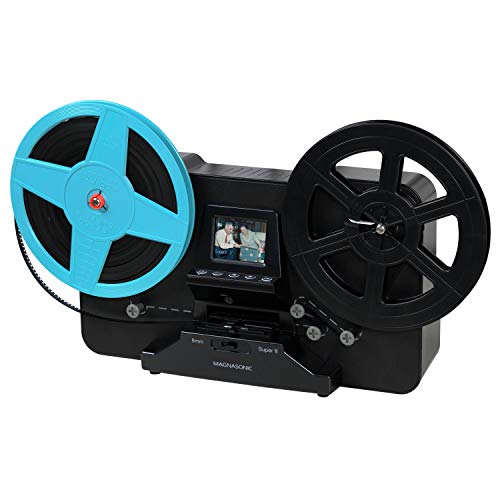
Reference features: Automatically converts 3″, 5″, and 7″ reels; playback on built-in 2.3″ LCD; view on TV via RCA output; saves to SD card up to 32GB (not included); no sound capture.
Best for: Quick digitization with an emphasis on direct playback and simple transfer, ideal for casual users who want a straightforward workflow.
Why selected: Its dedicated light-and-scan approach is user-friendly. Caution: It scans video only (no audio), which may be limiting for some projects.
eyesen FilmMaker Pro 8mm & Super 8 Reels to Digital

Reference features: Fully automated digitizer; supports 3”, 5”, and 9” reels in 1080P; built-in 2.4″ LCD or TV viewing; no computer needed; saves to SD/SDHC (32GB included).
Best for: Users who want a robust, all-in-one device with broad reel compatibility and frame-by-frame assurance.
Why selected: Strong reel-size range and user-friendly display. Caution: Check reel loading for tight cores to ensure smooth frames across longer sequences.
USHNIH 8mm & Super 8 Film to Digital Converter

Reference features: Stand-alone digital film converter; frame-by-frame HD conversion; saves to SD/SDHC (32GB included); supports reels up to 9″ with 1080P output; notes that sound may not be captured during conversion.
Best for: Archivists who want dedicated frame-by-frame control and a stand-alone workflow with on-device saving.
Why selected: Emphasizes frame-by-frame precision. Caution: Sound is not captured; plan to borrow external audio if needed for mixed-source projects.
Kodak SCANZA Digital Film & Slide Scanner
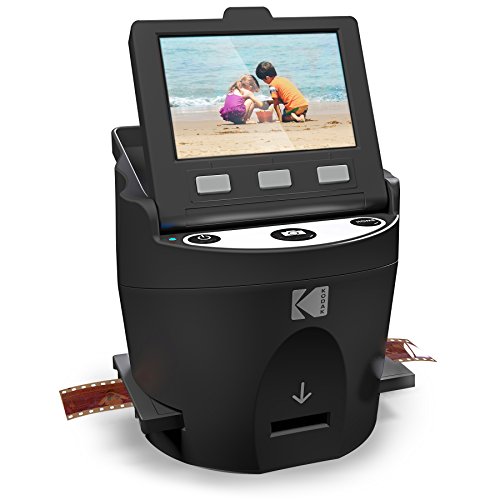
Reference features: Scans 35mm, 126, 110, Super 8, and 8mm film to JPEG; 3.5″ LCD display; includes multiple film inserts and adapters for fast, one-try scanning; user-friendly one-step scan and save.
Best for: Users who want a versatile device capable of handling both film and still-image formats, plus a bright display for immediate viewing.
Why selected: Broad format support and convenient adapters. Caution: Primarily outputs still images (JPEG) rather than moving video; not ideal if you require MP4 video output for all reels.
Buying Guide
What should you consider when choosing an 8mm film digitizer?
- Stand-alone vs. computer-based: If you want a simple, plug-and-play setup, prefer devices with built-in displays and SD card saving.
- Reel size compatibility: Look for devices that support 3″ to 9″ reels to cover most home movies.
- Output format: Decide whether you need MP4 video or JPEG still frames. Some devices produce MP4; others output stills or require a computer for video export.
- Image quality: Check sensor resolution and digital preservation features. Higher resolution generally yields better 1080P videos or clear still frames.
- Audio handling: If your reels include audio, ensure the device supports capturing sound or plan a separate audio transfer.
- Card capacity: Most units include a 32GB card. If you have long reels, consider larger cards to avoid frequent swaps.
- Future-proofing: A model with firmware updates or expandable formats can last longer as standards evolve.
FAQ
- Q: Do these devices require a computer to digitize 8mm film?
A: Some models are stand-alone and do not require a computer; others can transfer via USB to a computer if needed. - Q: What reel sizes do these devices support?
A: Most support 3” to 9” reels, covering common 8mm and Super 8 formats. - Q: Will I get audio from my old films?
A: Several models provide video-only scans; check each product’s details for audio support. - Q: Is 1080P sufficient for long-term archiving?
A: 1080P is a standard preservation resolution; consider higher resolution or post-processing if your reels are visually detailed. - Q: Do I need to buy additional memory cards?
A: Many units include a 32GB SD card; for longer reels, plan on a larger card to avoid interruptions. - Q: Are there risks of damaging fragile reels during digitization?
A: Stand-alone digitizers with automatic feeding generally reduce handling risk, but always follow manufacturer instructions and avoid forcing reels.