When shopping for an external microphone for a DSLR, prioritize models that deliver clear, directional sound with minimal handling noise. This guide highlights five reliable options that suit different creators—from vloggers to interviewers—who need compact, durable gear that’s easy to use with Canon, Nikon, Sony, and other DSLR bodies. Each pick is evaluated for portability, power needs, compatibility, and practical limitations.
Product snapshot at a glance:
- Movo VXR10 Universal Shotgun Mic — Best all-around for DSLR and smartphone use
- COMICA CVM-V30 LITE — Best plug-and-play for quick shoots with minimal power concerns
- Movo X1-Mini — Best versatile choice for multi-device recording
- RØDE VideoMicro II — Best ultra-compact option for on-the-go capture
- Acuvar Mini Shotgun Microphone — Best budget-friendly travel mic
Buying table (selected products):
- Movo VXR10 — Universal shotgun mic for camera, phone, and laptop
- COMICA CVM-V30 LITE — No-battery, plug-and-play for cameras and phones
- Movo X1-Mini — 24-bit audio, versatile 3.5mm and USB-C options
- RØDE VideoMicro II — Ultra-compact, highly directional
- Acuvar Mini Shotgun — Compact, universal 3.5mm mic for travel
Movo VXR10 Universal Shotgun Mic

The Movo VXR10 is designed to work with DSLR cameras, smartphones, and camcorders. It includes cables that support compatibility with cameras and may require adapters for newer phones. Built with a solid aluminum body and a built-in shock-absorbing mount, this mic minimizes handling noise while staying travel-ready. It is best for vloggers, interview setups, and on-site shoots where portability matters. A potential limitation is that some smartphone configurations may need adapters for optimal use.
Who it’s best for: Content creators who shoot with both cameras and phones and need a durable, all-in-one solution for on-the-go recording. Choose this if you value versatility and durability over ultra-slim form factors.
COMICA CVM-V30 LITE — On-Camera Microphone

The CVM-V30 LITE offers universal compatibility and a no-battery design. It can switch between Camera and Phone modes directly on the mic body, which makes it a strong plug-and-play option for YouTubers or interview setups. It uses camera or phone power to minimize battery concerns. The included shock mount helps reduce handling noise. A potential limitation is its reliance on 3.5mm jacks, which may require adapters on newer devices or certain cameras.
Who it’s best for: Shooters who want a straightforward, battery-free shotgun mic that works with both cameras and mobile devices. Choose this if you want a simple setup with minimal maintenance.
Movo X1-Mini Video Shotgun Mic

The X1-Mini provides broad compatibility with iPhone, Android devices, cameras, and laptops. It uses a battery-free design and includes a robust integrated shock mount to cut down on handling noise. It can deliver high-fidelity audio with up to 24-bit resolution in digital mode, making it suitable for vloggers and podcasters seeking professional sound. One caveat is that users must check device compatibility for USB-C or 3.5mm connections depending on their setup.
Who it’s best for: Creators needing a single mic that works across multiple devices, from cameras to phones to computers. Choose this if you want a flexible mic for varied shooting environments.
RØDE VideoMicro II Ultra-Compact Microphone

The VideoMicro II is an ultra-compact, directional shotgun mic designed to improve audio quality with minimal size. Its highly directional pickup helps isolate the subject from background noise, which is useful for tight shooting environments. It’s extremely portable, fitting easily into a backpack or camera bag. A limitation to note is that its small size may sometimes require closer mic placement to achieve optimal pickup in noisy or distant scenes.
Who it’s best for: Shooters who prioritize size and portability without sacrificing directional audio. Choose this if you need a tiny mic that still delivers clean, focused sound.
Acuvar Mini Shotgun Microphone
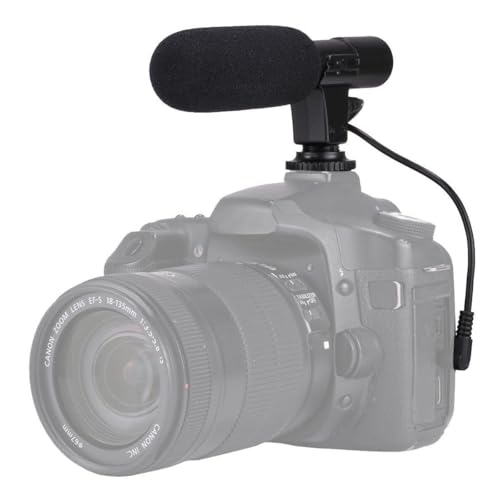
The Acuvar Mini Shotgun is a compact external microphone designed for cameras, camcorders, and compatible smartphones via a 3.5mm input. Its lightweight design makes it a convenient travel companion for handheld shooting, vlogging, and on-the-go content creation. It’s a practical budget-friendly option, though it may not offer the same level of noise rejection as higher-end models in extremely busy environments.
Who it’s best for: Budget-conscious creators who still want a dedicated shotgun mic for improved audio over built-in camera mics. Choose this if you want a portable, inexpensive upgrade for travel shoots.
Buying Guide
What to look for when buying an external DSLR microphone
- Directionality: Look for shotgun mics with a tight pickup pattern to reduce ambient noise and focus on the subject.
- Power and cables: Battery-free designs simplify setup. Check whether your camera or phone requires adapters for 3.5mm jacks or USB-C connections.
- Build quality: Aluminum bodies and integrated shock mounts improve durability and minimize handling noise.
- Compatibility: Ensure the mic supports your camera brand and any mobile devices you plan to pair it with.
- Size and weight: For travel and on-the-go creators, a compact mic is easier to carry and quicker to deploy.
Choose by scenario
- Vlogging and interviews: Prioritize a mic with good isolation, a robust shock mount, and easy plug-and-play operation, such as the CVM-V30 LITE or Movo VXR10.
- Multi-device creators: A versatile mic like the Movo X1-Mini provides compatibility across cameras, phones, and computers.
- Ultra-portable kits: The RØDE VideoMicro II offers excellent directional sound with minimal bulk for on-the-go shoots.
- Budget-first travelers: The Acuvar Mini Shotgun offers a lightweight option without breaking the bank.
Technical nuances
- 24-bit recording capability is beneficial for post-production flexibility (as with the Movo X1-Mini). If you primarily publish online quickly, this may be less critical.
- Shock mounts reduce handling noise but require proper positioning. A short boom or close placement can dramatically improve audio quality.
- Battery-free designs rely on camera power and do not require frequent battery changes, which can simplify field use.
FAQ
- Do I need an adapter for smartphones? Some phones require adapters for external microphones; check your device’s mic jack configuration and compatible cables.
- What’s the difference between shotgun and lavalier mics for DSLR use? Shotgun mics are typically mounted on the camera and target a directional field, while lavaliers attach to the subject and pick up voice clearly from close range.
- Is a larger microphone always better for video? Not necessarily. Smaller mics offer portability; larger ones may deliver stronger off-axis rejection but are less convenient for travel.
- Can I use these mics for both video and live streaming? Yes, most are suitable for both, provided you have the right input and adapters for your streaming setup.
- Do these mics require batteries? Most listed options are battery-free and draw power from the recording device, reducing maintenance.
- What is a shock mount and why is it important? A shock mount dampens vibrations and handling noise, improving audio clarity in dynamic shooting environments.