When you need to adapt Nikon F or C-mount lenses to different camera bodies, a dependable F to C mount adapter is essential. This guide highlights five reliable options for engineers, filmmakers, hobbyists, and CCTV enthusiasts who want reliable manual control and solid build quality. Each product is chosen for clear compatibility, straightforward use, and practical limitations you should consider before buying.
Summary table of selected products
| Product | Best For | Notes |
|---|---|---|
| Fotasy 16mm Prime Black C Mount & Nikon F Lens Adapter | Nikon F Lenses on C-Mount Cameras | Manual focus, no electrical contacts; good build |
| Fotodiox Pro Nikon F to C-Mount Lens Adapter | Professional Cine/CCTV work | Infinity focus; integrated aperture control on some models |
| Urth Lens Mount Adapter (Nikon F to C-Mount) | Manual focus enthusiasts | Lifetime warranty; manual only |
| C-NIK F Lens Adapter Ring (Nikon F to C Mount) | Budget-friendly Nikon F to C compatiblity | Brass/aluminum; manual control |
| SING F LTD C Mount to M12x0.5 S Mount Adapter Ring | C Mount lenses to M12 cameras | Lightweight; aluminum; M12 interface |
Fotasy 16mm Prime Black C Mount & Nikon F Lens Adapter

The Fotasy adapter enables a Nikon F mount lens to fit on C-mount cameras, including CCTV, microscope cameras, and cine-style systems. It is designed for infinity focus and uses a copper lens mount for durability. This option is best for photographers or videographers who want a solid, manual setup without electronic contacts. A potential limitation is the lack of electrical communication, which means exposure and focus must be managed manually on the lens or camera body.
Fotodiox Pro Nikon F-Mount to C-Mount Lens Adapter

The Fotodiox Pro adapter supports Nikon F-mount G-type lenses on C-mount cameras with an established 1.000 inch thread, making it suitable for Cine, CCTV, machine-vision, and microscope setups. Infinity focus is possible, and the adapter emphasizes precise craftsmanship with tight tolerances for a secure, no-play connection. The integrated aperture control dial is a practical feature for manual filmmakers. A consideration is that some users may need to verify compatibility with specific lens models to ensure aperture control alignment.
SING F LTD 3pcs C Mount to M12x0.5 S Mount Adapter Ring

This three-pack provides C-mount to M12x0.5 S-type adapter rings, enabling compatibility between C-type lenses and M12-type cameras. The outer diameter is 29.5mm with a 9.5mm hole diameter and a height of 9.7mm. Constructed from aluminum alloy, these adapters are sturdy yet lightweight, making them a flexible option for compact camera rigs. Best used for smaller form-factor surveillance or micro-camera projects. A limitation is that adapters are designed for specific interface conversions and may require exact thread matching on both lens and camera sides.
Urth Lens Mount Adapter (Nikon F to C-Mount)
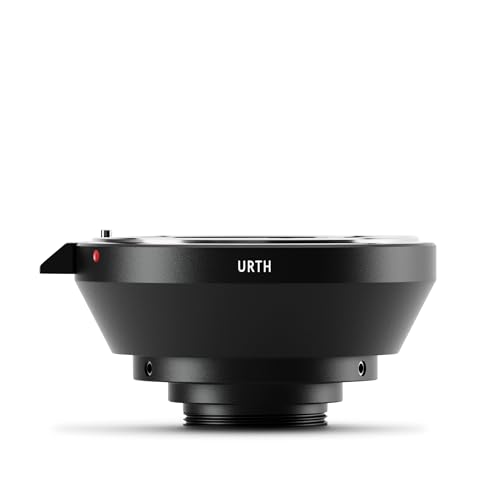
The Urth adapter is designed to connect any Nikon F mount lens to a C-mount camera body, enabling new lens combinations. It emphasizes a snug fit with a light-sealed, secure connection and backs its design with a lifetime warranty. This is a manual adapter—no automatic exposure or focus—so it suits shooters who prefer hands-on control. A potential limitation is that you must manually set focus and exposure, which can slow workflows in fast-paced shooting contexts.
C-NIK F Lens Adapter Ring for C Mount to Nikon F AI Mount

The C-NIK F adapter by LingoFoto allows C-mount lenses to be mounted on Nikon F AI bodies, offering a robust brass-aluminum build with a smooth surface finish for reliable mounting. It is designed for manual focus and exposure control, making it a solid choice for people who want to reuse existing C-mount lenses on Nikon DSLR bodies. The main limitation is the absence of electronic communication, meaning autofocus and aperture automation are not available.
K&F Concept Contax/Yashica to Sony E-Mount (for NEX) Adapter

Note: While this adapter enables Contax/Yashica lenses on Sony E-mount bodies, it is not a Nikon F to C-mount solution. It is included for context, showing the breadth of manual, non-electronic adapters in the market. It is best avoided if your goal is a direct Nikon F to C-mount workflow.
Buying Guide
What to consider when choosing an F to C mount adapter
- Mount compatibility: Confirm that the adapter accepts Nikon F lenses and C-mount cameras, or the reverse, depending on your setup. Some adapters are designed for C to F, others for F to C, and a few are bidirectional but require careful use.
- Manual vs. electronic control: Most F to C adapters are manual only. If you require automatic aperture or autofocus, you’ll need a camera system with compatible electronic support or a different solution.
- Infinity focus: Check that the adapter sustains infinity focus with your chosen lens and camera. Some budget options may require lens element adjustments or have limited register distance.
- Build quality: Look for brass or durable aluminum housing and a snug fit to prevent wobble, light leaks, or play that can degrade image quality.
- Size and weight: For portable rigs, lighter adapters with compact profiles are advantageous, but ensure rigidity to avoid misalignment.
- Aperture control: If your lens relies on camera body aperture, adapters with integrated aperture control can provide more flexibility in exposure control.
- Rear lens compatibility: Some adapters have restrictions with certain lens designs or require manual timing for stop-down and metering.
FAQ
- What is the main purpose of an F to C mount adapter?
– To mount Nikon F lenses on C-mount cameras, enabling reuse of legacy or specialized optics on smaller or different-format bodies. - Do these adapters support auto focus or electronic aperture control?
– Most F to C adapters are manual only; they do not provide autofocus or electronic aperture control unless explicitly stated. - Can I achieve infinity focus with these adapters?
– Infinity focus is possible on many models, but verify compatibility with your specific lens and camera pairing. - Is build quality important for image stability?
– Yes. A secure, rigid connection minimizes lens wobble and potential misfocus, improving overall image stability. - Are there any risks of damaging lenses when using adapters?
– Using adapters that are a poor fit or cross-threaded mounts can introduce mechanical stress. Choose adapters with precise fits and proper thread compatibility. - What should I consider if I need manual exposure control?
– Look for adapters with clear exposure calibration marks, or plan to manage exposure manually via the lens and camera settings.