Finding a reliable non-wiFi game camera is ideal for hunters, wildlife researchers, and property owners who want simple, power-efficient surveillance without cellular or WiFi connectivity. This guide highlights five top options that emphasize image clarity, long battery life, and rugged construction. Each product section explains who it’s best for, why it stands out, and a practical limitation to consider. The buyer-friendly summary below helps compare core specs at a glance.
| Product | Best For | Key Benefit |
|---|---|---|
| Meidase P70 (Non-Cellular) | Hunters and wildlife observers | 64MP photos, 1296p video, fast trigger |
| GardePro E5S Trail Camera | Rugged outdoor setups | 64MP, 1296P, IP66 rating |
| Meidase 2 Pack P70 | Budget-friendly multi-cam setups | Two cameras, strong night vision |
| Punvoe Trail Camera | Beginner-friendly monitoring | 2.7K video, 130° view, simple setup |
| KJK Trail Camera 36MP | Wide-angle wildlife observation | 0.1s trigger, 130° wide angle |
Meidase P70 Non-Cellular Trail Camera
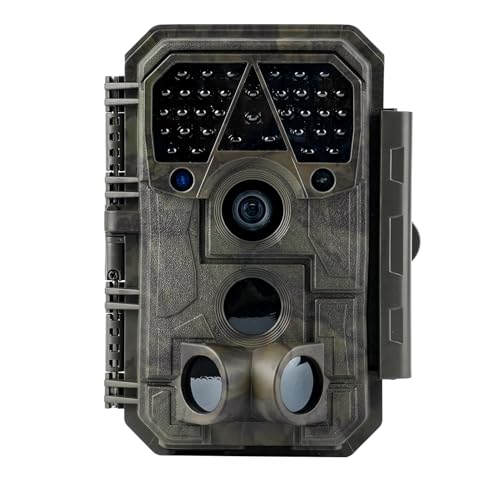
The Meidase P70 is designed for non-cellular use, making it ideal for remote wildlife plots or property surveillance where cellular access is not desired. It delivers 64MP photos and 1296p HD videos through a fast f/1.6 lens, helping identify details at a distance. Trigger speed is notably quick at 0.1 seconds, which is advantageous for capturing fast-moving deer or other wildlife. The camera uses 940nm no-glow LEDs for night shots, reducing animal disturbance.
Best for: Hunters and researchers who want crisp daytime and nighttime imagery without any network connection. The no-glow night vision helps maintain natural animal behavior. A potential limitation is the lack of cellular data options, which means manual retrieval is required for media.
Key considerations:
– Image quality: 64MP photos, 1296p video.
– Night vision: 940nm no-glow LEDs, up to 100 feet.
– Operation: Non-cellular, motion-activated, weatherproof.
SPYPOINT Flex-M Twin Pack Cellular Trail Cameras

Note: This product is listed here for contrast but includes cellular features. It is not a non-wifi model, so it’s not the primary focus of this guide. If you’re strictly avoiding any network connectivity, choose the non-wifi options above. The Flex-M emphasizes autonomous operation via cellular transmission and cross-carrier reliability, which can be advantageous in larger properties where cell coverage exists.
GardePro E5S Trail Camera (Non-Cellular)

The GardePro E5S is a rugged, non-cellular option designed for tough outdoor use. It delivers 64MP photos and 1296P HD video, supported by a 1/4″-20 mounting thread for secure placement. Its IP66 rating means it is more resistant to dust and water exposure, making it suitable for adverse weather. A potential limitation is the absence of cellular options, which means you’ll need to physically retrieve memory cards and media.
Best for: Users who prioritiz e durability and weather resistance in remote or exposed locations. Choose this if you want a high-resolution trail cam that stays off the grid and requires manual media retrieval.
Punvoe Trail Camera 2 Pack

The Punvoe two-pack offers a budget-friendly option with 36MP stills and 2.7K video. It features a 120° wide night vision capability and an IP66 waterproof rating, making it versatile for various landscapes. The models include a 2.0″ LCD for quick setup and playback. This option is attractive for users who need multiple cameras without Wi-Fi or SIM cards, though lower megapixels may favor daytime subjects over distant details.
Best for: Beginner or budget-conscious setups requiring multiple cameras for area coverage. Limitation: The 2.7K video resolution may be less sharp than higher-end models, especially for distant wildlife.
KJK Trail Camera 36MP 2.7K

The KJK Trail Camera focuses on clarity with 36MP photos and 2.7K videos, supported by a 130° wide-angle lens and a quick 0.1-second trigger. Built for field conditions, it uses a 22-piece LED setup for effective night performance and includes a 2.0” TFT color screen for straightforward setup and playback. The broader field of view helps capture more activity in a single frame, which is beneficial for monitoring larger plots.
Best for: Observing wide wildlife activity and capturing fast-moving creatures with minimal delay. Caution: The absence of cellular or cloud options means you’ll manage storage locally and visit the cam for media retrieval.
Buying Guide: Key Purchase Considerations
What matters most in a non-wifi game camera?
Core factors include image resolution, trigger speed, night vision capability, weather resistance, and battery life. Choose a model with a high megapixel count if you need detailed stills, but balance against storage and processing needs.
How important is night vision distance?
Night vision distance affects how far you can detect and identify animals after dark. No-glow infrared LEDs minimize animal disruption, while longer distances can capture more activity at the edges of your plot.
What about mounting and durability?
Look for IP ratings (like IP66) and standard mounting threads. A rugged exterior helps cameras withstand rain, dust, and temperature swings, reducing maintenance work.
How should you plan for media retrieval?
Non-wifi cameras rely on SD cards. Consider camera models with easy-to-read displays or simple card access to simplify data retrieval after field sessions.
How many cameras should you buy?
For larger properties or diverse terrains, a multi-camera setup improves coverage. Budget-conscious buyers can start with two cameras to monitor critical zones and expand as needed.
Frequently Asked Questions
- Are non-wifi game cameras harder to use? Answer: They are straightforward, as they require no network configuration and store media locally.
- What is the typical trigger speed? Answer: Many non-wifi models feature sub-0.2-second triggers, ensuring rapid capture of moving animals.
- Can non-wifi cameras still provide clear night shots? Answer: Yes, especially models with no-glow infrared LEDs and larger apertures for more light capture.
- Do I need a smartphone to operate a non-wifi camera? Answer: No, most work as stand-alone units with physical controls and memory cards.
- What maintenance is required? Answer: Regularly check battery levels, clean lenses, and retrieve media to prevent card corruption.
- Which camera is best for beginners? Answer: Punvoe or KJK models are user-friendly with simple setup and clear LCD interfaces.