When choosing an HDMI monitor for a camera, you want bright, accurate previews and reliable connectivity for on-location or studio work. This guide highlights five popular options, spanning compact on-camera screens to larger field monitors. Each selection is tailored to different shooting needs—from handheld vlogging to professional videography. Buyers can compare features like brightness, resolution, LUT support, and input/output options to pick the best fit.
| Product | Best For | Key Benefit |
|---|---|---|
| JINSWY 10.1″ Security Monitor | Budget-friendly multi-input setups | HDMI, VGA, BNC, AV and USB inputs |
| FEELWORLD S55 V3 | Professional on-camera monitoring | Waveform, LUTs, focus assist |
| NEEWER F700 7″ | High brightness indoor/outdoor | 2000nit brightness, 3D LUT |
| FEELWORLD FW759 | Portable DSLR/Mirrorless rigs | Slim, 1280×800, 4K HDMI |
| Atomos Shinobi GO | Compact full-featured monitoring | HDR, 1500-nit display, lightweight |
JINSWY 10.1 Inch Security Monitor

The JINSWY 10.1-inch monitor combines multiple inputs with a compact form factor. It offers a 1024×600 resolution, 16:9 aspect, 300 cd/m² brightness, and a 500:1 contrast ratio, delivering clear previews for security setups, cameras, PCs, or small surveillance rigs. Best for budget-conscious videographers and security installers who need versatility in one portable unit.
Best for: budget-conscious shooters who require HDMI, VGA, BNC, AV, and USB connectivity in one small display. Choose this if you need broad compatibility on a limited budget and a simple, compact monitoring solution.
Limitation: The 1024×600 resolution is lower than typical field-monitor standards, so the finest detail may be less crisp for critical focus work. However, it remains effective for basic framing and exposure checks in tight spaces.
FEELWORLD S55 V3 6 Inch Monitor

The FEELWORLD S55 V3 is a compact on-camera monitor designed for professional video work. It provides a 1920×1080 IPS display, 450-nit brightness, and a suite of exposure tools including waveform, vectorscope, RGB histogram, focus assist, and 3D LUT support. The included sun hood enhances visibility in bright environments, making it suitable for indoor studios or on-location shoots with glare.
Best for: creators who demand precise exposure and focus tools on a small, portable screen. Better for: users who require LUTs and professional scopes to streamline log shooting.
Limitation: The 6-inch size may be less ideal for framing complex scenes compared to larger monitors, particularly in multi-camera setups.
NEEWER F700 7 Inch Camera Field Monitor

The NEEWER F700 stands out with a bright 2000-nit panel and a 7-inch IPS touchscreen, delivering vibrant, daylight-visible previews. It supports 4K HDMI loop in/out and a broad range of formats, with an extensive set of professional tools like 3D LUTs, waveform, peak focus, and histogram. The package includes dual NP-F750 batteries for longer shoots and a cold shoe mount for flexibility on rigs.
Best for: on-location shoots where outdoor visibility is critical and extended power is a priority. Better for: filmmakers and videographers needing advanced LUT support and robust monitoring tools on a larger display than a portable on-camera screen.
Limitation: 2000 nits is exceptionally bright, which can drain battery life quickly in some configurations, so plan power accordingly.
FEELWORLD FW759 7 Inch DSLR Monitor
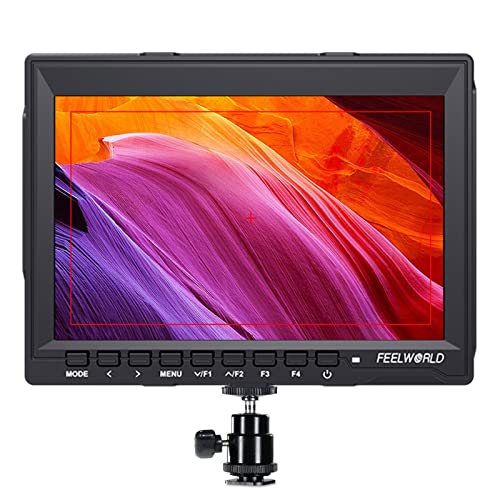
The FW759 offers a slim, lightweight chassis with 1280×800 resolution and 400 cd/m² brightness. It supports 4K HDMI input and AV input, making it compatible with most DSLRs and camcorders. This monitor is designed for budget-friendly, mobile rigs where a thin profile and reliable HDMI monitoring are needed without extra bulk.
Best for: handheld rigs, gimbal setups, and travelers seeking a slim monitor that still delivers solid color fidelity. Better for: users who value portability over extremely high brightness or specialist scopes.
Limitation: The screen resolution is lower than some competitors at similar price points, which can affect fine detail in critical focus work.
Atomos Shinobi GO HDMI 4K Monitor

The Shinobi GO is a compact, 5-inch HDR/SDR monitor designed for videographers who need high brightness (1500 nits) and a robust toolset in a lightweight form. It includes advanced camera monitoring tools such as waveform, histograms, false color, RGB parade, and an Analysis View. Its HDR performance helps in bright daylight shooting while maintaining rich detail in shadows.
Best for: professionals who need precise exposure and focus tools in a portable package. Better for: on-the-go shoots with lots of daylight and a desire for HDR monitoring in a slim profile.
Limitation: A smaller screen size may not be ideal for complex framing or multi-camera review in tight editing workflows, compared to larger field monitors.
Buying Guide: How to Choose the Right HDMI Monitor For Your Camera
- What size is best for you? Small on-camera screens are lightweight and portable; larger field monitors offer more accurate focus and framing control for multi-camera setups.
- What brightness do you need? Outdoor shoots benefit from high brightness (2000+ nits); indoor studios can manage with 400–800 nits depending on lighting.
- What professional tools matter? Waveform, vectorscope, histogram, focus peaking, and 3D LUT support help ensure correct exposure and color when shooting in log profiles.
- What inputs and outputs are required? Ensure HDMI is supported alongside other inputs (VGA, BNC, AV). Consider HDMI loop in/out for camera-to-monitor and daisy-chaining workflows.
- How long will you shoot? Battery life matters. Monitors often come with external batteries or USB power options; plan for extended shoots with spare power.
- Is LUT support important? LUT previews speed up color grading decisions on set and reduce reshoots when shooting in log.
- What about glare and visibility? A sun hood or anti-glare coating improves outdoor visibility and reduces eye strain during long shoots.
FAQ
- Q: Do these monitors support 4K input? A: Several do, including those with 4K HDMI loop-in/out, which enables 4K signal passthrough to the display for high-detail previews.
- Q: Are built-in batteries common for field monitors? A: Many models include external battery options or packs; check battery compatibility for runtime needs.
- Q: Is LUT support standard? A: LUT support is common on mid-to-high-end models and is valuable for previewing camera looks and color grading on set.
- Q: Which monitor is best for outdoor use? A: Monitors with higher brightness (around 1500–2000 nits) and sun hood inclusion are easier to read in daylight.
- Q: Should I pick a bigger screen or more features? A: If you rely on precise focus and exposure on location, a larger screen with waveform, histogram, and LUTs provides more accurate monitoring.
- Q: Do HDMI loop outputs matter? A: Yes, loop outputs help connect multiple displays or pass signal to recorders and other devices without re-encoding.