Image stabilization (IS) helps capture sharp photos and smooth video across a range of focal lengths. This article highlights five top lenses with built-in or integrated stabilization, spanning Nikon, Canon, and Panasonic systems. Each entry covers core features, stabilization capabilities, and practical shooting scenarios to help you choose the right lens for travel, events, wildlife, and sports.
| Product | Brand | Key Stabilization | Best For |
|---|---|---|---|
| Nikon NIKKOR Z 24-200mm VR | Nikon | Built-in Vibration Reduction (VR) | All‑in‑one travel and everyday reach |
| Canon RF70-200mm F2.8 L IS USM | Canon | Up to 5 stops of shake correction | Portraits, sports, events at long reach |
| Canon RF 200-800mm F6.3-9 IS USM | Canon | Built-in image stabilization | Wildlife and distant subjects |
| Nikon NIKKOR Z DX 50-250mm VR | Nikon | Built-in VR up to 5 stops | Telephoto for DX cameras and travel |
| Panasonic LUMIX G85 12-60mm Power O.I.S. | Panasonic | Dual IS with 5-axis body stabilization | Hybrid stills and 4K video |
Nikon NIKKOR Z 24-200mm VR

The Nikon NIKKOR Z 24-200mm VR is a versatile all-in-one zoom designed for Z-series mirrorless cameras. It combines a broad focal range with built-in Vibration Reduction, helping to stabilize handheld shots across a wide spectrum from wide to telephoto. Features include Aspherical Element, ED glass, ARNEO coat, and a Fluorine coat to minimize reflections and keep images sharp. The lens also includes a customizable, clickless control ring for quick adjustments—ideal for travelers who want fewer gear changes without sacrificing control.
Canon RF70-200mm F2.8 L IS USM

This Canon RF70-200mm F2.8 L IS USM delivers exceptional image quality with a bright f/2.8 aperture and robust stabilization. The lens is notably compact for a professional telephoto zoom, making it a strong choice for portraits, sports, and event photography. Its optical image stabilization provides up to five stops of shake correction, facilitating sharp handheld performances even at slower shutter speeds or in challenging lighting. The L-series construction ensures durability in varied shooting environments.
Canon RF 200-800mm F6.3-9 IS USM
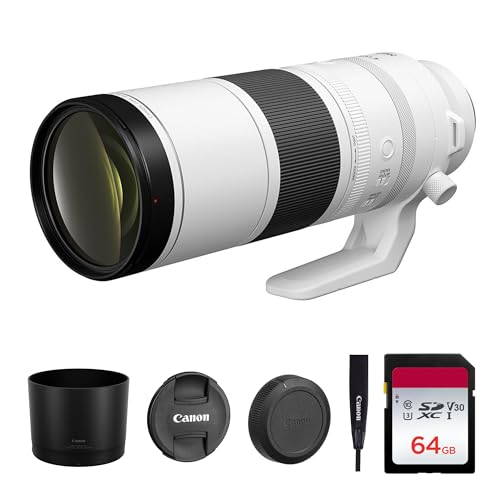
The Canon RF 200-800mm F6.3-9 IS USM offers extraordinary reach for wildlife and sports with built-in image stabilization to support handheld shooting at long focal lengths. This full-frame super-telephoto zoom brings distant subjects into frame with flexibility, while IS helps manage camera shake during panning or in low-light conditions. It’s a practical option for wildlife enthusiasts and outdoor photographers who want an all-in-one solution without swapping lenses in the field.
Nikon NIKKOR Z DX 50-250mm VR

The Nikon NIKKOR Z DX 50-250mm VR provides a practical range for APS-C Z-series cameras, with built-in VR stabilization that supports up to five stops of shake reduction. The lens also includes an assignable control ring for quick access to exposure settings, making it convenient for travel or daily photography. Its compact design and focal range from standard to telephoto cover a wide variety of subjects, from portraits to distant landscapes.
Panasonic LUMIX G85 12-60mm Power O.I.S.

The Panasonic LUMIX G85 pairs a 12-60mm kit lens with Power Optical Image Stabilization (O.I.S.) and 5-axis in-body stabilization for enhanced handheld performance. This dual stabilization system helps reduce camera shake in both stills and video, making it well-suited for vloggers and hybrid shooters who require steady footage in varied lighting. The camera’s 4K capabilities and detailed 16-megapixel sensor further support high-quality results across photo and video work.
Buying Guide: Key Considerations For Lenses With Image Stabilization
- Stabilization type and stops: Determine whether stabilization is lens-based (optical IS) or sensor-based (IBIS), and note the number of stops of shake reduction. More stops generally improve performance at longer focal lengths and slower shutter speeds.
- Focal length and range: Choose a lens with a focal length that fits your typical subjects. Wide zooms cover travel and landscapes, while telephotos excel at wildlife and sports.
- Aperture vs. stabilization: A brighter aperture (low f-number) is beneficial, but a stabilized lens can compensate for slower shutter speeds, enabling sharper handheld shots in lower light.
- Weight and balance: Consider how lens weight affects camera handling, especially for long shooting sessions or when mounted on lightweight bodies.
- Compatibility: Ensure the lens is designed for your camera system (Nikon Z, Canon RF, Panasonic Micro Four Thirds, etc.) and supports your typical workflows (stills, video, or both).
- Additional features: Look for control rings, weather sealing, and coating technologies that can improve handling and image quality in varied environments.
- Budget and availability: Stabilization is important, but total system cost and lens availability can influence your final choice. Consider lenses that offer a good balance of stabilization, reach, and weight within your budget.
- Use case scenarios: For travel, an all-in-one zoom reduces gear changes. For sports or wildlife, a longer focal length with solid IS helps freeze action at a distance.
These selections present a spectrum of stabilized lenses suitable for different camera systems and shooting needs. Each option emphasizes stabilization as a core feature, enabling sharper photos and smoother video across a variety of situations.