Micro Four Thirds cameras balance compact bodies with sharp, capable lenses, making macro photography accessible without bulky gear. The best m4/3 macro lenses combine magnification, working distance, and image quality, while affordable adapters and extension tubes expand your options. This guide highlights five practical picks that cover true macro lenses and useful accessories for Micro Four Thirds systems. Each entry includes compatibility notes, key specs, and practical considerations to help you choose lenses and tools that fit your macro style.
| Product | Brand | Type | Mount / Compatibility | Key Benefit |
|---|---|---|---|---|
| AMOPOFO 52mm To M4/3 Macro Reversing Ring | AMOPOFO | Reverse Ring | Micro Four Thirds | Turns any lens into a high-magnification macro tool when reversed |
| 7artisans 60mm F2.8 II Macro for M4/3 | 7artisans | Macro Lens | Micro Four Thirds | 1:1 magnification with native macro performance |
| TTArtisan 40mm F2.8 Macro for M4/3 | TTArtisan | Macro Lens | Micro Four Thirds | Compact 1:1 macro with solid all-metal build |
| JJC Micro 4/3 Auto Focus Macro Extension Tubes | JJC | Extension Tubes | Micro Four Thirds | Macro capability with autofocus compatibility on many lenses |
| Fotasy M42 To M4/3 Helicoid Adapter | Fotasy | Helicoid Adapter | Micro Four Thirds | Enables macro focusing with older M42 glass |
AMOPOFO 52mm To M4/3 Macro Reversing Ring
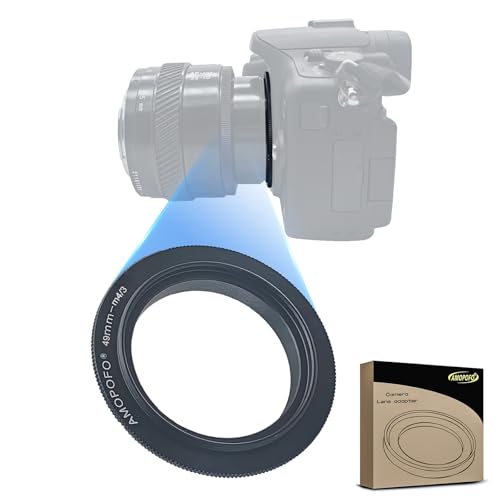
The AMOPOFO reversing ring enables macro work by mounting a lens in reverse on a Micro Four Thirds body. This technique increases magnification by relying on the camera’s sensor to capture textures and details at small scales. The kit’s three straightforward steps mirror typical reverse-macro workflows: take out your lens from the camera body, attach the adapter ring to the camera, and reverse the lens by threading it into the ring until secure.
- Take out your lens from your camera body.
- Mount the adapter ring to your camera body.
- Reverse your lens with filter thread and screw it to the adapter ring until it is tight.
Usage notes indicate compatibility with Micro Four Thirds cameras and broad lens options. This accessory is a cost-effective entry point for achieving dramatic macro magnification without investing in dedicated macro glass. For subjects like coins, jewelry, or tiny flora, reversing a standard lens can yield impressive detail with careful lighting and stance.
7artisans 60mm F2.8 II Macro for M4/3

The 7artisans 60mm F2.8 II Macro for Micro Four Thirds delivers true macro capabilities with a 1:1 magnification ratio. Its design incorporates 11 elements in 8 groups and a 9-blade diaphragm to balance sharpness and pleasing background blur. The lens uses Japanese HOYA low-dispersion glass to minimize chromatic aberration and maximize image clarity at high magnifications. With a minimum focusing distance of about 175mm (6.9 inches), it lets you frame your subject while maintaining a workable working distance.
- Manual Focus: F2.8–F22 aperture range; 1:1 magnification
- 11 elements in 8 groups; 9 diaphragm blades
- Minimum focusing distance: 175mm (6.9″)
- HOYA LD glass for improved sharpness and color
For tabletop, product, and detail work, this lens offers reliable macro performance with a compact M4/3 footprint. Its manual focus discipline makes it a favorite for precise texture capture, though you’ll need stable setup and good lighting to maximize results.
TTArtisan 40mm F2.8 Macro for M4/3

TTArtisan’s 40mm F2.8 Macro for Micro Four Thirds offers a compact, all-metal build with 1:1 magnification. Its 8-element-in-7-group optical design includes extra-low-dispersion glass to sharpen fine textures. The manual focus design includes distance and depth-of-field scales for precise control. A close focusing distance of 0.17 meters enables close-up captures while maintaining comfortable working distance for small subjects, and the F2.8 aperture helps preserve detail in lower light scenarios.
- 1:1 magnification; 0.17m minimum focus distance
- All-metal construction; durable bayonet
- Manual focus with distance and DOF scales
- F2.8 aperture with 11-blade diaphragm for smooth bokeh
JJC Micro 4/3 Auto Focus Macro Extension Tubes

The JJC macro extension tubes for Micro Four Thirds extend your lens’s close-up capability without adding optics. The tubes are engineered with a combination of aluminum, brass, and ABS plastic components to maintain rigidity while reducing weight. Used correctly, they shorten the minimum focusing distance, enabling macro photography with many existing lenses. Autofocus and auto exposure remain compatible in many configurations, making them a practical tool for quick macro setups.
- Aluminum camera mount; brass lens mount; ABS tube
- Shortens minimum focusing distance for macro
- Converts almost any lens into macro lens; cost-effective
- Full autofocus and auto exposure compatibility
Extension tubes are especially appealing for photographers who want macro reach without buying new glass. They’re versatile for product shots, insects, and floral textures, though they can introduce more working-distance constraints compared with dedicated macro lenses.
Fotasy M42 To M4/3 Helicoid Adapter
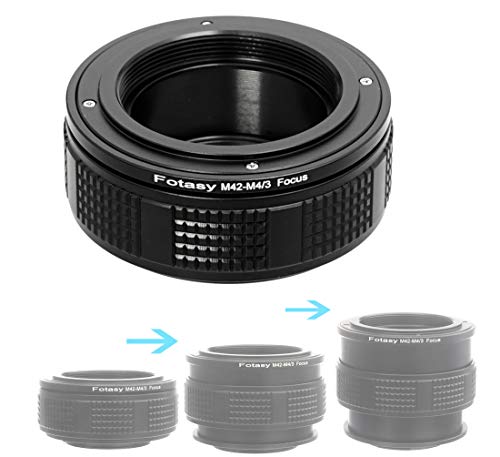
The Fotasy M42 to M4/3 helicoid adapter lets you mount vintage M42 lenses on Micro Four Thirds bodies and dial in macro focus with a dedicated helicoid mechanism. Constructed from lightweight alloy, this adapter provides a robust interface between older glass and modern mirrorless bodies. It enables a flexible macro focusing range and expands your options when combined with existing M42 lenses.
- Macro focusing helicoid tube enables M42 lens on MFT
- Made from lightweight alloy
- Acts as standard M42–M43 mount adapter; allows lens focus to infinity
Buying Guide
When choosing a Micro Four Thirds macro solution, consider the subject, your preferred shooting style, and how you’ll balance magnification with working distance. Native macro lenses (like the TTArtisan and 7artisans options) deliver reliable close-up performance with good optical quality and straightforward handling. Accessory paths—reverse rings, extension tubes, and helicoid adapters—offer flexibility and cost savings but require more careful technique and lighting to maximize results.
Key purchase considerations
- Magnification and working distance: 1:1 magnification is standard for true macro lenses; all-metal designs typically offer better durability and feel for close focusing.
- Mount compatibility: Micro Four Thirds cameras benefit from compact lenses, but ensure your chosen accessory aligns with your camera body and existing lenses.
- Build quality and handling: all-metal lenses tend to offer smoother focus rotation and long-term durability, while plastic builds may be lighter but less robust.
- Type of macro path: dedicated macro lenses provide straightforward macro performance; extension tubes and helicoids expand your toolkit but may require more setup and lighting.
- Lighting and stability: macro work often benefits from ring lights, diffusers, or macro diffusers to reveal detail without harsh shadows. A stable tripod and remote shutter help prevent blur at high magnification.
Perspective considerations
- Product photography: a dedicated macro lens with a stable focusing system can yield consistent texture and micro-detail, ideal for jewelry or small components.
- Nature macro: working distance is crucial; longer focal lengths (like 60mm) help keep you away from sensitive subjects like insects, reducing disturbance while capturing fine textures.
- Budget and versatility: if you already own standard lenses, a reverse ring or extension tubes can unlock macro potential with minimal investment. For more consistent results, a native macro lens is usually preferred.
In summary, the best approach blends your target subjects with practical gear choices. For those starting with Micro Four Thirds macro work, a native macro lens such as TTArtisan or 7artisans provides immediate results. If you already own lenses, a reverse ring or extension tubes offer a low-cost pathway to macro magnification. For vintage glass lovers, the Fotasy helicoid adapter adds macro compatibility without replacing your existing collection. This combination of options supports a wide range of macro applications—from tiny flora to detailed product textures.