Micro Four Thirds cameras excel when paired with compact lenses, and pancake-style designs epitomize portability without compromising image quality. This guide highlights five compact, lightweight lenses that fit the Micro Four Thirds system and are well-suited for street, travel, and everyday photography. Each option offers a bright aperture and a small footprint, letting you shoot freely without dragging a heavy kit. Explore a range of focal lengths from wide to standard for versatile field use, all while keeping your setup minimal and travel-friendly.
Use the table below for a quick at-a-glance comparison, then dive into each product section for detailed specs, handling notes, and practical shooting considerations. The goal is to help you pick a lens that stays out of the way while delivering solid performance across common shooting scenarios.
| Product | Brand | Focal Length | Max Aperture | Notable Feature |
|---|---|---|---|---|
| Panasonic LUMIX G II Lens, 20mm F1.7 | Panasonic | 20mm (40mm equivalent) | F1.7 | Close focus to 0.2 m; 0.13x magnification; seven elements in five groups |
| Panasonic LUMIX G 14mm F2.5 II | Panasonic | 14mm (28mm equivalent) | F2.5 | Ultra-compact wide prime; globally praised for sharpness |
| Rokinon FE14M-MFT 14mm F2.8 Ultra Wide | Rokinon | 14mm (28mm equivalent) | F2.8 | Ultra-wide field; solid build with built-in hood |
| Sigma 30mm F1.4 Contemporary DC DN | Sigma | 30mm (60mm equivalent) | F1.4 | Compact, fast prime with modern AF design |
| Meike 35mm F1.7 Manual Focus Prime | Meike | 35mm (70mm equivalent) | F1.7 | Manual focus, very compact for a normal-length prime |
Panasonic LUMIX G II 20mm F1.7 Lens

The Panasonic LUMIX G II 20mm F1.7 is a compact prime well-suited for street and travel photography. With a 20mm focal length, this lens provides a natural field of view close to a standard 40mm on full-frame, making it versatile for environmental portraits and candid shots. The bright F1.7 aperture helps in low light and yields a pleasant background separation. Its close focusing distance of 0.2 meters enables creative close-ups, while a seven-element, five-group optical design helps control aberrations for crisp image quality across the frame.
In practice, the G II 20mm pairs exceptionally well with small body cameras, offering a light footprint without sacrificing image quality. The lens construction aims to reduce internal reflections and color fringing, and its compact profile keeps overall kit weight down for city walking and daily carry. Autofocus is responsive for general use, but the lens also rewards thoughtful framing thanks to its bright, compact design.
OM SYSTEM M.Zuiko Digital ED 40-150mm f/4-5.6 R

The OM SYSTEM M.Zuiko Digital ED 40-150mm f/4-5.6 R is a compact telephoto zoom offering a practical reach from travel scenes to portraits. It extends subject distance with an 80-300mm equivalent range, enabling distant subjects to come into view with clarity. An aspherical and extra-low dispersion element set helps minimize aberrations, maintaining sharpness and contrast through the zoom range. At only about 6.7 ounces, the lens remains highly portable, making it an appealing option for photographers who want telephoto capabilities without a heavy lens lineup.
Autofocus tends to be smooth and quiet enough for video and stills, aligning with typical Micro Four Thirds use. The trade-off is that, while compact, it’s not a specialty pancake or ultra-wide option; it’s a versatile telephoto complement for travelers and documentary shooters who value reach without bulk. It pairs well with smaller OM System bodies for everyday carry and discreet shooting.
Panasonic LUMIX G VARIO 45-150mm F4.0-5.6 ASPH

The Panasonic LUMIX G VARIO 45-150mm F4.0-5.6 ASPH is a compact telephoto zoom designed for Micro Four Thirds bodies. With 12 elements in 9 groups, including one UHR lens and two aspherical elements, it maintains optical quality through the zoom range and helps suppress aberrations. Near silent focusing and a stepping motor support smooth operation for video and stills, while Panasonic Mega OIS stabilizes handheld shots in lower light. This lens is well-suited for travel, sports, and nature photography where reach is valuable but carrying heavy gear is undesirable.
Although not a pancake, the lens remains a practical, lightweight option in the telephoto category. Its compact design suits smaller cameras, enabling versatile framing across portraits and distant subjects. For photographers who want a budget-friendly zoom with decent performance, this lens provides a compelling balance of size, weight, and range.
Panasonic LUMIX G Lens 14mm F2.5 II ASPH

The 14mm F2.5 II is a compact, wide-angle prime well-suited for landscapes, architecture, and street work. On Micro Four Thirds bodies, it provides a roughly 28mm equivalent field of view with a bright F2.5 aperture for daylight shoots and pleasing background separation at closer distances. The pancake-like form factor makes it a natural match for small cameras and a carry-anywhere lens across travel days. Its optical design focuses on sharpness across the frame while maintaining compact dimensions and light weight for on-the-go use.
From a handling perspective, this lens excels when you want an unobtrusive, fast-wide option without adding significant bulk. The combination of compact size, solid sharpness, and reliable performance makes the 14mm F2.5 II a staple for travelers who prefer a discreet, wide field of view with minimal gear heft.
Meike 35mm F1.7 Manual Focus Prime
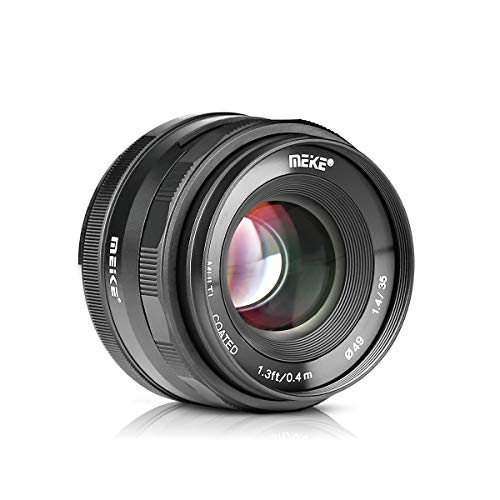
The Meike 35mm F1.7 is a compact, fixed-focal-length prime designed for Micro Four Thirds cameras. With a bright maximum aperture of F1.7, it enables low-light shooting and smooth background separation. The lens is manual focus, which suits photographers who prefer deliberate focusing and precise control over depth of field. The build is lightweight and reasonably compact for a standard-length prime, making it a practical option for casual street photography and travel where simplicity and portability matter. The design uses a traditional 5-group, 8-element arrangement to maintain image quality.
Compatibility spans Olympus and Panasonic Micro Four Thirds bodies, though some camera settings may require enabling specific modes for proper operation. This Meike option offers an affordable, compact solution for shooters who value a normal focal length with a wide open aperture and a straightforward, tactile focusing experience.
Buying Guide
Key purchase considerations for Micro Four Thirds pancake-style lenses include focal length choices, brightness, size, and compatibility. Decide whether you want a wide-angle option for landscapes and street scenes (14–20mm), a standard normal (35mm equivalent) for everyday shooting, or a telephoto reach for portraits and distant subjects (around 40–150mm, when available in compact form). Bright apertures (f/1.7–f/2.8) provide better performance in low light and allow more aesthetic control over depth of field, but they can add size and cost if you’re seeking the leanest setup.
Weight and size matter for portability. Lenses with pancake or near-pancake profiles minimize bulk and help maintain balance with compact bodies, which is ideal for travel, street, and daily carry. Autofocus speed and accuracy influence real-world shooting, particularly for candid street photography where quick focus is essential. For video work, look for quiet, near-silent focusing and consistent performance across the zoom or focus range.
Build quality and weather resilience are practical considerations. While many Micro Four Thirds lenses prioritize light weight, some users value robust construction and good sealing for outdoor use. Price-to-performance is another factor; the five lenses here provide a spectrum of budgets and capabilities, from fast prime options to versatile telephotos, enabling you to tailor a compact kit to your preferred shooting style.
Use-case recommendations by style:
– Street and travel: the 20mm F1.7 or 14mm F2.5 II balance field of view with portability and bright performance.
– Everyday carry: the 35mm F1.7 gives a natural perspective with easy handling for general photography.
– Wide landscapes and architecture: the 14mm options deliver broad frames with compact form.
– Tele and portraits on the go: tele-coverage options like the 40-150mm family provide reach without excessive bulk.
In summary, the best Micro Four Thirds pancake-focused picks offer a blend of compact design, fast apertures, and reliable optical performance. Your choice should align with your typical shooting style, preferred body, and how much you value portability versus reach or specialty features. This balance will help you achieve sharp images with minimal gear while staying comfortable during long shoots or travel days.