Smartphone microscope lenses turn ordinary phones into compact macro imaging tools, enabling close-up views of coins, plants, fabrics, and tiny insects. The best options stack magnification with reliable lighting, clipped-on ease, and broad device compatibility. This guide highlights five top performers that balance performance, portability, and value for American readers who want crisp microshots without specialized equipment. Each pick includes key features and practical usage notes to help you choose the right lens kit for your needs.
Below is a quick, at-a-glance summary of the chosen products to help you compare options side by side.
| Brand | Model | Max Magnification | Notable Feature |
|---|---|---|---|
| APEXEL | 200X Phone Microscope Lens | 200X | Built-in LED lights, CPL filter, quick clip-on |
| Spider Farmer | 200X Phone Microscope | 200X | LED + UV light, CPL filter, fast setup |
| MIAO LAB | Nano Zoom 200X Lens Kit | 100X/150X/200X | 3-in-1 CPL/LED/clip, universal clamp |
| DALYANGDA | Nano Zoom 200X Lens Kit | 100X/150X/200X | CPL lens + 12 lighting modes, USB rechargeable |
| IWOBAC | Digital Pocket Microscope | 50X-1000X | 8 LEDs, wifi/USB, accompanying app |
APEXEL 200X Phone Microscope Lens

APEXEL’s 200X phone microscope lens converts a standard smartphone camera into a dedicated close-up instrument. The four-layer premium glass lenses deliver high-definition detail, ideal for examining jewelry, mineral grains, insect wings, or textile fibers. A short working distance around 6 mm helps you frame tiny subjects without heavy camera proximity, while a built-in ring of six LEDs provides two lighting modes for consistent illumination. The CPL filter minimizes reflections on glossy surfaces, helping colors stay true even on polished coins or gem surfaces. The design emphasizes portability and simple setup.
Operation is clip-on and phone-only, with no app required. Attach the macro lens in seconds, align with your main camera, and start capturing images or videos. Its compact form fits in a pocket or bag, making it a practical gift for curious kids, students, jewelers, or engineers who need quick macro access in the field or on a workbench. Overall, it delivers solid image quality at an accessible price point.
Spider Farmer 200X Phone Microscope Lens

The Spider Farmer 200X model focuses on delivering crisp macro detail with a portable clip-on design. Its 200X magnification reveals fine textures such as trichomes on leaves, the surface of coins, or micro facets on jewelry. A built-in LED plus UV light, along with a CPL polarizing filter, provides versatile illumination and glare reduction, helping you capture more faithful colors and details in various lighting conditions. The CPL filter is particularly useful for reducing reflections on shiny or glossy subjects, making details easier to discern.
Fast and straightforward to use, this clip-on microscope snaps into place in about 15 seconds and adds minimal weight to your phone. It is well suited for indoor plant inspections, hobby projects, and field explorations where portability matters. If you need a reliable, no-fuss tool for quick macro shots, this option offers a strong balance of magnification, lighting, and ease of use.
MIAO LAB Nano Zoom 200X Lens Kit

The MIAO LAB kit provides 100X, 150X, and 200X magnification options in a compact, 3-in-1 package. It features a CPL lens to suppress glare, delivering richer color and better contrast, particularly on metallic or glossy subjects. The included LED lighting modes offer a range of brightness and color temperatures, enabling users to tailor illumination for each subject—whether you’re examining delicate plant trichomes, metallic coins, or textured stones. The universal clip fits a wide range of smartphones, making this a versatile option for students and hobbyists alike.
Two key strengths are its portability and ease of use. The device clips on quickly, and no app is required to operate it. When you want flexible magnification without juggling multiple tools, the MIAO LAB kit provides a straightforward path to capturing micro-detail with your phone. It’s particularly appealing to families and classroom settings that value simple setup and immediate results.
DALYANGDA Nano Zoom 200X Lens Kit
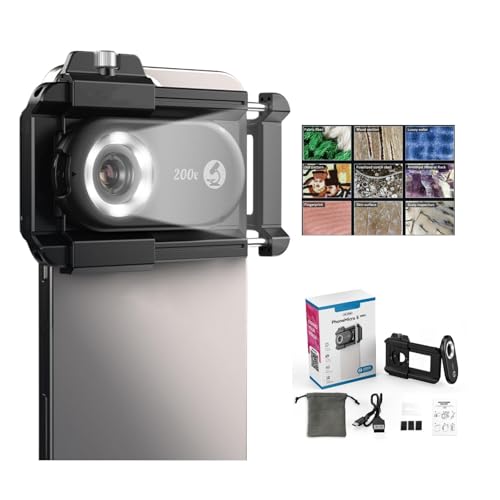
The DALYANGDA kit emphasizes a broad range of magnification—100X, 150X, and 200X—backed by a CPL lens that reduces reflections and enhances color saturation. It offers 12 lighting modes to adapt to different subjects and lighting environments, along with smooth brightness adjustments and both warm and cool options. A USB rechargeable power source supports extended sessions, making it convenient for fieldwork, classrooms, or weekend science projects. The combination of flexible magnification and diverse illumination makes it a strong all-around choice for general macro exploration.
Designed for portability, this kit attaches easily to most smartphones via the universal clip. While its primary appeal is versatility, users should note that image sharpness can depend on camera alignment and subject distance. For those who want reliable macro capability without extra accessories or apps, the DALYANGDA kit offers a balanced blend of performance and practicality.
IWOBAC Digital Pocket Microscope
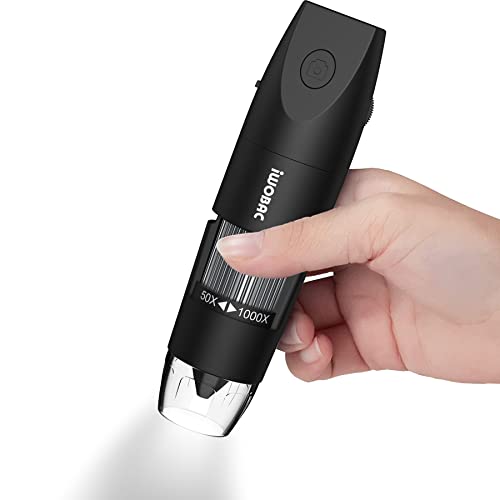
The IWOBAC digital pocket microscope covers a broader magnification range, from 50X up to 1000X, and pairs it with a set of eight dimmable LEDs to optimize lighting for any subject. Its wireless and USB connectivity options support viewing on smartphones, tablets, or computers, while an accompanying app provides an additional viewing and saving interface. This makes it a flexible choice for families, classrooms, or makerspace projects where participants want to compare micro-details across different subjects and lighting conditions.
Because it relies on digital imaging and a broader zoom range, the IWOBAC kit suits observing minute textures on electronics, textiles, coins, or plant surfaces. It’s best for users who value a wide magnification spectrum and the ability to share images easily via wireless connections. As a more feature-rich option, it may be heavier and more complex than ultra-simple clip-ons, but it offers substantial versatility for curious beginners and curious adults alike.
Buying Guide
- Magnification range matters. For simple close-ups, 100X-200X is usually enough. If you want to inspect fine plant hairs or micro-textures, look for 200X or higher, like these picks. Some models offer a wide span (50X-1000X) but may require careful focusing and subject selection.
- Lighting options affect image quality. LED lighting is essential in dim environments, while a CPL filter helps reduce glare on shiny surfaces. UV lights can reveal features invisible to the naked eye on certain materials, but may not be necessary for everyday macro work.
- Attachment compatibility matters. Clip-on designs are the simplest, but some lenses require 17mm threads or phone cages. Ensure the accessory matches your phone model and any protective cases you use.
- Power and connectivity influence practicality. Some models are USB-rechargeable, others rely on the phone’s power. Others pair with an app for viewing and saving images; consider whether you prefer a app-based workflow or a simple clip-on with no app.
- Image quality vs convenience. Glass lenses with multiple coatings typically yield crisper images and less distortion than acrylic lenses. However, premium lenses can be pricier. Balance budget with expected use and desired image fidelity.
- Portability and durability matter for field use. Pocket-sized tools are convenient for travel and classrooms, while sturdier builds suit workshop environments. Consider whether you need splash protection or a rigid carrying case.
- Use-case alignment. Hobbyists often prioritize ease of use and quick results for coins, insects, plants, and fabrics. Students may value a versatile kit with multiple magnifications. Professionals might seek higher fidelity, stable focus, and reliable color accuracy.
- Future-proofing. If you anticipate expanding into more advanced macro work, choose a kit with higher magnification options, strong illumination, and compatibility with other accessories like phone cages or tripods.