When choosing monoculars for bird watching, prioritize compact designs, bright optics, and a comfortable viewing experience. This guide presents five top options that balance portability with optical performance, helping beginners and seasoned birders pick the right model for outdoor adventures. Each entry highlights who benefits most, plus practical considerations to watch for in the field.
| Product | Best For | Key Benefit |
|---|---|---|
| Nocs Provisions Zoom Tube 8×32 | Ultra-portable hikers | Lightweight, rugged with waterproofing |
| FEEMIC 8×42 Monocular | Clear, wide views | High brightness and wide field |
| ASxmhGo 80×100 Monocular (Green) | Extreme close-ups | Very high magnification with wide view |
| OXK Optics 12×56 | Steady long-range viewing | Balanced power and light transmission |
| Pankoo 12×60 HD | Smartphone photography lovers | Strong light transmission and build |
Buyer’s note: Each model prioritizes a different strength—portability, brightness, power, or digital integration. Use this guide to match your typical birding environment, whether you hike rugged trails, chase distant raptors, or document sightings with a phone.
Nocs Provisions Zoom Tube 8×32 Monocular

Best for ultralight field use, the Zoom Tube weighs 9.5 oz and features Fully Multi-Coated optics with a Bak4 prism for a bright edge-to-edge view. The central focus mechanism supports quick adjustments, ideal for fleeting bird species. It’s water-resistant (IPX4) for all-weather outings and compatible with smartphone photography to capture sharp moments in the wild.
Who it’s best for: hikers and travelers who need a compact monocular without sacrificing image quality. Why selected: ultra-portable design, bright optics, rain-ready performance.
Caution: The compact form means a smaller eyepiece may challenge users who require larger eye relief or users wearing glasses may prefer models with adjustable eye cups.
FEEMIC 8×42 Monocular

This monocular emphasizes a wide HD view with all-glass optics and a FMC fully multi-coated lens paired with a BAK-4 prism. The 8×42 setup yields a broad field of view (about 360 ft/1000 yards) and high light transmittance, delivering bright, color-accurate images even in mixed light. It’s nitrogen-filled for waterproof and fogproof performance, and the rubberized exterior adds rugged grip for tough outings.
Who it’s best for: birders who value brightness and a large viewing area, especially in variable weather. Why selected: strong light transmission and wide field of view with sturdy construction.
Caution: Slightly bulkier than ultra-compact options; may be heavier to carry on long hikes.
ASxmhGo 80×100 High Powered Monocular (Green)
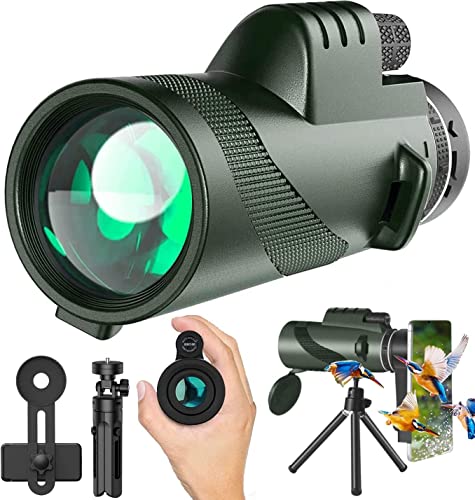
Designed for extreme close-ups, this 80×100 monocular offers substantial magnification and a large objective lens for improved light capture. The device uses a BAK-4 prism and full multi-coating to maximize brightness and reduce color fringing. It’s compact enough for travel yet capable of delivering detailed distant views, making it a strong pick for dedicated bird watchers targeting distant species or nest sites.
Who it’s best for: observers who frequently view distant birds or scenery and want the sharpest possible detail. Why selected: unmatched magnification paired with a robust optical stack.
Caution: Higher magnification can amplify shake; a tripod or stable support is recommended for steady viewing.
OXK Optics 12×56 High Power Monocular

The 12×56 configuration provides considerable magnification with a large 56mm objective, delivering a bright image and a wide 6.5° field of view. Its fully multi-coated optics with a large Bak-4 prism optimize brightness and color fidelity. It’s compatible with a smartphone adapter and tripod accessories for documentation and longer observation sessions.
Who it’s best for: birders who want strong magnification without sacrificing image brightness. Why selected: balanced power, light transmission, and ease of integration with mobile capture.
Caution: Higher magnification requires steadier hands; consider a simple tripod for extended sessions or challenging species.
Pankoo 12×60 HD Monocular

The 12×60 configuration focuses on bright, high-definition viewing with a large 60mm objective. It uses a 21mm BAK-4 prism and fully multi-coated optics to improve light transmission and reduce color distortion. The ergonomic rubber armored body and included smartphone adapter make it a practical choice for field documentation and social sharing of bird sightings.
Who it’s best for: social birders who want sharp images and easy photo capture on the go. Why selected: strong optical stack with practical photo compatibility.
Caution: Higher magnification can be sensitive to hand motion; a stable grip or rest is recommended for crisp images.
Buying Guide: What To Check Before You Buy
- Magnification vs. Field of View: Higher magnification helps with distant birds, but can reduce brightness and increase shake. Pair with a wide field of view when possible for easier locating of birds in foliage.
- Optical System: Look for Bak4 prisms and fully multi-coated lenses for brighter, crisper images. Coatings reduce glare and color fringing in natural light conditions.
- Objective Lens Size: Larger objectives gather more light, improving performance in dawn or dusk. Balance lens size with portability for field use.
- Weather Resilience: Water and fog resistance ensure reliability in outdoor environments. IPX ratings and nitrogen sealing are good indicators.
- Ergonomics and Eye Comfort: Consider eyepiece design, eye relief, and whether the device is comfortable with or without eyeglasses. Rubber armor improves grip in wet conditions.
- Accessory Support: Smartphone adapters, tripods, and carrying pouches add versatility, especially for documentation or extended observation.
How To Choose By Scenario
- Best for ultralight hikers: ultra-compact designs with solid optics and IPX4 rating.
- Best for long-range observation: higher magnification models with good light transmission and a stable viewing method (tripod support).
- Best for photography integration: monoculars advertised with smartphone adapters and easy alignment for quick captures.
- Best for variable light: models featuring strong brightness and effective coatings for dawn or dusk birding.
FAQ
- What magnification is best for bird watching? A balance around 8x to 12x is common; 8x offers steadier views, while 12x shows more detail at distance.
- Do I need a tripod with a monocular? It depends on magnification and use; higher magnification often benefits from a stable support, especially during long sessions.
- Are waterproof monoculars necessary for birding? If you bird in variable weather, a water- or fog-proof model reduces image degradation and equipment risk.
- Can I use a monocular with a smartphone for photos? Yes, many models support smartphone adapters to capture distant birds.
- How important is the field of view? A wider field of view makes it easier to locate and follow quick-moving birds in trees or grasslands.
- What should I consider for eyeglass wearers? Look for adjustable eye relief and comfortable eyecups to avoid blocking the view.