Whether you’re shooting portraits, sports, or travel documentary, a reliable monopod can improve stability while staying portable. This guide highlights five top monopod stands tailored for DSLR and mirrorless cameras, balancing weight, height, and load capacity. Each pick is evaluated on build quality, ease of setup, and versatility for various shooting scenarios. Explore quick product overviews below and then check our buying guide for key decisions before you buy.
| Product | Brand | Approx. Max Height | Weight |
|---|---|---|---|
| Altura Photo 62-Inch Monopod | Altura Photo | 62 inches | 0.59 lbs |
| NEEWER Extendable Monopod With Base | NEEWER | 66 inches | Not specified |
| CAMBOFOTO 73″ Monopod / Tripod | CAMBOFOTO | 73 inches | 3.3 lbs |
| NEEWER 61″/155cm Monopod Stand | NEEWER | 155 cm (about 61″) | Not specified |
| IFOOTAGE A400 Round Base Monopod | IFOOTAGE | 79 inches | Not specified |
Altura Photo 62-Inch Monopod

The Altura Photo 62-Inch Monopod is a lightweight, aluminum design aimed at DSLR and mirrorless setups. It collapses down to a compact 16.75 inches and weighs about 0.59 pounds, making it easy to carry in a bag or backpack. A soft grip and safety wrist strap enhance user comfort during handheld operations, while a 1/4-inch universal thread (with 3/8-inch adapter) supports cameras up to 5 pounds. This monopod prioritizes portability without sacrificing essential stability for casual shoots and travel photography.
NEEWER Extendable Monopod With Detachable Base
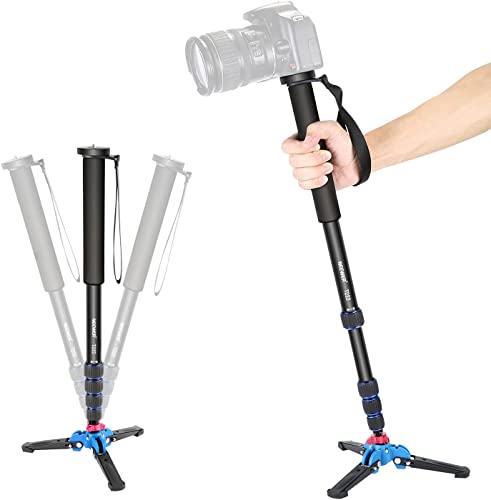
This NEEWER monopod includes a detachable foldable base with three legs, enabling it to function both as a monopod and as a compact tripod. Extended height reaches up to 66 inches, with a maximum load around 11 pounds. It incorporates a 15-degree tilt option on the tripod base to facilitate panoramic rotations and angled shots. The kit’s versatile design supports various DSLR and mirrorless cameras, providing flexibility for on-the-go shooting and burst-mode photography in dynamic environments.
CAMBOFOTO 73″ Monopod / Tripod

The CAMBOFOTO 73″ unit combines a monopod with a built-in detachable center column that converts into a monopod for rapid position changes. With a maximum height of 73.3 inches and a 11-pound load capacity, this model is suitable for DSLR and mirrorless cameras, as well as cell phones and camcorders. It features solid CNC-made joints for smoother adjustments, resistance to scratches, and a bubble level for precise alignment. Note the product’s versatility for event shoots, travel, and livestreams, though it’s heavier than ultra-portable options.
NEEWER 70.5″/179cm Monopod With Fluid Head

This NEEWER professional monopod features a telescoping range up to 179 cm with a 360-degree pan and a -70°/+90° tilt on a fluid head. It offers a detachable tripod base and compatible quick-release systems for DSLR cameras, camcorders, and gimbals. The setup supports precise pan and tilt movements, making it suitable for video work, vlogging, and dynamic sports photography. It also supports a range of accessories through multiple screw options and a compatible layout with various camera systems.
IFOOTAGE A400 Round Base Monopod

The IFOOTAGE A400 uses a space-saving round base design to minimize floor space during crowded shoots and studio setups. It features a heavy-duty 5mm aluminum chassis and can support studio lights up to 22 pounds, reducing tipping risks in tight spaces. The monopod includes universal 3/8″ screw compatibility, plus light adapters for cameras, camcorders, and other gear. It’s well suited for small studios, quick positioning, and macro-focused workflows where space is at a premium.
Buying Guide: Key Purchase Considerations
- Height range and portability: Choose a model that collapses compactly for travel yet reaches a comfortable working height for your typical shots.
- Load capacity: Ensure the monopod can support your camera body, lens, and any accessories (monopods listed here handle up to roughly 11 pounds or more, depending on the model).
- Base versatility: Some monopods include detachable bases or tripod functionality, offering quicker repositioning for video and motion work.
- Weight and materials: Aluminum builds provide good strength-to-weight ratios; look for models with foam grips and wrist straps for comfort during handheld use.
- Head compatibility: While most monopods rely on a 1/4-inch thread, verify if adapters are included or available for your camera system and quick-release plates if you plan to swap heads frequently.
- Stability features: For video or long exposure, consider models with a fluid head, tilt/pan controls, or a built-in bubble level to ensure level framing.
- Accessory ecosystem: Some stands offer additional accessories like removable bases, 360-degree pan heads, or compatibility with common brands and gimbals; check compatibility before purchasing.
- Intended use: Travel photography and vlogging often benefit from lighter, compact monopods, while studio or event work may prioritize heavier-duty bases and fluid heads for smooth motion.
- Budget vs. value: Higher-priced options often provide smoother operation and longer lifespans; balance cost with how frequently you’ll use the monopod and the environments you shoot in.
- Warranty and support: Look for brands offering clear warranty terms and readily available replacement parts or accessories.