Camera sliders elevate video and time-lapse work by delivering silky, controlled motion. This guide highlights five top motorized sliders that suit a range of setups—from compact setups to full-frame rigs. Each option balances motion precision, app control, battery life, and compatibility with common cameras and accessories. Whether you’re filming interviews, tracking shots, or expansive panoramas, these motors provide repeatable results and professional-looking motion.
Summary of chosen products
| Product | Brand | Key Strengths | Approximate Readiness |
|---|---|---|---|
| GVM 48″/120cm Motorized Slider (Carbon Fiber) | GVM Great Video Maker | 6 shooting modes, panoramic + 120° pan, multiple screw ports | High versatility; solid for pro setups |
| NEEWER 47.2″/120cm ER1-120 | NEEWER | App control, Time Lapse, 120° Panorama, silent motor | Excellent for extended shoots |
| NEEWER 47.2″/120cm DL400 (Dual Motor) | NEEWER | Ultra-quiet dual motor, long runtime, multi-mode | Great for smooth, quiet footage |
| NEEWER 31.5″/80cm ER1-80 | NEEWER | Compact, app + remote control, versatile mounting | Compact travel-friendly option |
| GVM 48″/120CM Carbon Fiber Slider (Remote) | GVM Great Video Maker | Remote control, multiple modes, 120° panorama | User-friendly live control |
GVM 48/120cm Motorized Carbon Fiber Slider

The 6-in-1 motion system supports tracking, panoramic, time-lapse, and video capture, with programmable start/end points, motor torque adjustments, and precise slip settings. Its carbon fiber construction promises stiffness with light weight, while multiple 1/4″ and 3/8″ screw ports on both sides and the middle enable flexible mounting for vertical, horizontal, or 45-degree shooting. A comprehensive set of shutter release cables broadens compatibility with a range of cameras, ensuring professional results across diverse shoots.
NEEWER DL400 Upgraded Motorized Slider

Designed with ultra-quiet dual motors and nonslip wheels, the DL400 supports up to 6.6 lb (3 kg) loads for smooth, uninterrupted video. It includes a 360° ball head and action camera adapter compatible with top 1/4″ screws, making it easy to pair with DSLRs, mirrorless cameras, or smartphones. The NEEWER app enables wireless control, including Live Video, Time Lapse, and preset save. A rechargeable battery provides hours of runtime, and USB-C supports charging and firmware upgrades, extending field usability.
NEEWER 47.2″/120cm ER1

This 120 cm slider combines a versatile 11 lb horizontal load capacity with a balanced 5.5 lb tilt capacity. It supports app control and a 2.4 GHz remote, offering manual, video, and time-lapse modes. The ER1 is powered by a 4400 mAh battery with charging options via USB-C, enabling hours of continuous filming in field environments. Its silent motor design minimizes noise in audio-sensitive shoots and expands practical use in interviews and on-location productions.
NEEWER 31.5″/80cm ER1-80

Compact yet capable, the ER1-80 offers app wireless control and a 2.4G remote option to tailor movement. It handles standard video modes, time-lapse sequences, and a smooth constant-speed option. The 31.5″ length makes it ideal for smaller studios, vlogging setups, or on-the-road shoots where space-saving is essential. A 4400 mAh battery supports extended use, with USB-C charging to keep gear ready between takes.
NEEWER 47.2″/120cm ER1-120

The ER1-120 model provides extended travel with a robust motion system that supports tracking, video, and panoramic shooting, including a 120° panoramic mode. The dual motor setup delivers improved stability and smoother starts/stops, ideal for long-form interviews, run-and-gun shoots, and cinematic tracking shots. Users can operate via app and remote controls, adjusting frame counts, intervals, and shutter settings to suit the scene. Battery-powered operation extends shoot time in field conditions.
GVM 48″/120CM Carbon Fiber Slider (Remote)
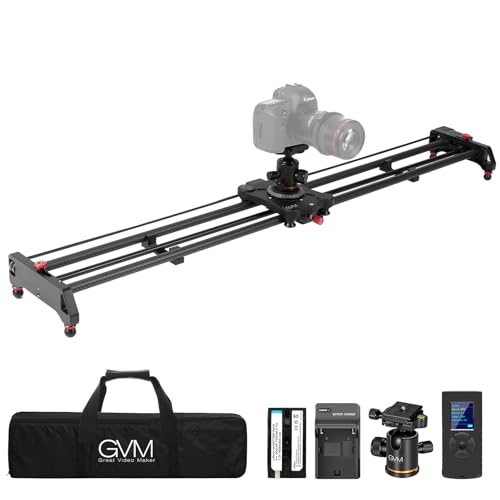
This carbon fiber slider emphasizes lightweight mobility with a full remote control interface. It offers three shooting modes—tracking, time lapse, and video—plus a 120° panorama option for dramatic establishing shots. The dual-access control can simplify complex scenes, and the starting/ending point customization supports precise repetition for multi-shot sequences. The design accommodates a range of accessories and mounting configurations, making it a practical choice for studio and field work alike.
Buying Guide: Key Purchase Considerations
- Motor performance and noise: Look for quiet, smooth motors to protect audio quality. Dual motors can offer more stable motion for longer runs.
- Control options: Apps provide convenience for complex moves; remotes and wired controls can be essential in environments with limited wireless signal.
- Weight capacity and tilt tolerance: Ensure the slider can safely support your camera body and accessories, especially when tilted or mounted on uneven terrain.
- Length and portability: Longer sliders enable cinematic moves but require more storage space and setup time. Consider travel-friendly options for on-location shoots.
- Power options: Battery life matters for field shoots. Check whether batteries are included and whether USB-C charging is supported for on-site charging.
- Versatility of shooting modes: Time-lapse, video, and panoramic modes expand what you can capture, but confirm whether the slider supports automatic looping or interval control.
- Mounting versatility: Multiple screw ports and compatibility with tripods or supports increase setup flexibility for different rigs.
- Build material: Carbon fiber tends to be lightweight and stiff, aiding stability and transportability compared to metal alternatives.
- Accessories and expandability: Included accessories (remote, extra cables, ball heads) save setup time and increase versatility in complex shoots.
- Warranty and service: A robust warranty and accessible customer support help maintain gear reliability in demanding work environments.
Each of the featured models offers a distinct balance of features, performance, and portability. When choosing the best motor for a camera slider, align the selection with your typical shooting scenarios—whether studio interviews, location shoots, or travel documentation—and consider how you’ll use modes like time lapse or panoramic shooting to achieve consistent, professional results.