When choosing a multi-camera video conference system, look for reliable auto-tracking, integration with your favorite apps, and clear audio capture. This guide highlights five top options suited for small to large rooms, hybrid work, and teaching environments. The top picks emphasize (1) flexible multi-camera setups, (2) built-in or easy app integration, and (3) practical usage in real meeting scenarios. This overview helps buyers match gear to room size, speaking needs, and collaboration style.
Summary table of selected products:
| Product | Best For | Key Benefit | Limitations |
|---|---|---|---|
| NexiGo Meeting 360 Ultra (Gen 3) | Medium to Large rooms | Up to four cameras, built-in OS, eight mics | Most complex setup |
| PANOCORE360 All-in-One | Small to Medium spaces | 360° coverage, single PC/Mac output | 1080p output |
| TOUCAN 360-Degree Camera | Balanced office use | 360° view with AI tracking | 4K not specified |
| TONGVEO All-in-One System | Small to medium rooms | AI auto-tracking, USB3.0 and HDMI | Native 1080p emphasis |
| COOLPO Camera 360 | Hybrid meeting spaces | AI tracking, 8 mics, 360° view | 4K not stated |
NexiGo Meeting 360 Ultra Gen 3

This all-in-one conference system supports up to four integrated cameras, enabling wide-area capture ideal for long or U-shaped table layouts. The NexiGo Meeting Studio app detects participants and helps share the spotlight across multiple viewpoints. This solution is best for teams needing expansive room coverage and smooth switching between views during discussions. A built-in operating system allows direct conferencing on a display, removing the need for an external PC.
Best for: Medium to large meeting rooms with multiple talking points. Why: It offers multi-camera flexibility and built-in app compatibility with popular platforms like Zoom, Google Meet, Skype, and Teams. Limitation: The setup can be more complex due to multi-camera integration and network considerations.
PANOCORE360 All-in-One Meeting Camera
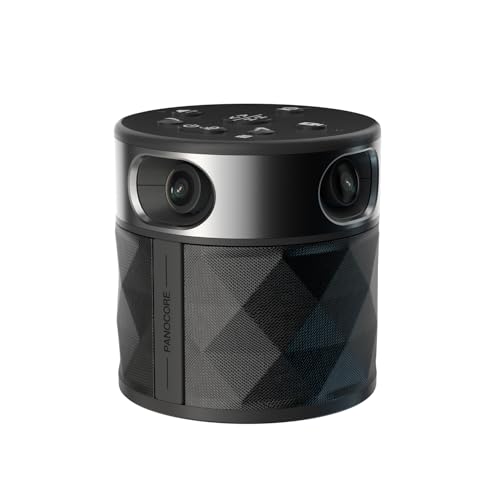
Designed for small to medium spaces, this camera combines four cameras, mics, and a speaker with a single PC/Mac connection. It delivers a full 4K 360° capture merged into a 1080p output, with adaptive modes to emphasize an active speaker or show the entire room. Ideal for hybrid meetings where one computer needs to manage multiple perspectives. It’s especially suited for rooms where remote participants benefit from a comprehensive room view.
Best for: Small to medium rooms needing a single-point computer solution. Why: It simplifies hardware while preserving room-wide visibility. Limitation: Output is 1080p, which may be lower than native 4K expectations for some users.
TOUCAN 360-Degree Conference Camera
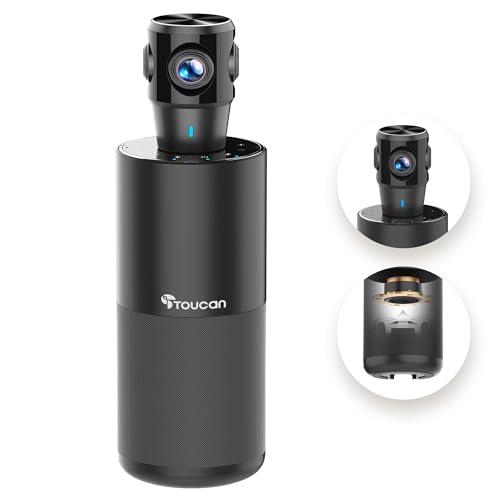
TOUCAN offers a 360-degree HD camera with four noise-reducing mics and AI tracking, designed for PC, Mac, or tablets. It supports plug-and-play setup, making it a practical choice for teams prioritizing quick deployment and consistent audio pickup. Best for: Office teams needing vivid 1080p video and reliable AI tracking without complex configuration. Limitation: Primarily 1080p quality, which may suit some rooms but not higher-resolution needs.
TONGVEO All-in-One Conference System

This all-in-one system combines an AI auto-tracking PTZ camera, HDMI, and USB 3.0 output with a Bluetooth conference speakerphone. Designed for small-to-medium rooms, it provides integrated video and audio with clear tracking of speakers. Best for: Settings where a single device handles both camera and audio in a compact footprint. Caution: The description emphasizes 1080p output, which may not satisfy users seeking 4K capture.
COOLPO Camera 360

COOLPO offers a 360° 4K-capable solution with AI-driven speaker tracking and multiple mics. It is designed for Zoom, Meet, and other platforms with plug-and-play simplicity. Best for: Hybrid rooms seeking robust collaboration with AI focus on active speakers. Limitation: Some models advertise 4K capability, but product data here emphasizes general 360° coverage and AI features without consistently stating 4K output.
Logitech BCC950 Desktop Conferencing

Logitech BCC950 combines a full HD camera with a built-in speakerphone and noise-canceling mic for compact spaces. It is compatible with common meeting platforms and offers straightforward plug-and-play USB connectivity. Best for: Small offices or desktops needing a single-device, all-in-one conferencing setup. Limitation: Not a multi-camera system, so it lacks room-wide dynamic views in larger spaces.
4K PTZ Camera AI Auto Tracking

This TongVeo 4K PTZ camera focuses on AI humanoid and face recognition to keep the primary subject in frame. It provides HDMI 2.0 and USB 3.0 outputs at 60fps, catering to education, worship, and conference spaces that require high-resolution streaming. Best for: Rooms needing high-fidelity tracking of speakers across larger stages. Limitation: 4K capture may demand higher bandwidth and compatible hardware for optimal performance.
Buying Guide
What size room are you equipping? For small conference rooms, a single camera system with reliable audio may suffice. For medium to large rooms, look for multi-camera setups (or easy expandability) and AI tracking to maintain a strong presenter view. Consider whether you want an all-in-one device with built-in OS or prefer using a preferred video platform on a PC/Mac.
How important is 4K vs 1080p? If your presentation content includes fine detail or you have large displays, 4K may be beneficial. However, many rooms successfully operate with 1080p beyond standard conferencing needs. Bandwidth and processing power should guide resolution decisions.
Audio quality matters as much as video. Systems with multiple mics and echo cancellation typically yield clearer conversations, especially in echo-prone rooms. Check for full-duplex capabilities and how microphones pick up voices at varying distances.
Ease of use and compatibility: If you rely on Zoom, Meet, Teams, or WebEx, choose devices marketed as fully compatible with those apps. Built-in app stores or straightforward plug-and-play setups reduce friction for daily use.
Future-proofing: Look for scalable systems that allow adding cameras or upgrading components. An all-in-one footprint is convenient, but modular options can adapt as meeting needs grow.
FAQ
- What is AI auto-tracking in conference cameras? It uses algorithms to identify the speaker and adjust framing to keep them in view, reducing manual panning.
- Do these systems require a PC? Some models have built-in OS or apps, while others connect via USB/HDMI to a computer or display. Check the device you choose for your setup.
- Which is best for large rooms with many participants? Multi-camera systems with wide field-of-view and strong microphone arrays are designed for larger spaces and longer tables.
- Is 4K worth it for video conferencing? It improves detail on large displays, but it may require higher network bandwidth and processing power; 1080p often suffices for standard meetings.
- Can I use these with common platforms like Zoom and Teams? Yes, most listed products advertise compatibility with Zoom, Google Meet, Microsoft Teams, and WebEx.
- Are these devices easy to install? Plug-and-play models prioritize quick setup, while multi-camera systems may require more configuration to optimize camera angles and mic placement.