Whether you’re a hobbyist preserving old family photos or a pro digitizing archives, the right negative scanner can dramatically improve clarity and efficiency. This guide highlights five top all-in-one film and slide scanners that work without a computer, making it easy to convert 35mm, 110, and other formats into high-quality digital files. Each option targets different needs—from large displays for sharing to compact, portable units for quick previewing.
Buyer profiles:
– Best for casual at-home archiving: models with large LCDs and simple one-touch scanning.
– Best for families and legacy collections: built-in memory and easy transfer features.
– Best for on-the-go digitization: quick-feed trays and compact form factors.
– Best for enthusiasts who want high resolution: higher MP sensors and HD output options.
| Product | Key Strength | Best For |
|---|---|---|
| KODAK Slide N SCAN | 5″ LCD, multiple film adapters | Families with mixed film types |
| Magnasonic All-in-One 24MP | Built-in memory, HDMI output | Home viewers who want TV playback |
| DigitPro Photo Scanner | One-Touch scanning, 5″ LCD | Non-tech users digitizing varied formats |
| KODAK Slide N Scan Max | 7″ tiltable LCD, fast feed | Display-ready previews and editing |
| Portta 22MP Film Scanner | HDMI, 5″ LCD, no computer | High-resolution standalone scanning |
KODAK Slide N SCAN
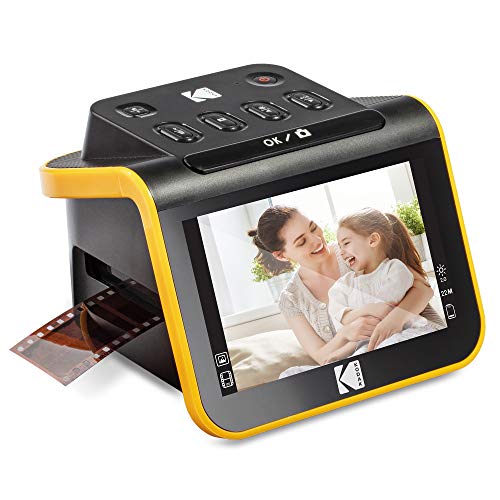
The KODAK Slide N SCAN is a standalone 1422MP digital film scanner designed to convert negatives and slides into JPEG files directly to an SD card. It supports 135, 126, and 110 formats with 5” LCD for on-device viewing and editing. Its quick-feeding tray and included adapters streamline continuous scanning, making it well-suited for family photo archives and hobbyists who want a simple, all-in-one solution. Best for users who prioritize a built-in display and direct SD storage.
Who this is best for: families or collectors digitizing mixed film formats and who value an integrated display for quick previews. A potential limitation is the need for an SD card (not included) to store scans.
Magnasonic All-in-One 24MP Film Scanner

Magnasonic combines 24MP scanning with a 5″ display and HDMI output for viewing on a larger screen. It handles 35mm, 110, 126, and Super 8 film, along with slides, delivering high-resolution digital JPEGs. The built-in 128MB memory and an SD card slot (up to 128GB) support a straightforward workflow for archiving memories and sharing them on a TV or monitor. Best for users who want a larger display and external viewing capability.
Who this is best for: households that want immediate TV-friendly playback and a simple conversion path from film to digital. Limitation: requires compatible HDMI connection for external viewing (HDMI not included).
DigitPro Photo Scanner
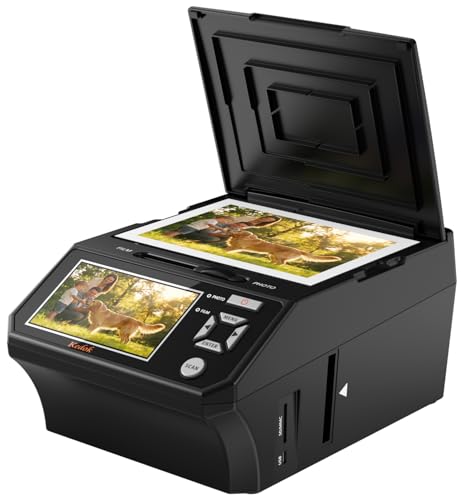
DigitPro offers an all-in-one solution capable of converting 35mm, 110, and 126 negatives as well as 50mm slides to 22MP images. The 5″ LCD provides real-time previews, and its standalone operation means no computer is required. An included 8GB SD card and built-in memory simplify the initial setup, while the one-touch scanning makes it ideal for non-technical users. Best for those who want a versatile scanner with strong on-device viewing and memory options.
Who this is best for: first-time digitizers and busy families who value quick, no-software operation. Caution: SD card capacity may limit long sessions unless expansion is planned.
KODAK Slide N Scan Max Digital Film Scanner

The Slide N Scan Max features a 7″ tiltable LCD and a 13MP sensor for vivid previews and edits. Its quick-feed tray supports continuous scanning without frame repositioning, and the display doubles as a digital picture frame. This model is ideal for users who want a larger viewing area and a more cinematic preview workflow. Best for archive projects where preview quality matters before saving.
Who this is best for: collectors who value an adjustable display and a fast, uninterrupted scanning workflow. Limitation: tilt and reach may require table space for optimal use.
PORTTA Film Scanner

Portta’s 22MP option provides a 5″ LCD with HDMI output, supporting 135, 126, 110 film and slides with no computer required. It offers a choice between 16MP and 22MP resolution for sharper scans and easier sharing. This model suits users who want a compact, standalone unit with flexible high-resolution options. Best for those balancing size, price, and output quality.
Who this is best for: shoppers seeking a compact, standalone scanner with HDMI viewing. Caution: some users may prefer higher MP sensors for very fine detail work.
HP Touch Screen Film & Slide Scanner

HP’s 7″ touch-screen scanner emphasizes ease of use with a 13MP sensor and a touch interface for quick previews and edits. It supports 35mm films, negatives, and slides, with a quick-feed and 50mm adapter to streamline scanning. This option is positioned for users who want a modern touchscreen experience without a computer. Best for touch-oriented workflows and users who value direct on-device editing.
Who this is best for: users who prefer a tactile, modern UI and straightforward film-to-digital conversion. Limitation: higher-end features may come with a learning curve for complete customization.
Buying Guide: What to Consider
- Display size and quality: A larger LCD simplifies framing and previewing before saving files. If you share on a TV, confirm HDMI output availability.
- File formats and resolution: Look for 22MP or 24MP sensors for clear detail. Confirm whether the device saves directly to SD card or internal memory.
- Film format support: Ensure compatibility with 35mm, 110, 126, and slides you own. Some models also handle Super 8.
- One-touch vs. software-based scanning: Standalone units with one-touch scanning are easiest for non-tech users; software-assisted options may offer advanced color correction.
- Memory and expansion: Check internal memory size and SD card capacity limits; consider SDXC compatibility for future use.
- Connectivity: HDMI output enables external displays; USB or network features can aid in quick transfers.
- Physical design: A tilt or large screen can improve usability on desks or shelves; consider desk space requirements.
FAQ
- What is the typical scan resolution I should expect from these devices?
– Most models offer between 16MP and 24MP scans, which balance detail with file size; higher MP generally yields crisper images on larger displays. - Do these scanners require a computer to operate?
– Many listed options are standalone and do not require a computer, saving steps when digitizing family memories. - Will I be able to preview scans on a TV or monitor?
– Many models include HDMI output or a large LCD for on-device preview; HDMI is needed for external displays. - Can I store scans directly to an SD card?
– Yes, several models support saving directly to SD cards (and some include built-in memory for immediate use). - Which model is best for mixed film formats?
– Models with broad format support (35mm, 110, 126, slides) and easy adapters, like the ones listed, are ideal for mixed archives. - Is a high-resolution sensor always necessary?
– Higher resolution is beneficial for large prints and detailed archiving, but consider storage and display needs for your setup.