When choosing a night vision hunting camera, expect reliable motion sensing, clear nighttime footage, and rugged durability. This guide highlights five top options that balance night vision performance with practical features for American hunters. The featured picks cover cellular and non-cellular models, so you can pick based on whether you need remote access or long-term offline use. Below, you’ll find concise overviews, ideal use cases, and a practical buying guide to help you compare at a glance.
| Product | Best For | Key Benefit |
|---|---|---|
| SPYPOINT Flex-M Twin Pack Cellular Trail Cameras | Cellular monitoring in remote areas | Free photo transmission and cross-carrier connectivity |
| WOSODA 2 Pack Trail Camera | Budget-friendly, high-resolution night footage | Fast 0.3s trigger and 850nm infrared night vision |
| Meidase P70 (Non-Cellular) | Offline analysis with high detail | 64MP photos, 1296p video, no-glow night vision |
| Meidase 2 Pack (Non-Cellular) P70 | Two-camera offline scouting | Same high-detail capture, no-wifi setup |
| KJK Trail Camera | Wide-angle field coverage | 36MP stills, 2.7K videos, strong night vision |
SPYPOINT Flex-M Twin Pack Cellular Trail Cameras

The SPYPOINT FLEX-M is designed for cellular monitoring with no WiFi setup. Best for hunters who need remote access and ongoing connectivity in challenging terrain. It includes cross-carrier coverage, so you don’t have to swap SIMs. The model supports night vision and 28MP photos with 720p videos and sound. It also pairs with solar panels for longer autonomy, and offers a free photo transmission plan up to 100 photos per month. A practical choice for long-term field deployments where cellular reliability matters.
Who this is for: hunters who want real-time image updates in remote locations and minimal maintenance. Why selected: it emphasizes seamless connectivity and a cost-friendly cellular option with no activation fees. Limitation: the free plan may require upgrades for many photos per month, and mobile data limits can apply depending on location.
WOSODA 2 Pack Trail Camera with Night Vision

The WOSODA pair emphasizes fast response and clear nighttime shots. With 30MP photos and 1080p video, these cameras capture detailed daytime and night-time activity. The night vision uses 850nm infrared LEDs for low-glow imaging, which helps reduce animal disturbance. It’s a strong option for backyard security, farm surveillance, or scouting without WiFi or cellular requirements. Included memory cards simplify setup.
Who this is for: budget-conscious hunters and property watchers who need reliable, non-cellular night vision. Why selected: strong still image quality, quick trigger, and effective low-glow night vision at a compelling price. Limitation: no remote viewing or cloud features; you must retrieve cards to review footage.
Meidase P70 Non-Cellular Trail Camera
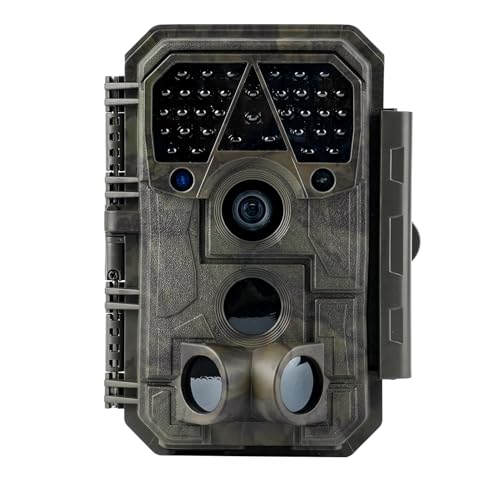
The Meidase P70 non-cellular model focuses on high image quality and reliable night vision. It offers 64MP photos and 1296p video with a fast 0.1s trigger speed and no-glow 940nm LEDs for night shooting. This makes it well-suited for users who prefer offline scouting with strong daytime detail and discreet nighttime capture. It’s a straightforward, no-network option for hunting camps where internet isn’t available.
Who this is for: wildlife researchers or hunters who prioritize image clarity in offline setups. Why selected: high-resolution daytime and nighttime output with quick triggering. Limitation: no cellular connectivity means you won’t receive remote updates or alerts.
Meidase 2 Pack Non-Cellular Trail Camera P70

This two-pack variant delivers offline scouting efficiency with two cameras using the same 64MP/1296p capabilities as the single-pack, plus no-glow 940nm infrared night vision. It’s ideal for wider coverage on larger tracts or paired deployments on trails. The absence of WiFi or cellular keeps costs predictable and setup simple, which is valuable for first-time users or budget-conscious buyers.
Who this is for: property owners or hunters who want dual offline coverage with top-tier image quality. Why selected: cost-efficient twin-pack for broader area surveillance. Limitation: must manage two SD cards and review footage manually.
KJK Trail Camera 36MP 2.7K Night Vision

The KJK model offers a wide 130-degree field of view with 36MP images and 2.7K videos. It features 0.1-second trigger speed and strong night vision up to 75 feet, using 850nm low-glow LEDs for discreet operation. This camera suits hunters who want broad area coverage and crisp nighttime footage in a compact package. It also includes a color LCD screen for on-device review, which helps in field adjustments without a computer.
Who this is for: users needing wide coverage and clear night footage with an easy on-device review. Why selected: excellent night performance combined with high-resolution daytime footage. Limitation: the broad angle can produce more motion blur if animals are far away or moving quickly.
Buying Guide: Key Night Vision Hunting Camera Choices
- What connection type fits your operation? Cellular cameras provide remote updates and alerting, while non-cellular units rely on local SD cards. Choose cellular for remote scouting or security, and non-cellular for simple setups and offline review.
- How important is night vision quality? Look for no-glow or low-glow infrared LEDs (around 850nm to 940nm) to minimize disturbance and improve nighttime image clarity. Consider the distance the camera can effectively illuminate.
- Trigger speed and memory capacity matter. Faster triggers (0.1–0.3 seconds) reduce missed moments. Higher MP and video resolution (e.g., 64MP, 1296p) yield clearer daytime and nighttime footage but increase file sizes.
- Field of view and placement flexibility. A wide-angle lens (e.g., 130°) helps monitor larger areas, while compact form factors fit tight spaces. Weather resistance (IP rating) keeps cameras reliable in harsh conditions.
- Power options and longevity. Solar compatibility or high-capacity rechargeable batteries reduce visits to replace batteries, especially in remote locations. Check if solar panels are sold separately or included.
- Data management and ease of use. For offline setups, ensure you can format and transfer data easily. For cellular models, confirm plan options, coverage, and costs that match your scouting schedule.
Frequently Asked Questions
- What is night vision in hunting cameras? It refers to infrared or no-glow LEDs that illuminate dark scenes without spooking animals, enabling clear footage at night.
- Do you need a cellular plan for a cellular hunting camera? Yes, for remote image transmission and alerts in real-time. Plans vary by provider and usage.
- How far can night vision travel on these cameras? LED range typically ranges from 50 to 100+ feet, depending on model and terrain.
- Should I buy two cameras or a single model? Dual cameras expand coverage and reduce blind spots, especially on larger properties.
- Are non-cellular cameras easier to manage? Yes, they are simpler and less costly over time since there are no data plans, but you must manually review footage.
- What should I consider for post-hunt data handling? Ensure your cameras save data reliably on SD cards and that you have a straightforward way to review, label, and store footage.