Answering your search, these night vision thermal monoculars bring clear heat-detecting imagery, rugged builds, and on-device or app-based recording. They’re best for outdoor enthusiasts, hunters, and professionals needing reliable detection in darkness or adverse weather. The top picks below balance resolution, battery life, and portability to help you choose confidently. A quick buyer table follows the intro to compare core specs at a glance.
| Product | Resolution | Frame Rate | Key Benefit |
|---|---|---|---|
| TOPDON TS004 | 256×192 | 50 Hz | Strong battery, real-time app monitoring |
| TOPDON TS004 Pro | 384×288 | 50 Hz | Higher detail for larger targets |
| RIX Pocket K3 | 384×288 | 50 Hz | Very compact with OLED display |
| AGM Taipan V2 19-320 | 320×256 | 50 Hz | Longer detection range, waterproof |
| MiLESEEY TNV30i | 512×384 | 50 Hz | Super-resolution and long-range capability |
TOPDON TS004 Thermal Imaging Monocular

Best for: Budget-conscious outdoorsmen who want solid image clarity with long battery life and wireless monitoring. The TS004 uses a 256×192 thermal sensor at 50Hz, delivering vivid thermal images for clear target identification. Its 5000mAh battery supports up to 11 hours of operation, reducing the need for frequent recharging in the field. Real-time monitoring via the TopInfrared App enables wireless image capture and video with audio, even when offline, supporting flexible recording in remote locations.
Why chosen: Strong balance of core heat-imaging performance and practical features. The IP67 rating adds field durability, and the wireless app integration helps you share or review footage on the go. Best for long-into-the-night observation without frequent battery swaps.
Limitations: Higher-end features rely on app connectivity; ensure your device remains paired for uninterrupted streaming in the field.
TOPDON TS004 Pro Thermal Imaging Monocular

Best for: Users needing higher resolution for larger or more distant scenes. The TS004 Pro elevates imaging with a 384×288 sensor, still at 50Hz, for crisper details and sharper edges in complex environments. Like the base model, it offers a 5000mAh battery for extended outings and wireless live monitoring through the TopInfrared App, providing seamless capture and playback.
Why chosen: Higher sensor resolution translates into improved target discrimination in brush or rugged terrain, making it a better option where detection range and detail matter more than size. A suitable upgrade path from the TS004 for serious enthusiasts.
Limitation: Increased data can require more storage and processing; ensure you have adequate on-device space if capturing long videos.
RIX Pocket K2 Portable Thermal Monocular

Best for: Ultra-portable night vision on the move. The RIX Pocket K2 emphasizes compact design with a 256×192 sensor and a 50Hz refresh rate for reliable night scanning. Its 800×600 OLED display offers bright, clear viewing, and the ultra-lightweight build makes it easy to carry in a pocket or during hikes, hunts, or surveys.
Why chosen: The pocket-size form factor suits quick-look checks without bulk, making this a versatile choice for travelers who still want dependable thermal imaging. It also benefits from a straightforward, handheld experience for fast target confirmation.
Caution: The compact form factor means a smaller battery and potentially shorter run times in extreme conditions; plan charging accordingly.
RIX Pocket K3 Portable Thermal Monocular
Best for: Hunters and outdoor enthusiasts needing higher resolution and long-range capability in a compact unit. The K3 uses a 384×288 sensor and 50Hz frame rate, paired with a 17.5° field of view and a 2x base magnification. Its 800×600 OLED display provides crisp visuals, and the device supports Wi-Fi for easy sharing of thermal data.
Why chosen: The combination of improved resolution, ergonomic form, and robust display makes it a strong choice when you need more detail without stepping up to a larger monocular. It also includes a tripod-ready interface for stable observations.
Limitation: For some users, the more compact optics may have a shallower depth of field at distance compared to larger models; consider field needs before buying.
AGM Taipan V2 19-320 Thermal Monocular
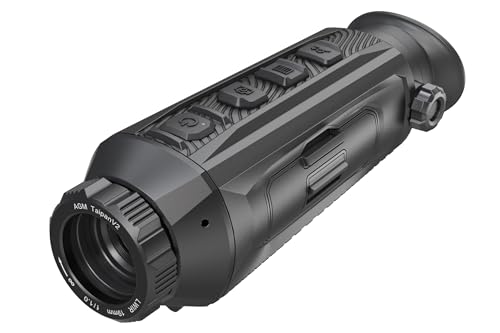
Best for: Users seeking long detection range and rugged performance in challenging environments. The Taipan V2 19-320 features a high-resolution 320×256 sensor, a 19mm lens, and strong digital zoom, delivering extended reach up to approximately 950 meters in controlled tests. It adds IP67 waterproofing for field resilience.
Why chosen: The higher zoom and longer-range capability make this model well-suited for perimeter monitoring, large-area scouting, or difficult terrain where distant heat signatures matter. It is a solid choice for serious night-hunting setups or remote surveillance tasks.
Limitation: Real-world performance varies with weather, contrast, and target size; maximum range is a guideline under controlled conditions.
AGM Taipan V2 10-256 Thermal Monocular

Best for: Outdoor users needing reliable imaging with flexible zoom. The Taipan V2 10-256 pairs a high-sensitivity 12μm detector with a range of digital zoom options and IP67 waterproofing, delivering practical versatility for varied field conditions.
Why chosen: The sub-35mK detector provides crisp images even in low-contrast scenes, and the product’s outdoor-ready design supports extended field use. This model balances value with capability for regular nighttime scouting.
Limitation: The zoom range may be less dramatic than larger-diameter lenses; consider your typical engagement distance when choosing.
MiLESEEY TNV30i Thermal Monocular

Best for: Professionals and serious enthusiasts who want multi-sensor clarity and advanced processing. The TNV30i uses 512×384 resolution with a 20mK sensitivity and Super-Resolution output. Its 10–15 mm lens enables flexible scanning from wide to focused views, and the 1600-yard detection distance supports long-range observation in total darkness.
Why chosen: The combination of high resolution, super-resolution processing, and long-range capability makes this model a top pick for those who demand peak image quality and distant heat detection in diverse environments.
Caution: The device relies on a robust app workflow for full features; ensure your pairing and app setup are complete before field use.
Buying Guide: Key Considerations for Night Vision Thermal Monoculars
- Resolution and sensor size: Higher resolution improves target discrimination, particularly at longer distances or in cluttered environments.
- Frame rate: 50 Hz is common and provides smoother motion; lower rates can cause motion blur on moving targets.
- Detection range: Real-world ranges vary; consider typical distances you monitor and whether you need long-range capability.
- Display quality: OLED or high-contrast displays help in low-light conditions; larger screens reduce eye strain during extended use.
- Battery life and power management: Longer run time is critical for extended hunts or surveillance; look for devices with USB-C charging or replaceable batteries when possible.
- Durability and weather sealing: IP67 or higher ratings protect against water and dust; field use often requires rugged construction.
- Connectivity: App-based monitoring and data transfer can be important for recording and sharing; verify compatibility with your devices.
- Weight and portability: Ultra-compact models improve ease of carry, but may trade off some features or battery capacity.
- Storage and memory: On-device storage (e.g., 16GB to 32GB) supports quick capture of media; consider models with expandable options if needed.
Frequently Asked Questions
- What is a thermal monocular used for?
Thermal monoculars detect heat signatures to reveal living beings, animals, or warmed objects in darkness or obscurants like fog, smoke, and light brush.
- How important is resolution in a thermal monocular?
Resolution affects detail and target recognition; higher resolution helps distinguish small targets and identify features at distance.
- Do I need Wi-Fi or an app for these devices?
Apps enable live monitoring, image/video transfer, and remote control in some models. Consider how you plan to review footage in the field.
- Is IP rating important for outdoor use?
Yes. An IP67 (or higher) rating protects against water and dust, which is valuable in harsh or wet environments.
- What should I know about battery life?
Longer battery life reduces the need to recharge during extended outings; check whether the model uses replaceable batteries or recharge via USB-C.
- What is the typical detection range I can expect?
Detection range varies with environmental conditions and target contrast; manufacturer figures are often measured under controlled conditions and may differ in the field.