Planetary imaging blends optical performance with digital sensors to reveal crisp details on the Moon and planets. The right planetary camera can boost resolution, minimize noise, and streamline capture workflows for beginners and seasoned observers alike. The selections below emphasize color and monochrome sensors, cooling options, high frame rates, and user-friendly software. Each camera is linked to Amazon for quick spec comparison, while a concise summary follows to help you compare at a glance.
| Product | Brand | Key Feature |
|---|---|---|
| SC715C | SVBONY | 1.45μm pixel, 4K color imaging, IMX715 sensor, 512MB cache |
| SV105 | SVBONY | 1.25″ IMX307, beginner-friendly, plug & play |
| SV305C | SVBONY | 2.1MP color, IMX662, good for EAA |
| SC432M | SVBONY | Monochrome cooled, 9µm pixels, global shutter |
| SC311 | SVBONY | IMX662, 1080P wifi eyepiece, lunar photography |
SVBONY SC715C: 4K Planetary Camera

The SVBONY SC715C leverages a 1.45 micrometer pixel sensor to deliver high-detail planetary images at up to 4K resolution. The IMX715 sensor provides a broad dynamic range and low readout noise, which helps preserve subtle shading on planetary discs even during short exposures. A 512MB DDR3 cache minimizes frame delays, enabling smoother video and more efficient stacking for high-contrast captures. This camera is well-suited for experienced observers seeking crisp color planetary sequences without complicated optical arrangements.
Designed for practical telescope setups, the SC715C can produce sharp results with standard focal lengths and does not require additional magnification with a Barlow lens for many planetary targets. Its compact design makes it easy to integrate into existing rigs, and the high data throughput supports rapid capture of multiple frames for stacking. Users can expect detailed views of major planets and moons with reduced blur from atmospheric turbulence when capturing during favorable seeing conditions.
In operation, the camera emphasizes color fidelity and detail, with a focus on maximizing throughput and stability across observing sessions. The SC715C is compatible with common capture software and workflows, offering a reliable option for both solo observers and imaging setups that rely on quick-turnaround sequences for documentation and outreach purposes.
SV105: Entry-Level Lunar and Planetary Camera
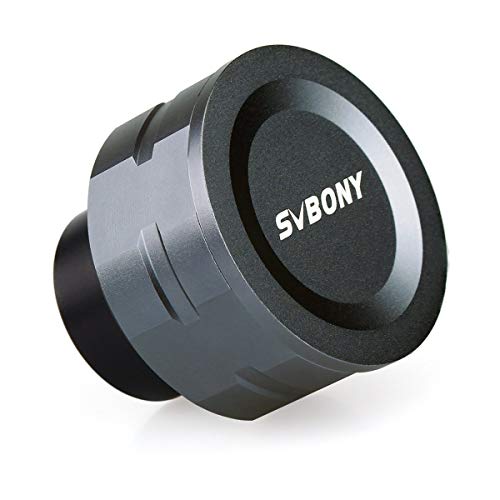
The SV105 camera provides a straightforward path into astronomical imaging. Its 1.25″ form factor and IMX307 CMOS color sensor are tailored for lunar and planetary photography, making it an approachable option for beginners. An electronic telescope eyepiece setup enables real-time viewing and quick recordings; users can capture quick videos by simply pointing at the Moon or a bright planet and starting the recording.
One of the camera’s advantages is plug-and-play simplicity: no driver installation is required on Windows, and it supports real-time observation. Real-time viewing can be transferred to a laptop via compatible software, with Linux and Android variants supported through the respective capture programs. The SV105 is ideal for hobbyists who want an affordable, easy-to-use entry point into planetary imaging while exploring basic stacking and processing workflows.
Overall, the SV105 prioritizes user-friendliness and immediate results, offering a practical means to learn imaging basics, build confidence, and expand into more advanced planetary and lunar projects over time.
SV305C: 2.1MP Color Planetary Camera

The SV305C introduces a color entry-level option with a 2.1MP resolution and the IMX662 sensor. Its 1.25″ back-illuminated design and 2.9µm pixels support a balanced dynamic range and improved light sensitivity, which is helpful for planetary and lunar imaging. The sensor’s low readout noise and red spectral efficiency help deliver clearer, more natural color representations, particularly in situations with modest light and higher atmospheric turbulence.
Designed with EAA (eyepiece computer-assisted viewing) in mind, the SV305C is well-suited for capturing quick videos of the Moon and bright planets while you learn to optimize exposure, gain, and stacking. It complements entry-level to mid-range telescope setups, offering a dependable step up from more basic cameras without sacrificing accessibility for new users.
Compatibility with standard capture software expands its flexibility for both live-monitoring sessions and post-processing workflows, enabling a range of viewing experiences from live color previews to refined planet renders after stacking and processing.
SC432M Monochrome Cooled Planetary Camera

The SVBONY SC432M is a monochrome cooled planetary camera that emphasizes high sensitivity and image stability. Equipped with a global shutter, it can capture fast-moving targets with reduced rolling shutter artifacts, making it suitable for imaging the Moon’s quick changes and bright planetary features. The camera uses large 9µm pixels, which contribute to strong signal collection and high detail, especially when paired with narrowband filters or dedicated luminance channels.
With a 1.1″ large-format sensor area and the cooling capability, the SC432M supports high-contrast imaging with lower thermal noise during longer sessions. Its monochrome design is ideal for combining with LRGB or narrowband filter wheels to achieve rich color separation and finer tonal gradations. This camera is well-suited for advanced observers who want precise grayscale data and flexible post-processing options for planetary detail and lunar close-ups.
In practical use, professionals may leverage the high frame rate and sensitivity to maximize data quality during short, high-speed captures, while hobbyists can utilize extended integration for cleaner results after stacking and calibration.
SC311 WiFi Eyepiece: Moon Camera

The SC311 is designed as a WiFi-connected eyepiece with an IMX662 sensor and 1080P resolution, focusing on lunar photography and real-time viewing. It supports up to four device connections, enabling observers to share the view with multiple tablets or laptops. The camera includes a removable UV/IR cut glass, which helps improve color fidelity in daylight views and night photography contexts.
Important to note is that the SC311 is not a standalone imaging solution; it needs to be paired with a telescope for effective astrophotography. Its wireless streaming capability makes field use convenient for quick-look observations, outreach demonstrations, or collaborative observing sessions. For Moon-centric captures or live demonstrations, the SC311 offers a lightweight, flexible option for on-the-go imaging without a heavy mount setup.
Buying Guide
When choosing a planetary camera, consider how sensor characteristics, resolution, and workflow impact your results. The following perspectives cover common use cases, from beginner to advanced imaging, and highlight trade-offs across color, monochrome, cooling, and connectivity.
Sensor Type, Pixel Size, And Light Handling
- Smaller pixels (around 1.25–1.45 µm) can provide higher detail with careful sampling, but may require longer exposure or better seeing to avoid noise.
- Monochrome sensors with cooling typically yield higher contrast and lower thermal noise, ideal for serious lunar and planetary work with filter wheels.
- Color sensors simplify immediate viewing but may trade some photometric accuracy for speed and ease of use.
Resolution, Frame Rate, And Data Management
- Higher resolution cameras (2MP–4K color) deliver more detail but demand robust processing and storage capabilities.
- Frame rate matters for short-exposure planetary captures; global shutters help prevent motion artifacts on fast targets.
- Onboard cache (like 512MB) and fast interfaces (USB 3.0) reduce bottlenecks during bursts and stacking workflows.
Cooling, Noise, And Dynamic Range
- Cooled monochrome cameras reduce thermal noise during long sessions, improving signal-to-noise for faint features.
- Low readout noise and high dynamic range help preserve the subtle tonal variations on planetary discs and lunar textures.
- For beginners, a color camera with adequate sensitivity can yield satisfying results with moderate processing and stacking.
Connectivity, Software Compatibility, And Workflow
- USB 3.0/3.1 interfaces support rapid data transfer for live viewing and fast stacking pipelines.
- Software compatibility (SharpCap, AstroDMx Capture, etc.) determines how easily you can integrate a camera into your existing setup.
- WiFi-enabled eyepieces offer portability and quick sharing, but may require network setup and consider field reliability.
Optical Fit, Mounting, And Back Focus
- 1.25″ and 2″ compatibility affects what eyepieces and adapters are needed for your telescope.
- Back focus requirements influence how easily you can integrate a camera with existing optical paths.
- Consider whether a camera supports direct imaging with your current focuser and any filter wheels you plan to use.
Use Case And Long-Term Value
- Beginner: prioritize ease of use, plug-and-play operation, and real-time viewing for quick learning and hobbyist imaging.
- Intermediate: value in higher resolution, better dynamic range, and software-driven stacking to improve detail.
- Advanced: cooled monochrome options with global shutters and filter wheel compatibility for precise data collection and calibrated results.
In short, the best choice depends on your experience level, desired targets, and how you balance convenience against the depth of data you wish to capture. A color camera with straightforward software is ideal for quick results and learning, while a cooled monochrome camera paired with filters and careful stacking yields the most scientifically useful lunar and planetary data. Always verify mounting compatibility and software support for your specific telescope and observing goals.