Finding the right push camera for sewer inspection can save time, reduce guesswork, and protect your property from costly damage. The following guide highlights five standout models designed for professional and DIY use, with features like long semi-rigid cables, 9″ or 7″ displays, 512Hz locators, and reliable IP67/IP68 durability. Each choice balances image clarity, ease of use, and durability to help you identify cracks, blockages, and leaks with confidence.
Summary of Selected Products:
- <strongChoosePRO 2026 New 7” Sewer Camera — 1080P HD camera, 32GB DVR, 100ft (30m) cable, twist-to-unlock reel.
- <strongGatebig Sewer Camera with Locator — 165ft cable, 9″ IPS screen, 512Hz locator, portable trolley.
- <strongDEPSTECH Triple Lens Sewer Camera — 50ft semi-rigid cable, triple lenses, split screen, 5″ IPS screen.
- <strongAnysun Self Leveling Sewer Camera — 165ft length, 512Hz sonde, 9″ monitor, IP68, robust cable.
- <strongVEVOR Sewer Camera — 165ft/50m, 9″ screen option with DVR, IP68, durable cable reel.
ChoosePRO 2026 New 7” Sewer Camera

The ChoosePRO sewer camera offers a true HD 1080P lens paired with a bright 7″ IPS screen, enabling clearer visualization of pipe interiors. A 16× zoom helps spot small details such as cracks, clogs, and rust. The upgraded 2025 cable reel unlock system twists to unlock in a second, reducing hand fatigue and cable jams. A DVR with a 32GB card provides real-time recording and instant playback, facilitating thorough analysis and documentation of findings. This kit is designed for faster issue identification and streamlined reporting.
Gatebig Sewer Camera With Locator
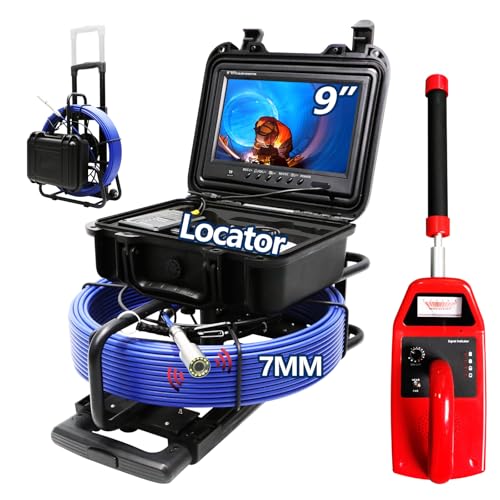
Gatebig combines long-range capability with locator technology. The 165ft fiberglass cable supports deeper inspections, and the 9″ IPS display provides a large viewing area for clearer imaging. A 512Hz transmitter works with a locator to identify the precise location of blockages or damage, helping technicians plan repairs efficiently. The system records video to a 16GB TF card for documentation. A portable trolley and wheels simplify transport on job sites, reducing setup time and fatigue.
DEPSTECH Triple Lens Sewer Camera

The DEPSTECH DS520 model brings versatility with a 50ft semi-rigid cable and three lenses for front and side views. Its split-screen functionality and 180° flip option facilitate multi-angle inspection without rotating the camera wire excessively. The system uses a 5″ IPS screen for clear real-time observation. The focal ranges across lenses support inspecting tight spaces, while the ergonomic design aids in handling during extended inspections.
Anysun Self Leveling Sewer Camera

Anysun’s self-leveling camera includes a 512Hz sonde, enabling precise location within pipes. The 9″ HD monitor displays footage clearly, while the 7MM thicker pushrod offers improved stiffness for navigating bends. A 32GB card stores recordings, and the IP68-rated stainless steel camera head provides durable performance in challenging environments. Built-in distance counting assists with project planning, and the cable reel design supports straightforward transport and cable management.
VEVOR 165 ft Sewer Camera

The VEVOR system delivers a 9″ display option with a DVR function and a 16GB SD card, enabling straightforward image and video capture. Its IP68 camera is housed in durable stainless steel with a sapphire lens for enhanced protection. A long 165 ft (50 m) semi-rigid cable supports deep inspections, while the included cable reel keeps cables organized. The device is designed for professional use in home, duct, or drain inspections, providing reliable illumination with adjustable LEDs for dark spaces.
Buying Guide: Key Purchase Considerations
Intended use and environment vary between residential and commercial work. When selecting a sewer inspection camera, consider the following factors to balance value and capability:
- Cable length and flexibility: Longer cables extend reach into distant sections of pipe, while semi-rigid cables navigate curves more easily than fully flexible ones.
- Camera head and lighting: Look for IP68 or higher ratings for water and dust resistance, multiple LED brightness levels, and a high-resolution camera (720p to 1080p). A robust cable head protects against impact and abrasion.
- Display size and features: Larger screens reduce eye strain and improve detail recognition. Split-screen or multi-view capabilities help compare front and side perspectives in real time.
- Sonde and locator: A built-in transmitter (e.g., 512Hz) and compatible locator simplify localization of blockages and breaks, especially in complex piping networks.
- Storage and DVR: Ample memory (32GB or more) and a convenient transfer method (SD card, USB-C) support documenting findings for customers and records.
- Portability and setup: Look for wheels, rollers, and organized reels to reduce setup time on job sites, especially in challenging environments.
- Maintenance and durability: Metal housings, weather resistance, and reliable battery life are important for field use and daily operation.
From a value perspective, a system with a high-definition display and a durable, long cable reel often pays for itself through faster diagnostics and fewer callbacks. For occasional DIY use, models with simpler interfaces and adequate lighting may provide the best balance of cost and utility. When comparing options, assess the combination of cable length, camera resolution, locator capabilities, and the robustness of the reel system to determine which model fits your typical inspection scenarios.
In terms of future-proofing, consider cameras that offer easy firmware updates, compatibility with standard SD cards, and transferable recordings for reporting. If you plan to scale up to more frequent inspections, investing in a model with a reliable locator and a durable, longer cable will likely yield the best long-term return.