The following picks highlight refractor telescopes that balance sharp optics, field flatness, and user-friendly design for astrophotography. Each option supports imaging workflows from entry to advanced, with features like built-in field flatteners, multi-coated optics, and precise focusing. This guide compares five strong choices, helping you decide which model best fits your observing goals and budget.
| Product | Aperture | Focal Ratio | |
|---|---|---|---|
| SVBONY SV503 Refractor Telescope 70mm | 70 mm | F6.78 | Built-in field flattener for flat field and edge-to-edge sharpness |
| SVBONY SV503 Refractor Telescope 102mm | 102 mm | F7 | Large aperture with ED glass for brighter, truer colors |
| SVBONY SV48P 90mm Refractor | 90 mm | Not stated | Good entry point for deep-sky and visual observing with solid focuser |
| Gskyer 90mm AZ Refractor | 90 mm | f/6.7 | Fully coated optics, versatile eyepiece options |
| MEEZAA 90mm Refractor with AZ Mount | 90 mm | f/8.88 | Includes mount, tripod, and accessories for quick setup |
SVBONY SV503 70mm Refractor: Flat-Field Ready For Imagers
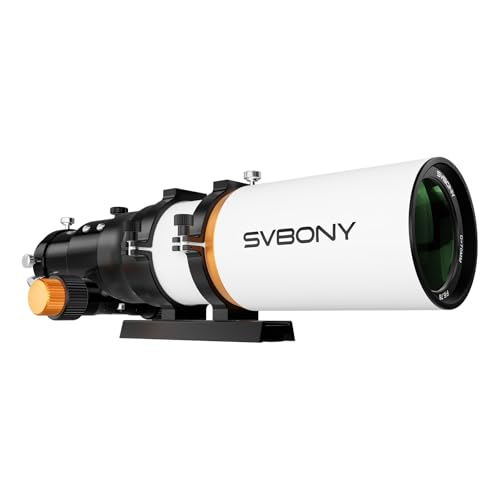
The SVBONY SV503 70mm refractor features a built-in field flattener designed to reduce field curvature. Its flat-field design supports edge-to-edge focus, producing sharp star fields across the imaging sensor. With an f/6.78 ratio and a 70mm aperture, it delivers bright, color-accurate images suitable for wide-field astrophotography of galaxies, nebulae, and star clusters. The self-flat-field design eliminates the need for a separate field flattener, which streamlines setup and enhances imaging readiness after focusing.
Optically, the SV503 70mm emphasizes color fidelity and minimal chromatic aberration, helping users capture true-to-life skies. The combination of a compact OTA and its built-in features makes it a practical choice for beginners transitioning to imaging, as well as for observers seeking portable imaging capabilities without extra adapters.
Key considerations: portability, edge performance, and ease of use are balanced here. This model suits those who want an all-in-one refractor that reduces post-processing corrections for field curvature, while still providing solid performance for deep-sky targets in accessible conditions.
SVBONY SV503 102mm Refractor: Bright Widefield Imaging

The 102mm SV503 refractor delivers a larger aperture (102mm) and a 714mm focal length at f/7, making it ideal for backyard deep-sky photography and planetary observations. The telescope uses doublet air-spaced S-FPL51 ED glass to minimize chromatic aberration, resulting in more true-to-life color rendition. Fully Multi-Coated (FMC) optics maximize light transmission and minimize reflections, which boosts image brightness and detail. The system also suppresses stray light within the optical tube, increasing overall image contrast for faint nebulae and galaxies.
With the 102mm aperture, this model captures more light, improving signal-to-noise ratios for longer exposures. The ED glass helps preserve color accuracy across the field, which is valuable when stacking frames to reveal subtle details in deep-sky objects. The optical design emphasizes a balance between accessibility and imaging performance, making it a strong option for enthusiasts building a semi-portable imaging setup.
Key considerations: larger aperture, improved color control, and better contrast come with a longer tube and slightly heavier setup. This model suits those who prioritize higher light-gathering power without significantly complicating alignment and focusing.
Smart Telescope: 80mm Hybrid Imaging Starter
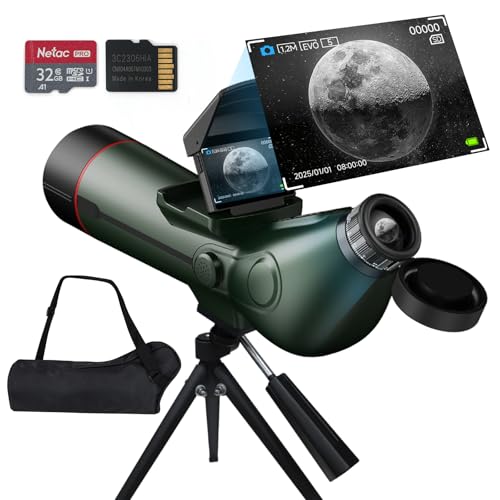
This Smart Telescope from FASHIONARI provides an 80mm aperture and a 300mm focal length, yielding an f/8.89 system suitable for beginners seeking clear, high-resolution images. A notable feature is the dual-screen display, which supports real-time viewing from both an eyepiece and an external screen. The starlight-grade sensor and 4K photography capabilities enable crisp astrophotography and deep-sky capturing even in suboptimal lighting. The unit also offers up to 512GB external storage, facilitating straightforward saving and sharing of celestial images.
Imaging benefits include straightforward capture workflows, a longer practical exposure range for beginner-level deep-sky targets, and a flexible eyepiece setup. The inclusion of a foldable screen helps with framing subjects in daylight and twilight conditions, while the built-in sunshade improves daytime usability for finder alignment and targeting.
Key considerations: this model blends beginner-friendly features with modern digital capture, making it a good fit for those who want an all-in-one compact imaging package without separate adapters or computers. It’s well-suited to newcomers exploring a mix of wide-field astrophotography and basic planetary shots.
SVBONY SV48P 90mm Refractor: Beginner-Friendly Performance

The SV48P 90mm refractor offers a practical entry point into amateur astronomy with a 90mm aperture and a 500mm focal length. This configuration provides more light-gathering than smaller refractors, supporting better views of the Moon, planets, and brighter deep-sky objects. The kit features a two-inch rotatable dual-speed focuser with a gear ratio of 1:10, enabling precise focusing essential for sharp images and clean star fields. Its mechanical build emphasizes reliable performance for beginners upgrading from smaller refractors.
The SV48P design prioritizes stability and ease of use, helping users achieve consistent focusing and alignment. Its light weight and simple setup make it a versatile choice for field imaging and casual night-sky observing, especially for those who plan to capture short-exposure astrophotography or use it as a stepping stone to more advanced setups.
Key considerations: consider this model if you want more light and a straightforward optical path with a solid focuser. It’s a balanced option for newcomers who want growing capabilities without a steep learning curve.
Gskyer 600x90mm AZ Refractor: Flexible Beginner’s Kit

The Gskyer 600x90mm AZ refractor blends 90mm aperture and a 600mm focal length (f/6.7) to provide a flexible imaging and observing platform. The fully coated optics offer sharp, bright views and allow for a range of magnifications via three eyepieces (24X, 60X, 120X) plus a 3x Barlow lens. The adjustable aluminum tripod adds stability and height range to suit different viewing positions, aiding both beginners and more experienced observers who want ergonomic setup options for imaging sessions.
For imaging, the triple eyepieces and Barlow lens expand the field of view and magnification possibilities, supporting a progression from wide-field captures to higher magnification targets. The kit’s portability is beneficial for field outings and outreach demonstrations, while the solid optical performance supports learning and practice with imaging basics.
Key considerations: while not specialized for deep-sky imaging, it offers a comprehensive starter package with versatile optics, making it a practical choice for users who want a broad, hands-on introduction to astrophotography and visual astronomy.
MEEZAA 90mm Refractor With AZ Mount Kit

The MEEZAA 90mm refractor offers a substantial aperture and an included AZ mount, tripod, and accessories for a complete setup. With an 800mm focal length and f/8.88, this instrument emphasizes light-gathering and detail for astrophotography beginners. The fully multi-coated optical glass lenses improve brightness and clarity, while the two eyepieces (10 mm and 25 mm) plus a 3x Barlow lens expand the magnification range. This kit supports capturing lunar details and larger deep-sky targets, with a workflow oriented toward straightforward imaging and rapid target acquisition.
Considerations include the balance between aperture and portability, as well as the availability of a robust mount and accessories to support imaging tasks. The included carry bag adds convenience for field use and storage, making it a practical all-in-one option for new astrophotographers.
Buying Guide: Key Purchase Considerations
- Purpose and targets: Deep-sky imaging benefits from larger apertures and field-corrected optics; planetary work favors stable, precise focusing and high-contrast optics.
- Aperture versus portability: Larger apertures capture more light but add weight and size. Smaller refractors excel for travel and quick sessions.
- Optical design: ED glass and fully multi-coated optics improve color accuracy and brightness; built-in field flatteners reduce post-processing corrections for wide-field imaging.
- Focal ratio: Lower numbers (f/5 to f/7) favor wider fields and shorter exposure times; higher numbers (f/8+), while slower, can deliver higher contrast for high-resolution work.
- Mount and stability: Dual-speed or fine-focusers help achieve precise focus; sturdy tripods and smooth mounts improve image quality when tracking objects.
- Accessories and integration: Eyepieces, Barlow lenses, and imaging adapters determine your flexibility; check compatibility with your camera or guider system.
- Portability vs performance: For field work, weight and setup speed matter as much as optical performance; for backyard imaging, you may prioritize light transmission and field flatness.
- Budget and upgrade path: Starting with a versatile kit can reduce upgrade pressure as you learn imaging workflows; later upgrades can focus on larger apertures or advanced mounts.
Across these options, the choice hinges on your balance of imaging ambitions, portability, and budget. For beginners, the packages that provide mounts and all-in-one accessories reduce setup friction. For intermediate users, models with ED glass and flat-field designs yield cleaner data on longer exposures. Advanced hobbyists may favor larger apertures and more precise focusing mechanisms to maximize deep-sky results.