Answering the search for reliable remote shutter options, this guide highlights 5 versatile choices that fit a wide range of DSLR brands and shooting styles. Best for studio portraits, long exposures, and wildlife photography alike, these remotes help minimize camera shake and enable precise timing. Each option is explained with who it’s best for, its key strengths, and a small caveat to consider before purchasing. A quick comparison table follows to help you decide at a glance.
| Product | Best For | Key Benefit |
|---|---|---|
| AODELAN Camera Remote Control Wireless Shutter | Canon and other DSLR systems; versatile cross-brand use | Broad compatibility with many bodies and wired/wireless modes |
| CamKix Wireless IR Shutter Remote | Nikon and Canon users needing simple, ready-to-go control | Infrared, easy setup, quick response |
| PIXEL 2.4G Wireless Remote | Nikon and Canon users seeking long-range operation | Up to 4s delay, 100m range option |
| PROfezzion Wireless Shutter for Nikon | Nikon shooters needing robust remote with multiple cameras | 2.4GHz, multi-channel, noticeable range |
| NEEWER Digital Timer Remote | Timelapse and long-exposure shooters | Interval and exposure control |
AODELAN Camera Remote Control Wireless Shutter

Brand: AODELAN. Features include compatibility with Canon EOS RP, R, R5, 5D series, 6D Mark II, 7D series, and more, plus extensive Canon and other-brand compatibility. It can trigger shutter wirelessly and as a wired remote through the receiver. The package requires 2 AAA batteries for the receiver and a CR2032 for the transmitter (included). Best for photographers who need broad cross-brand support and flexible use across many EOS bodies. A potential limitation is the need to install batteries in both transmitter and receiver for operation.
CamKix Wireless IR Shutter Remote

Brand: CamKix. This infrared remote supports Nikon and Canon cameras with quick-response and delayed shooting modes, including bulb. Its range reaches up to 16 feet (5 meters), with line-of-sight required for reliable operation. Best for beginners or casual shooters who prefer a simple, affordable option with straightforward setup. Caution: Infrared remotes require unobstructed line of sight, and performance can be limited in bright sunlight or cluttered environments.
PIXEL 2.4G Wireless Remote

Brand: PIXEL. Supports a wide range of Nikon cameras including Df, Z series, and many DSLRs, with up to 100 meters range in some configurations. It offers single-shot, continuous, and bulb exposures, along with a 4s delay shooting option. Best for photographers who need a versatile, long-range remote that covers multiple Nikon bodies. Limitation: Performance depends on camera settings and may require some trial to optimize modes for continuous shooting.
PROfezzion Wireless Shutter Release (Nikon Z/D Series)

Brand: PROfezzion. This 2.4GHz radio remote supports Nikon Z6, Z7, D7500, D5600 and other models, with 16 channel options for reduced cross-interference. It includes a transmitter, receiver, and a connecting cable; powered by AAA batteries. Best for advanced users who need reliable cross-brand Nikons and longer reach. Caution: Not all channels may be free in crowded shooting environments; ensure you select a clear channel.
NEEWER Digital Timer Remote Shutter
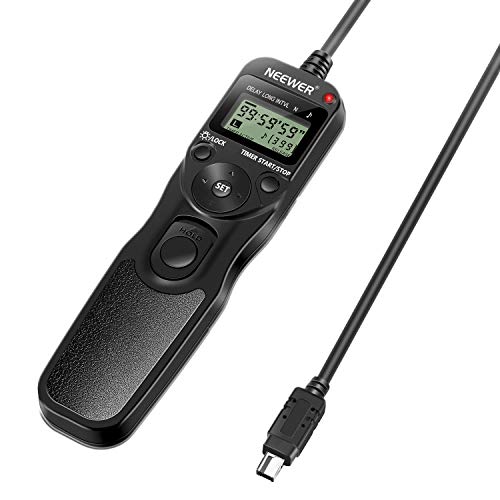
Brand: NEEWER. A timer remote offering delay, self-timer, bulb, interval timing, and exposure count controls. It supports multiple continuous or timed exposures and features a 0-second to 99 hours 59 minutes 59 seconds range, with interval timing up to 99 hours. Best for long-exposure or timelapse shooters who need automated control. Limitation: It may require more setup time to configure timed sequences compared to simple on/off remotes.
Buying Guide: How To Choose A DSLR Remote
What matters most when selecting a remote is compatibility, range, and the shooting modes you need. If you own Canon or Nikon DSLRs, prioritize remotes with broad camera compatibility and clear instruction sets. For studio work or macro shots, wireless options with long range and reliable line-of-sight are preferable. Timelapse and bulb shooting demand remote timers or intervalometers, while quick shutter control benefits from infrared or radio-frequency remotes with minimal setup.
- Compatibility: Confirm your camera model and whether the remote supports wired or wireless use, or both.
- Range: Consider how far you typically shoot from. Radio-frequency remotes offer longer ranges than infrared ones.
- Modes: Identify essential modes such as single, continuous, bulb, delay, and interval shooting.
- Power: Check required batteries and whether they’re included. Battery life can affect field reliability.
- Ease of use: A straightforward setup minimizes time between frames in critical shoots.
Frequently Asked Questions
- What is the main purpose of a DSLR remote control? – It reduces camera shake, enables precise timing, and allows control from a distance for macro, wildlife, and long-exposure shots.
- Should I choose infrared or radio-frequency remotes? – Infrared is simple and inexpensive but requires line of sight and can be obstructed. Radio-frequency remotes offer greater range and work through barriers but can be pricier.
- Can remotes trigger long-exposure or timelapse automatically? – Yes. Timers and intervalometers are designed to automate repeated shots and long exposures without manual button presses.
- Do remotes work with multiple camera brands? – Some remotes are cross-brand and support Canon, Nikon, Fujifilm, and more. Always verify compatibility with your exact model.
- Is a wired remote better than a wireless one? – Wired remotes eliminate signal interference but restrict distance. Wireless options provide freedom at the cost of potential interference and battery management.
- Do these remotes require special software or apps? – Most do not. They use standard camera triggering mechanisms and batteries; no additional software is typically required.