Looking to convert photos, negatives, and slides into high-quality digital files? This guide highlights five top-rated, standalone scanners that don’t require a computer. These devices are ideal for families digitizing old photo albums, historians archiving media, or hobbyists preserving memories. Each option is evaluated for who they suit best and why, with practical cautions to help you pick confidently.
| Product | Best For | Key Benefit |
|---|---|---|
| DigitPro Photo Scanner | Families with mixed media | 5″ LCD, all-in-one scanner |
| KODAK Slide N SCAN Max | Slide collections | 7″ tiltable LCD, quick-feed |
| ClearClick QuickConvert 2.0 | Quick, on-the-go digitizing | Portable, rechargeable |
| Plustek ePhoto Z300 | Photo-heavy archives | Fast 4×6 to 8×10 scans |
| DigitConvert 22MP | All-in-one film and print scanning | 128MB internal memory + 4GB SD |
DigitPro Photo Scanner And Film Digitizer
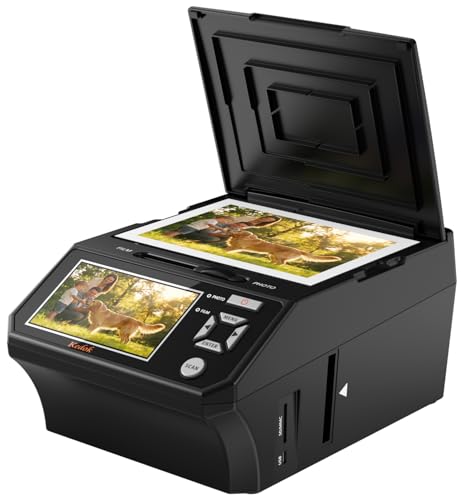
This all-in-one device converts 35mm slides, 135 and 110 negatives, printed photos, and business cards into digital files without a computer. It uses a standalone workflow with a built-in 5-inch LCD screen for immediate preview and grading of scans. The model is best for households that want a simple, self-contained solution for mixed media archiving and quick sharing with friends and family.
Best for: beginners and non-technical users who prefer a single, self-contained unit. Why selected: it combines multiple media types in one device and emphasizes an easy, one-touch workflow on a large display. Caution: some advanced edits may require external software on other models; this scanner focuses on straightforward conversion.
KODAK Slide N SCAN Film & Slide Scanner

Digitize negatives and slides with a 5-inch LCD and gallery mode for instant previews and sharing. It supports 135, 126, and 110 films, plus 50mm slides, and saves directly to an SD card. Quick-load supports fast processing for larger collections, making it ideal for preserving family slide archives and displaying results on a built-in gallery. Best for: users who want a larger display and easy viewing of scans. Caution: SD card is not included and must be purchased separately.
DigitPro Film And Slide Scanner

Converts 35mm, 126, 110 film negatives, slides, and 50mm slides to 22MP digital images. It offers a 5-inch LCD, easy one-touch scanning, and internal memory plus SD card storage. This model is a strong pick for users who value a compact, all-in-one unit with straightforward color and brightness adjustments. Best for: households digitizing varied negatives and slides with minimal fuss. Caution: 128MB internal memory is modest; plan for SD card expansion if you have large batches.
KEDOK Photo, NameCard, Slide & Negative Scanner

Provides a 5-inch LCD for live previews and can convert 35mm/110 film negatives, slides, photos (3R, 4R, 5R), and name cards to 22MP JPEGs. Includes an 8GB SD card for immediate storage. Suitable for gift-giving and family use, it emphasizes a stylish, compact form factor with broad media support. Best for: gift-givers and families who want a single device for multiple media types. Caution: 32GB SD card support is listed; verify card compatibility if using larger cards.
ClearClick QuickConvert 2.0
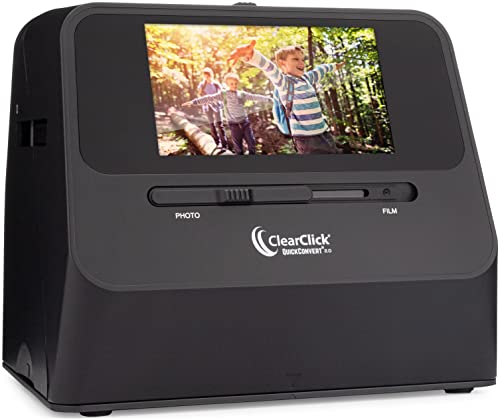
ClearClick QuickConvert 2.0 is a fast, standalone scanner for 4×6 photos, slides, and 35mm/110/126 film. It uses a built-in battery and 5″ LCD for real-time viewing and saves to an SD card. It’s optimized for quick, one-by-one scans without drivers or a computer. Best for: on-the-go digitization and desk setups where portability matters. Caution: It scans one item at a time and does not have an auto-feeder, which slows batch processing.
Plustek Photo Scanner ePhoto Z300

The Plustek ePhoto Z300 excels with fast 4×6 scanning in about two seconds and auto crop/deskew using a CCD sensor. It supports 3×5, 4×6, 5×7, and 8×10 photos, as well as letter/A4 documents. It’s well-suited for users digitizing large photo collections who value efficiency and Mac/PC compatibility. Best for: home offices and small studios that scan many photos quickly. Caution: primarily designed for photos; handling film requires separate solutions or adapters.
Buying Guide: Key Purchase Considerations
What should you evaluate when choosing a photo and negative scanner?
- Media types supported: Ensure the device handles your specific negatives, slides, prints, and cards (e.g., 35mm, 110, 126, 3R–5R, business cards).
- Display and workflow: A larger LCD and intuitive controls help with on-device previews and quick edits without a computer.
- Storage and expansion: Check internal memory, SD card compatibility, and whether external drives or cloud options are available.
- One-touch scanning vs. batch handling: Some models offer rapid, single-scan operations; others support quick-feeding trays for batch work.
- Ease of use: Standalone devices are ideal for non-tech users; those needing editing may prefer models with stronger software options on a PC/Mac.
- Portability and power: If you need to move the unit often or scan away from outlets, battery or compact form factors matter.
Practical Comparisons
- Best for all-in-one media: DigitPro Photo Scanner provides versatility across negatives, slides, and prints with a built-in screen.
- Best for slides: KODAK Slide N SCAN Max offers a large, tilt-adjustable display and a fast-feed tray for slides.
- Best for portability: ClearClick QuickConvert 2.0 is compact and battery-powered for quick, individual scans.
- Best for photo-heavy archives: Plustek ePhoto Z300 focuses on fast photo scanning with auto-crop features.
- Best all-in-one film and print: DigitConvert 22MP handles a wide range of media with internal and external storage options.
FAQ
- Do these scanners require a computer to work?
- Some models operate standalone with built-in memory and LCD screens, while others connect to a computer for saves to a drive or cloud.
- What media formats are typically supported?
- Common formats include 35mm/135/110 negatives, 3R–5R prints, slides, and business cards. Support varies by model.
- Is a large LCD display important?
- A larger LCD helps with on-device previews and reduces the need to transfer files to a computer for quick checks.
- Can I digitize film without losing quality?
- Most units advertise high MP output (e.g., 22MP) and built-in enhancements; for archival quality, consider models with high sensor resolution and reliable color management.
- Which model is best for beginners?
- Standalone devices with simple one-touch scanning and clear previews are typically easiest for first-time users.