Enhance your stargazing and nature photography with a smartphone adapter that lets you capture clear images through telescopes, spotting scopes, and other optics. This guide highlights five reliable options, explaining how they align the phone camera with the eyepiece for sharp, shareable shots. Whether you’re birdwatching, observing celestial objects, or documenting macro details, these adapters offer stability, compatibility, and ease of use across a range of devices.
| Product | Brand | Key Benefit | Eyepiece Range | Notes |
|---|---|---|---|---|
| GOSKY Smartphone Adapter Mount Regular Size | Gosky | Easy setup and wide eyepiece compatibility | 28–47 mm | |
| Celestron NexYZ – Universal Smartphone Adapter | Celestron | Three-axis precision alignment | Various smartphones; most cases | |
| Celestron NexYZ DX | Celestron | 3-axis alignment with Bluetooth remote | Broad compatibility | wider feature set; travel-friendly |
| tridaptor Universal Digiscoping Adapter | MOVE SHOOT MOVE | All-metal, high-precision 3-axis | Eyepieces 22–61 mm; phones 60–87.5 mm | built for durability |
| Jreiiolk Universal Binocular Phone Adapter | Jreiiolk | 360° rotation and easy clip lock | 16–50 mm oculars | easy setup; broad compatibility |
Note: The products listed here are selected for compatibility with a wide range of optics and smartphones, focusing on stability, ease of use, and alignment accuracy. Each item supports quick setup so you can start recording or photographing with minimal fuss.
Gosky Regular Size Smartphone Adapter

The Gosky adapter is designed to connect smartphones to telescopes, spotting scopes, binoculars, monoculars, and microscopes. It emphasizes ease of use with a simple three-step setup: place the phone in the mount, align the camera with the eyepiece, and tighten the knob to secure. It supports eyepieces with a diameter between 28 mm and 47 mm, making it broadly compatible with many existing optics. This model prioritizes sturdy construction and straightforward operation for newcomers and experienced users alike.
Celestron Smartphone Adapter
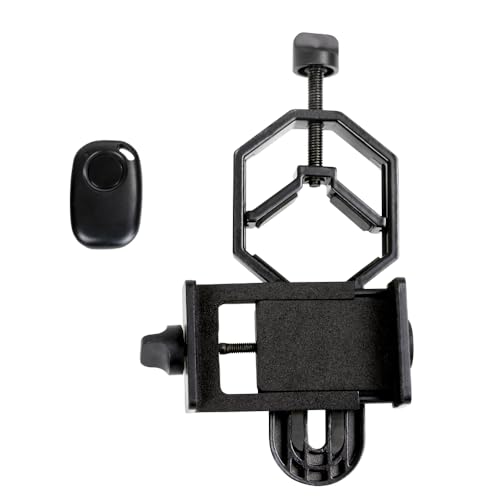
This universal adapter from Celestron connects your phone to a telescope, spotting scope, or binocular system. It accommodates a wide range of smartphones, including newer iPhone, Samsung Galaxy, and Google Pixel models, even with most cases. The setup is straightforward: place the phone in the adapter, center the camera over the eyepiece, and secure with knobs. It’s a compact, travel-friendly option from a trusted optics brand, balancing simplicity with reliable performance in the field.
Celestron NexYZ – 3-Axis Universal Adapter

The NexYZ from Celestron offers three-axis precision alignment to center a phone’s camera over the eyepiece. It supports a broad range of smartphones, including heavy or larger models, thanks to tension adjustments that secure even the heaviest devices. The system is designed to let users frame shots quickly and accurately, with user-friendly knobs easing alignment for sharp photos and videos through your optics.
MOVE SHOOT MOVE tridaptor 3-Axis Adapter

The tridaptor 3-axis metal holder delivers high-precision adjustment along X, Y, and Z axes to align a smartphone with the eyepiece. Built from robust aluminum alloy, this adapter minimizes sag and supports stable, vibration-free imaging. It features rubber pads to protect devices and provides fine-tuning knobs for precise alignment. It fits eyepieces ranging from about 22 mm to 61 mm in diameter, offering broad compatibility with many spotting scopes and telescopes.
Jreiiolk Universal Binocular Phone Adapter
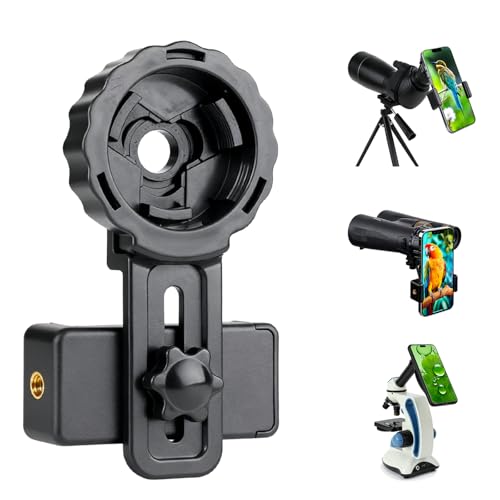
The Jreiiolk adapter offers 360° rotation and a clip-lock system for quick, tool-free mounting to spotting scopes, telescopes, and microscopes. It supports a broad ocular range of 16 mm to 50 mm, and is designed to fit most iPhone and Android devices, including many phone cases. Its user-friendly design emphasizes rapid setup and secure phone attachment, suitable for casual and more serious digiscoping alike.
Buying Guide: Key Purchase Considerations
- Compatibility: Check eyepiece diameter compatibility (common ranges include 16–50 mm and 28–47 mm) and whether your smartphone model fits within the adapter’s clamp and weight limits.
- Three-Axis vs. Simple Mount: 3-axis systems (X, Y, Z) offer precise alignment but can be bulkier. Simpler mounts are lighter and easier for beginners but may require manual adjustments for perfect framing.
- Build Quality: Look for all-metal construction with rubberized clamps or pads to protect devices from scratches and to reduce wobble during capture.
- Ease of Setup: Quick alignment with intuitive knobs is ideal for field use. Consider models with clear instructions and minimal steps.
- Compatibility with Accessories: Some adapters pair with Bluetooth remotes or include features like eye relief adjustments, which can enhance long observation sessions.
- Portability: If you travel or hike, opt for a compact, travel-friendly design that stores easily without sacrificing stability.
- Brand and Support: Reputable brands often provide better customer support and compatible accessory ecosystems, which can simplify future upgrades.
- Future-Proofing: With frequent phone model changes, choose adapters known for broad device compatibility or adjustable clamps to accommodate new smartphones.
When selecting an adapter, align your choice with your primary use case: casual hobbyist photography, serious digiscoping, or travel-focused setups. Consider whether you value quick setup and universal compatibility over ultra-fine alignment control, or vice versa. These five options provide a spectrum of features, from straightforward mounting to advanced, multi-axis alignment, enabling you to capture sharper images and videos through your optics with a smartphone.