The answer is clear: for reliable DSLR stability, choose a heavy‑duty aluminum tripod with solid build, high load capacity, and versatile height. This guide highlights five strong options suited for different shooters—travelers, vloggers, nature photographers, and studio users. Each pick emphasizes sturdy construction, reliable leg locking, and broad compatibility with DSLR gear. The following table summarizes key traits to compare at a glance.
| Product | Max Height | Weight | Load Capacity | Best For |
|---|---|---|---|---|
| VICTIV 74” Camera Tripod | 74 inches | 3.14 lbs | 9.5 lb | All-around DSLR work, compact travel |
| K&F CONCEPT 64 inch Camera Tripod (O234A1+BH-36) | 64 inches | 2.53 lbs | 17.6 lbs | Lightweight travel, versatile for mobile shoots |
| K&F Concept 76 inch Camera Tripod | 76 inches | 3.63 lbs | 17.6 lbs | Tall setups, flexible angles |
| JOILCAN 74″ Tripod | 74 inches | 3.15 lbs | 15 lb | Budget‑friendly heavy‑duty use |
| NEEWER 90 Inch Tall Overhead Tripod | Up to 90 inches (230 cm) | Varies by kit | 10 kg / 22 lb | Professional height and overhead shots |
VICTIV 74” Camera Tripod
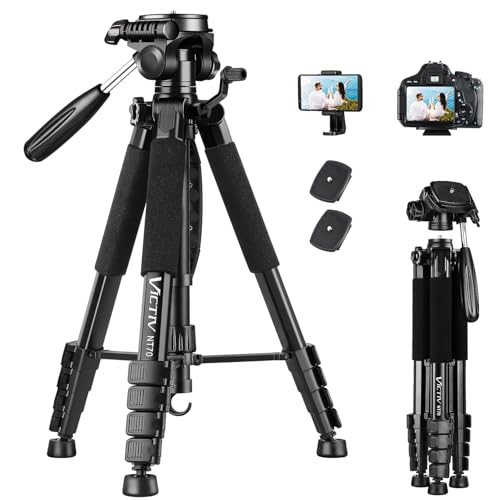
This tall aluminum tripod adjusts from 19 to 74 inches, offering a compact form when folded. It is compatible with Canon, Nikon, and other DSLR bodies, as well as spotting scopes and binoculars. A 3‑way pan head supports 360° panning and 180° tilt. Stability is aided by a weight hook and non-slip feet. Best for photographers who need a durable, all‑around travel companion that can support mid‑project loads.
Who it’s best for: casual and semi‑professional DSLR users seeking a versatile height range in a single kit. Why selected: combines tall reach with a lightweight design and included carry bag for portability. Caution: the load rating is modest for larger telephoto rigs; avoid oversized glass without testing balance.
K&F CONCEPT 64 Inch Tripod (O234A1+BH-36)

Lightweight and portable, this 64‑inch model folds down to about 15.5 inches and weighs roughly 2.53 lbs. It features a 360° ball head and supports up to 17.6 lbs. A quick‑flip leg lock system enables one‑hand setup, making it ideal for on‑the‑go shoots. Best for: travelers and vloggers who need quick setup with ample height while keeping the kit light. Caution: lower weight may limit use with very large or heavy rigs over extended periods.
K&F Concept 76 Inch Camera Tripod

This 76‑inch tripod uses a rotatable multi‑angle center column and a 360° ball head, supporting up to 17.6 lbs. It folds compactly and includes an extension arm option for panoramic work. Best for: shooters who need tall, flexible framing and smooth pan movement. Caution: higher height can require sturdy footing and careful balance when using heavier cameras.
JOILCAN 74″ Tripod For Camera

JOILCAN offers a lightweight 3.15‑pound tripod capable of 74 inches in height, with a maximum load around 15 pounds. It employs a trapezoidal flap lock system for quick height changes and includes a carrying bag for portability. Best for: budget‑conscious photographers who still need solid stability on varied terrain. Caution: some users may prefer higher load capacity for heavier telephoto setups.
K&F CONCEPT Camera Tripod, 75″

This 75‑inch tripod uses a pentagonal tube design to balance portability with stability and weighs about 2.6 lbs. It supports smartphones and tablets with a versatile holder and features a 360° pan head with a bubble level for precise alignment. Best for: travelers and creators who need compact storage and reliable framing at multiple heights. Caution: specialized device adapters may be required for some tablets or larger phones.
NEEWER 90 Inch Overhead Tripod
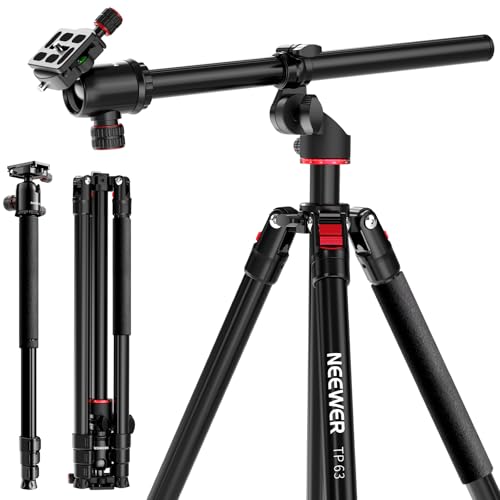
NEEWER’s tall overhead tripod features an adjustable center column and a 360° ball head with Arca‑type quick‑release plates. It supports a variety of configurations, including inverted legs for compact storage and high–angle shots. Best for: professional or semi‑professional creators needing overhead or low‑angle options. Caution: this model can be larger and heavier, requiring more storage space and travel planning.
Buying Guide: Key Considerations For Your DSLR Tripod Choice
Height range and stability are the primary trade‑offs. Consider how tall you need the rig for eye‑level, low‑angle, or overhead shots, and ensure the legs provide a stable base on your typical shooting surfaces.
Load capacity matters when pairing a DSLR with lenses and accessories. Choose a model that exceeds the combined weight of your camera body and lenses to maintain stability during long exposures or windy conditions.
Weight and portability are crucial for travel. Light tripods with robust locking mechanisms save time on location and reduce fatigue during hikes or field shoots.
Head type and pan/tilt range influence framing control. A 360° pan head and flexible tilt angles are beneficial for panoramic and video work, while a simple ball head may suffice for stills.
Compatibility with accessories—phone mounts, tablet holders, and quick‑release plates—affects versatility. Ensure the mount interfaces match your gear and workflow.
Durability and materials impact long‑term performance. Aluminum tripods offer a good balance of weight, price, and stiffness, while carbon fiber options emphasize rigidity at a higher cost.
Frequently Asked Questions
- What is the most important feature in a DSLR tripod? Load capacity and stability are critical, followed by height range to accommodate different shooting angles.
- Can a DSLR be balanced on a light tripod? It can, but stability may be compromised with heavy lenses; ensure the setup stays within the tripod’s supported load.
- Is a taller tripod better for landscape photography? Yes, taller tripods enable higher vantage points, but they can be less stable in wind and more difficult to transport.
- Do I need a pan head for video work? A pan/tilt capable head improves smooth camera motion and framing, which is advantageous for video.
- Are phone mounts on tripods useful for DSLR users? They add convenience for quick framing or social media shots, but ensure they do not compromise overall rig balance.
- How should I choose between aluminum and carbon fiber? Aluminum is generally more affordable and durable; carbon fiber is lighter and stiffer but costs more.