If you’re shopping for a USB endoscope to inspect pipes, engines, or HVAC ducts, these waterproof borescopes offer reliable image quality, flexible cables, and easy smartphone connections. They’re best for DIY homeowners, plumbers, and automotive technicians who need quick, on-site inspections. The following picks emphasize 16.4-foot semi-rigid cables and IP67 waterproof probes for underwater or damp environments, plus dual-lens options for better viewing angles. A concise buying table follows to help you compare key specs at a glance.
| Product | Best For | Key Feature |
|---|---|---|
| Kinpthy Endoscope Camera – Single Lens | General inspections, tight pipes | 16.4 ft semi-rigid, 1920P HD, IP67 |
| Kinpthy Endoscope Camera – Dual Lens | Cornering and complex routing | Dual lenses, 16.4 ft, IP67 |
| PAPIBLU Endoscope – Dual Lens | Pipes, HVAC, wiring with different angles | Dual lenses, 16.4 ft, IP67 |
| CTEOUNPT Endoscope | Universal iOS/Android use, water exposure | Single lens, 16.4 ft, IP67 |
| DEPSTECH Inspection Endoscope | Industrial and automotive diagnostics |
Kinpthy Endoscope Camera Single Lens – 16.4ft
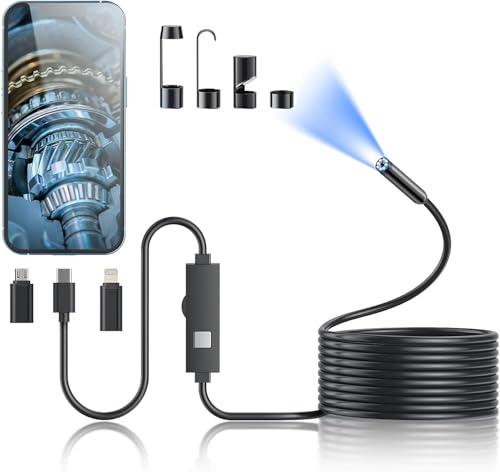
Best for: DIY enthusiasts who need a straightforward, waterproof endoscope for pipes and engine bays. The 1920P HD resolution on a 7.9mm probe delivers clear details at close range, ideal for spotting minor leaks or rust.
Why selected: The 16.4-foot semi-rigid cable balances flexibility with shape retention, making it easier to guide the camera through bends while maintaining control. IP67 waterproofing allows limited underwater use for a short time.
Limitations: The system relies on a mobile app for live viewing; users should ensure their device is compatible (iOS 9.0+ / Android 7+). Real-time response depends on the phone’s performance.
Kinpthy Endoscope Dual Lens – 16.4ft

Best for: Inspecting pipes and tight spaces from multiple angles. The dual-lens design enables quick switching between front and side views, helping you understand the path of a problem area without rotating the probe.
Why selected: The 1920P HD resolution and 16.4-foot semi-rigid cable provide strong image clarity and navigation accuracy in damp, dark areas. IP67 waterproofing supports work in wet environments.
Limitations: Dual lenses add complexity; users may need a moment to acclimate to switching views during inspection.
PAPIBLU Endoscope Dual Lens – 16.4FT

Best for: Plumbers and mechanics who need precise viewing from different angles in pipes, HVAC ducts, and corners. The dual-lens design offers front and side perspectives with one-click switching.
Why selected: The 1920P HD image quality combined with 8 LEDs yields bright, detailed visuals in dark spaces. The 16.4-foot semi-rigid cable helps reach deep areas without losing control.
Limitations: Some users may prefer a single-lens model for simpler tasks; dual lenses require understanding which view best suits the job.
CTEOUNPT Endoscope – Single Lens

Best for: Users seeking broad compatibility with iOS and Android devices via USB connection, without Bluetooth or Wi‑Fi. Good for quick, plug-and-play inspections on mobile devices.
Why selected: IP67 waterproof construction plus 2 MP HD camera provides clear imagery, while 8 adjustable LEDs illuminate dark inspection zones. Wide compatibility ensures easy pairing with common devices.
Limitations: The visual field is dependent on the app and device; some users may experience minor delays in live feed depending on hardware.
DEPSTECH Dual-Lens Inspection Endoscope
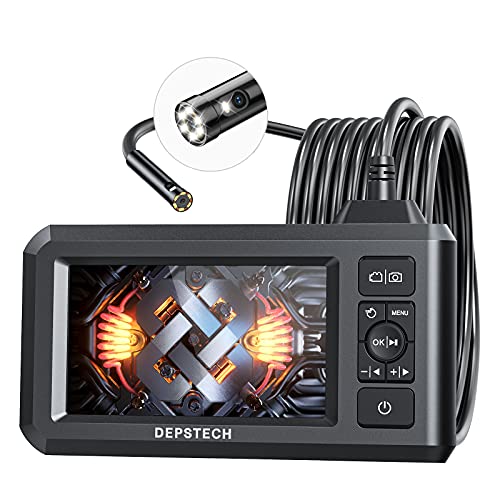
Best for: Industrial and automotive diagnostics where multiple viewing angles improve inspection efficiency. The 4.3-inch IPS screen offers a standalone viewing option, reducing phone dependency.
Why selected: Features dual lenses with a split-screen option, 1080P video, and a wide 70° viewing angle. The built-in battery supports several hours of use, and the 16.5-foot cable helps reach long runs in pipes or ducts.
Caution: The device may be bulkier for very tight spaces; a compact model could be preferable for extremely narrow inspections.
Buying Guide
What should you look for when choosing a USB endoscope?
- Cable length and rigidity: A 16.4-foot semi-rigid cable is common and balances flexibility with shape stability. Longer cables extend reach but can reduce maneuverability.
- Camera resolution: 1920P (2 MP) provides sharp images; higher resolution helps identify small cracks or leaks in pipes, engines, and walls.
- Lighting: Eight or more LEDs with adjustable brightness improves visibility in dark spaces. Consider models with adjustable white balance for color accuracy.
- Waterproof rating: IP67 is standard for underwater or damp inspections. Ensure probes are rated if you plan to submerge the camera.
- Connectivity: USB-C, Type-C with Apple/Android compatibility or app-based interfaces. Plug‑and‑play options reduce setup time, but verify device compatibility (iOS/Android versions).
- Dual-lens options: Dual lenses can simplify inspection by providing front and side views without repositioning the probe. Choose this if your tasks involve corners and angled surfaces.
- Screen vs phone reliance: Some models include a built-in screen; others require a smartphone. A built-in screen can be advantageous when you don’t want to rely on a phone.
- App availability: Ensure the recommended app is actively maintained for your device and that the app supports real‑time viewing and saving images/videos if needed.
FAQ
- Do USB endoscopes require a specific phone model? Not usually. Most work with iOS 9.0+ and Android 7+ via the recommended app or USB connection.
- Can these be used underwater? Yes, models with IP67 waterproofing are designed for wet environments, but they are not intended for prolonged underwater use.
- What’s the benefit of a dual-lens endoscope? Dual lenses provide immediate front and side views, which helps identify issues around corners and along bends without rotating the probe.
- Is a built-in screen necessary? Not always. A phone-connected model saves weight and cost, but a standalone screen can be more convenient in field work where a phone isn’t readily available.
- How do I choose between a single vs dual-lens model? If you often inspect corners and pipe elbows, dual lenses reduce repositioning time; for straightforward inspections, a single-lens model is simpler and lighter.