Answering the needs of videographers and photographers who require reliable on-camera monitoring, this guide highlights five external monitor options. Each pick is best for different setups: from compact field rigs and budget-friendly kits to high-brightness models for outdoor shoots and precise focus tools for professionals. Use this overview to choose a monitor that matches your camera, battery setup, and work environment.
| Product | Key Strengths | Best For |
|---|---|---|
| NEEWER F700 | 2000nit brightness, 4K HDMI loop, 3D LUT, peak focus | Bright outdoor shooting, cinematic focus control |
| FEELWORLD FW759 | Slim, portable, 4K HDMI input, sun hood | On-the-go filming with compact rigs |
| FEELWORLD S55 V3 | 3D LUT, waveform, vectorscope, compact 6” display | Precise exposure and focus in tight spaces |
| FEELWORLD F5 Prox | 1600nit, 5.5”, LUTs, focus tools | Outdoor shoots with bright displays |
| NEEWER F100 | 7” IPS, 450nit, peak focus, F750 battery included | Balanced rig with long battery life |
NEEWER F700 7″ Field Monitor

Brand: NEEWER. This 7-inch IPS touchscreen delivers 1920×1080 resolution and 2000 nits brightness, with 160° viewing and a 180° adjustable bracket. It includes 4K HDMI loop in/out, a 3.5mm headphone jack, and multiple monitoring tools such as False Color, Zebras, and Waveform. It supports up to 60 custom 3D LUTs and firmware upgrades via SD card. Best for: professionals who need high brightness for outdoor scenes and fast LUT-based previews. Limitation: HUD controls are mounted on top; users preferring a minimal setup may find the extra controls less essential in simple runs.
FEELWORLD FW759 7 Inch DSLR Monitor
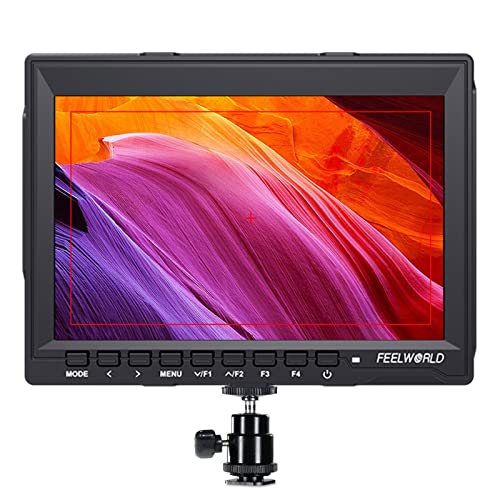
Brand: FEELWORLD. This slim 7-inch monitor weighs about 300g, with 1280×800 resolution, 4K HDMI input, and a sun hood for outdoor visibility. It supports 4K UHD (3840x2160p) and 4096x2160p signals, making it compatible with most DSLRs and camcorders. Best for: filmmakers and vloggers who need a lightweight, portable external screen with reliable 4K input. Limitation: Brightness is around 400 nits, which may be less ideal in very bright sun compared to higher-nit models.
FEELWORLD S55 V3 6 Inch Field Monitor

Brand: FEELWORLD. The S55 V3 delivers 1920×1080 resolution in a compact 6-inch form with 3D LUT support, waveform, vectorscope, focus assist, and a 3.5mm headphone jack. An included sun hood helps when shooting outdoors. Best for: creators who need precise exposure and focus in tight spaces while maintaining a small rig. Limitation: 6-inch screen can challenge critical focus on certain cameras with small viewports.
FEELWORLD F5 Prox 5.5 Inch Monitor

Brand: FEELWORLD. The F5 Prox offers 1600 nits brightness on a 5.5-inch screen with 4K HDMI input and 3D LUT support. It includes focus peaking, waveform, histogram, and false color to aid accurate exposure and focus. Best for: outdoor shoots where brightness matters and a compact, bright monitor is needed. Limitation: Smaller screen size may be less comfortable for detailed critical viewing over long sessions.
NEEWER F100 7″ Field Monitor
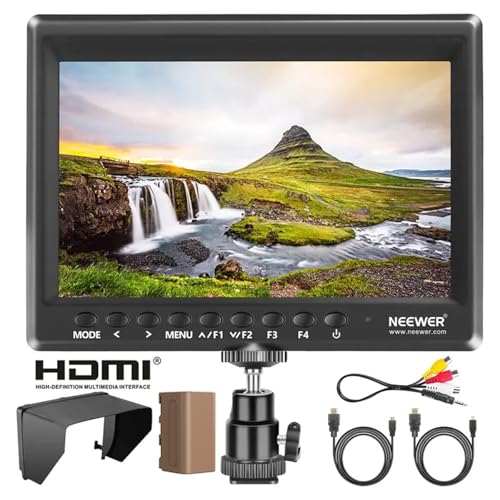
Brand: NEEWER. The F100 uses a 7-inch IPS panel at 1280×800 with 450 nits brightness and a 16:10 aspect ratio. It ships with a 4400mAh F750 battery and supports various HDMI formats, including 1080p and 4K feeds, plus professional tools like peaking, check field, pixel-to-pixel, and histogram. Best for: handheld rigs needing reliable battery life and a balance of size and features. Limitation: 450 nits brightness is moderate for very sunny outdoor conditions compared with higher-nit models.
Buying Guide
What matters most when choosing an external monitor?
- Brightness and outdoor use: If you shoot outside in bright conditions, prioritize higher nit ratings and sun shade compatibility.
- Resolution and screen size: Larger screens improve framing and critical focus, but add bulk. Choose based on how you shoot (handheld, gimbal, tripod).
- HDMI inputs/outputs and formats: Ensure compatibility with your camera’s HDMI standard and whether you need loop-through for multi-device setups.
- Monitoring tools: Waveform, vectorscope, histogram, focus peaking, and LUT support help achieve correct exposure and sharp focus.
- Power options: Battery life matters on location. Look for included batteries, USB power, and compatibility with existing battery packs.
- Rigs and mounting: Check mounting options (cold shoe, 1/4″-20, ball head) and whether the monitor’s weight suits your rig.
- Compatibility and workflow: Consider if you need LUTs for on-set grading or if you plan to upload custom LUTs for your post workflow.
Frequently Asked Questions
- What is the benefit of a 4K HDMI input on a field monitor?
It allows monitoring of 4K camera feeds with minimal downscaling for precise focus and exposure checks. - Is a higher brightness monitor always better for outdoors?
Higher brightness helps in direct sun, but weight and battery life may increase; consider a sun hood as a supplement. - Do I need 3D LUT support?
LUTs help preview looks and exposure settings close to final grading, reducing surprises in post. - What is peak focus and why is it useful?
Peak focus highlights the sharpest transition areas, aiding critical focus especially with shallow depth of field. - Should I pick a 6-inch or 7-inch monitor?
A 7-inch screen offers larger viewing area for framing and focus, while a 6-inch model is more compact for portable rigs. - What about battery life on external monitors?
Battery life varies; check included batteries and whether USB power can extend runtime on location.