For sharp, detailed close-ups and creamy bokeh, vintage-inspired macro lenses deliver characteristic character and unique rendering. This guide highlights five strong options, balancing classic optical design with modern compatibility. Each lens excels in macro work, from tiny insects to floral details, while offering distinctive image aesthetics that digital-native glass often lacks. Explore versatile choices across Sony E, Canon RF, and Micro Four Thirds ecosystems to expand your macro toolkit.
The table below summarizes the selected products to help you compare at a glance:
| Product | Brand | Mount / System | Key Strengths |
|---|---|---|---|
| 7artisans 60mm F2.8 II | 7artisans | Sony E-Mount (APS-C) | Lightweight, short min focus, ED glass for sharpness |
| Xenvo Pro Lens Kit | Xenvo | Smartphone (clip-on) | Wide angle plus macro, built-in LED, versatile mobile macro |
| Canon RF100mm F2.8 L Macro IS USM | Canon | Canon RF | 1.4x magnification, image stabilization, high build quality |
| TTArtisan 40mm F2.8 (APS-C) | TTArtisan | Sony E (APS-C) | 1:1 magnification, compact, excellent bokeh |
| TTArtisan 40mm F2.8 (MFT) | TTArtisan | Micro Four Thirds | 1:1 magnification, robust metal build |
7artisans 60mm F2.8 II Macro Lens for Sony E
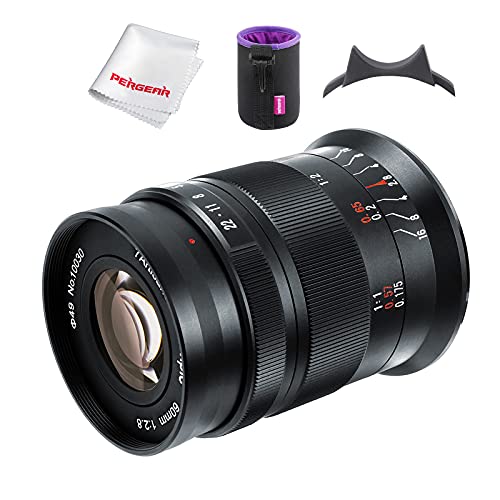
The 60mm F2.8 II macro lens for Sony E-mount is designed with an internal focusing system, contributing to a compact form that weighs about 342g. At 80.5mm in length, it remains lightweight while delivering high-resolution images with improved edge-to-edge sharpness. Its minimum focusing distance of 0.175m makes it well-suited for portraits, still life, flowers, and small subjects like insects. The optical design includes one or more built-in ED (extra-low dispersion) elements to suppress chromatic aberrations and sustain clarity across the frame, from center to edge. For macro work, this focal length offers a natural working distance with pleasing compression in close-ups.
In use, the lens allows users to approach subjects closely without sacrificing image integrity. Its compact build pairs well with small mirrorless bodies, making it a practical option for travel photography or everyday macro tasks. The combination of light weight and respectable optical performance makes it a favorable choice for enthusiasts seeking a vintage-inspired macro look with modern handling.
Xenvo Pro Lens Kit for Mobile Macro and Wide Angle

The Xenvo Pro Lens Kit expands mobile macro capabilities with a TruView 0.45x wide-angle lens and a Clarus 15x macro lens, alongside a TruGrip clip, GlowClip LED light, and protective case. This setup is ideal for casual macro work on smartphones, particularly when you want to photograph close-up textures and details without a dedicated camera body. The kit’s robust construction uses aircraft-grade aluminum for durability and high-quality optical glass to minimize ghosting and reflections. The macro lens provides sharp, close-up detail, while the wide-angle adds context in product, travel, or creative shoots. A practical option for those who prefer mobile macro solutions.
Canon RF100mm F2.8 L Macro IS USM

The Canon RF100mm F2.8 L Macro IS USM stands out as a high-end macro option for Canon’s RF system. Featuring a maximum magnification of 1.4x and a bright f/2.8 aperture, this lens delivers superb sharpness and subject isolation. The Optical Image Stabilizer can compensate for up to five stops of shake, allowing sharp handheld macro shots even at slower shutter speeds. Built for Canon’s EOS R lineup, it provides excellent image quality, reliable auto-focus, and a robust build, making it a strong choice for serious macro photographers who shoot still life, flora, or tiny subjects.
TTArtisan 40mm F2.8 APS-C Macro (Sony E)

The TTArtisan 40mm F2.8 APS-C macro lens for Sony E mounts a 1:1 magnification with a compact, all-metal body. It uses an eight-element, seven-group optical design that includes two extra-low-dispersion elements to minimize chromatic aberration and maximize resolution. The combination of a short minimum focusing distance (0.17m) and a 1:1 magnification makes it well-suited for close-up subjects, including flowers, insects, and small objects. Manual focus with distance and depth-of-field scales supports precise focusing control, while the f/2.8 aperture provides versatility in varied lighting and renders gentle bokeh for macro compositions.
TTArtisan 40mm F2.8 Macro Lens for Micro Four Thirds
For Micro Four Thirds systems, the TTArtisan 40mm F2.8 Macro offers 1:1 magnification with a lightweight, durable metal build. The lens shares the same optical philosophy as its APS-C counterpart, focusing on delivering sharp macro detail with good contrast and color fidelity. Its 0.17m minimum focusing distance supports close-up shots of small subjects, while the 11-blade diaphragm helps achieve smooth background blur. This option is a practical pick for Olympus and Panasonic shooters seeking a compact, affordable macro prime with an appealing vintage-leaning aesthetic.
Upgraded Macro Lens with Ring Light for Smartphones

The HB100U macro lens for smartphones combines a detachable ring light with a macro lens, delivering adjustable lighting and close-up capability on mobile devices. The ring light offers multiple color temperatures and brightness levels to tailor illumination for subjects like insects, jewelry, or textures. The lens employs high-quality optics and AR-coated multi-layer coatings to minimize reflections and distortion, resulting in accurate colors and crisp detail. Its 10x magnification range, when appropriately focused, supports impressive macro captures, while the compact form makes it a travel-friendly option for on-the-go photography.
Buying Guide: Key Considerations for Vintage-Style Macro Lenses
Selecting the right macro lens involves balancing optical performance, system compatibility, and creative goals. Here are essential factors to weigh when choosing a vintage-inspired macro lens:
- Magnification and working distance: Look for lenses offering 1:1 or higher magnification and a workable minimum focusing distance that suits your subjects. Shorter working distances can yield more dramatic close-ups but may require precise handling.
- Optical quality vs. character: Vintage-inspired designs often introduce distinctive rendering. Consider whether your priority is razor-sharp macros or a lens that provides unique micro-contrast and depth that enhances creative subjects.
- Mount compatibility: Ensure the lens fits your camera system (Sony E, Canon RF, Micro Four Thirds, etc.). Adapters may extend options, but native mount lenses typically deliver better autofocus, stabilization, and handling.
- Build and weight: Macro work benefits from stable handling. Lighter lenses improve portability, while metal bodies tend to be sturdier for frequent close-up shooting and field use.
- In-body or optical stabilization: Macro work often benefits from image stabilization or fast shutter speeds. If your body lacks stabilization, a lens with IS can help reduce camera shake at higher magnifications.
- Focal length considerations: Shorter lenses (e.g., 40–60mm) provide closer working distance, while longer macros (e.g., 100mm) offer more subject distance and easier lighting, but may be bulkier.
- Subject suitability and lighting: Decide whether you typically shoot flowers, insects, or textures. If you work in low light, prioritize fast apertures and consistent coatings to maximize light transmission.
- Accessory ecosystem: Some kits include macro extenders, clips, or LED lighting. These additions may improve versatility and convenience for specific shoots.
In practice, matching a vintage-leaning macro lens with a suitable camera body can yield distinctive, high-quality close-ups. Evaluate sample images and consider renting a lens to assess how its rendering aligns with your creative goals before committing to a purchase.