To meet diverse needs, these wired-to-wireless camera converters translate Ethernet or wired video streams into flexible wireless signals. The top picks below are designed for security cameras, IP cameras, DVRs, medical devices, printers, and other networked equipment. Best for relying on robust 2.4 GHz or 5 GHz bands, they suit installations where running cables is impractical or costly.
Overview of selected products
| Product | Best For | Why Selected |
|---|---|---|
| Vonets VAP11G-300 (B014SK2H6W) | Industrial IP cameras and PLCs | Compact WiFi bridge with Ethernet port; supports WiFi-to-Ethernet and Ethernet-to-WiFi; rugged for monitored devices. |
| j5create JVW120 | Streaming & conferencing cameras | Wireless extender for USB cameras; easy setup for wireless video in conference rooms. |
| BrosTrend AC1200 | Smart TVs, printers, game devices | AC1200 dual-band bridge; versatile for various Ethernet-enabled devices via WiFi. |
| Vonets VAP11G-300 (B07Z1SGWL5) | General IP cameras and media devices | 2.4 GHz bridge/repeater with RJ45; multiple modes and straightforward implementation. |
| Vonets VAP11G-300 (B0B1Q1HDNL) | Industrial wiring-to-wireless setups | Three-in-one solution: bridge, repeater, AP; strong for monitoring and IoT devices. |
Vonets VAP11G-300 WiFi Bridge for Ethernet to WiFi and More

The Vonets VAP11G-300 acts as a compact 2.4 GHz WiFi bridge and repeater with a single RJ45 Ethernet port. It supports WiFi 802.11b/g/n and delivers up to 300 Mbps theoretical throughput. It can operate as a WiFi bridge (transparent IP or MAC layer), a wireless repeater, or an AP hotspot. The device is suitable for monitoring systems, IP cameras, medical devices, PLCs, and network printers. Best for cost-effective, space-constrained installations where a small bridge is sufficient.
Who it’s best for: small to mid-sized deployments needing a simple bridge or repeater without extra gear. Limitations include maximum distance in obstructed environments and the 300 Mbps ceiling.
j5create Wireless Extender for USB Cameras

This device converts a wired USB webcam or microphone setup into a wireless connection, enabling streaming or conferencing without USB cables. It offers up to 82 feet (25 meters) of wireless range and supports low-latency audio and video transmission over USB. It’s a solid choice for home studios, classrooms, or small offices where cable clutter is undesirable.
Who it’s best for: users seeking a cable-free USB camera workflow for streaming or conferencing. Limitations: designed for USB devices; not a general Ethernet bridge.
BrosTrend AC1200 WiFi To Ethernet Adapter
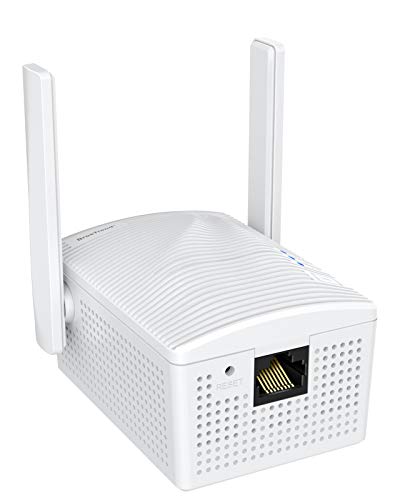
The BrosTrend adapter enables a wired device to access WiFi using a dual-band AC1200 connection. It’s compatible with smart TVs, game consoles, Blu-ray players, network printers, and more. With 867 Mbps on 5 GHz and 300 Mbps on 2.4 GHz, it’s well-suited for streaming, gaming, and online activities where a wireless bridge is needed. No driver installation is required.
Who it’s best for: homes with multiple Ethernet devices needing stable wireless access. Limitations: performance depends on WiFi environment; may require proximity to router for optimal speeds.
Vonets VAP11S-232 300Mbps WiFi to Ethernet Adapter

This 2.4 GHz industrial mini WiFi bridge supports three modes: router, bridge, and repeater. It provides a 300 Mbps theoretical rate and features two RJ45 ports for flexible network layouts. Ideal for IP cameras, DVRs, medical devices, and IoT systems requiring a compact, three-in-one solution. Best for scalable industrial setups where edge devices need reliable wireless access.
Who it’s best for: industrial environments needing a bridge, repeater, or AP in a compact device. Limitation: external power may be required; verify voltage compatibility for your setup.
Vonets VAP11G-300 WiFi to Wired/Wired to WiFi Converter (AP/Bridge/Repeater)

This 2.4 GHz mini bridge supports three operation modes: WiFi bridge, repeater, and AP hotspot, with a 300 Mbps rate. It’s designed for a wide range of network devices, including DVRs, IP cameras, printers, IoT devices, and medical equipment. It provides transparent IP or MAC layer transmission and supports both wired-to-wireless and wireless-to-wired configurations.
Who it’s best for: users seeking maximum flexibility in wireless bridging. Limitations: ensure the environment supports stable 802.11b/g/n operation for best results.
Buying Guide
- Application mode — Decide whether you need a bridge, repeater, or AP hotspot. Bridges are best for direct device-to-network connections; repeaters extend existing WiFi; AP mode creates a new wireless access point for nearby wired devices.
- Connectivity — Look for at least one Ethernet port and compatibility with 802.11b/g/n or 802.11ac/ax where available. The 2.4 GHz band provides longer range, while 5 GHz offers higher speeds with less interference.
- Power options — USB-powered devices are convenient for USB peripherals; DC-powered units may suit industrial environments or wall outlets.
- Distance and obstacles — Review the manufacturer’s stated point-to-point distance. Real-world ranges vary with walls and interference; plan placements accordingly.
- Device compatibility — Ensure the adapter supports your target devices (IP cameras, DVRs, printers, media players, PLCs, etc.).
- Security — Choose devices that support current WiFi security standards (WPA2/WPA3) to protect data transmitted over wireless links.
- Installation complexity — Some units announce “no driver” installation, which simplifies setup. Others may require more configuration; match to your technical comfort level.
FAQ
- What is a wired-to-wireless camera converter? It’s a device that converts a wired Ethernet or USB camera feed into a wireless signal so the camera can connect to WiFi networks or mobile devices without running cables.
- Can these devices work with all IP cameras? Compatibility is generally broad for standard Ethernet-based cameras, but check the product’s listed use cases (IP camera, DVR, medical device, etc.) to ensure it fits your model.
- Is 300 Mbps enough for HD video? For typical IP camera feeds and multi-device setups, 300 Mbps is adequate in many scenarios, but higher bandwidth networks may benefit from dual-band or higher-speed adapters.
- Do I need drivers? Many options advertise no-driver installation, but some setups may require basic configuration for bridge or AP modes.
- How do I place these devices for best performance? Position near the WiFi router and away from metal cabinets or dense walls; shorter path obstacles improve link quality and stability.
- Are these safe for medical devices? Some models list medical devices among supported applications; verify with your facility’s IT and device compatibility guidelines before deployment.