Digital photographers seeking a fast, versatile 24mm wide-angle option have many choices across mirrorless systems. A 24mm prime excels for landscapes, street scenes, and environmental portraits, offering bright apertures and sharp imaging with minimal distortion. This guide highlights five strong options that cover full-frame and APS-C formats, plus zooms and primes from Sony, Nikon, and Canon. Each lens brings a distinct balance of speed, weight, and image quality, helping you pick the right tool for your camera system and shooting style.
The table below summarizes the five lenses chosen here, emphasizing system, key strengths, and best-use scenarios for quick reference.
| Lens | Brand | Camera System | Key Benefit |
|---|---|---|---|
| Sony SEL24F14GM | Sony | Full-Frame | Fast F1.4 prime with sharp wide-open performance and smooth bokeh |
| Nikon NIKKOR Z 14-24mm f/2.8 S | Nikon | Full-Frame Z | Ultra-wide zoom with constant f/2.8 and excellent edge-to-edge sharpness |
| Sony FE 24mm F2.8 G | Sony | Full-Frame | Ultra-compact prime with strong corner sharpness |
| Nikon NIKKOR Z DX 24mm f/1.7 | Nikon | APS-C DX | Bright f/1.7 for small sensors with compact design |
| Canon RF24mm F1.8 Macro | Canon | Full-Frame RF | Fast prime with macro capability and close focusing |
Sony SEL24F14GM 24mm F1.4 GM
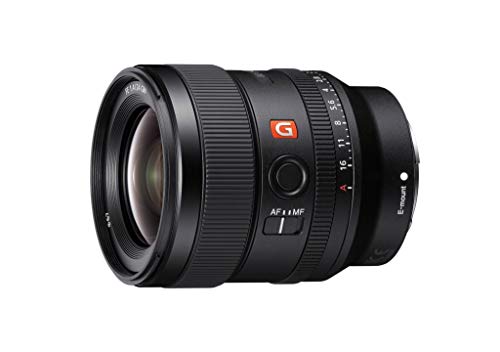
The Sony SEL24F14GM is a compact master wide-angle prime designed for full-frame Sony E-mount cameras. Its F1.4 maximum aperture delivers outstanding exposure control and subject separation at 24mm, making it a strong choice for nightscapes, interiors, and environmental portraits. The G Master lineage emphasizes corner-to-corner sharpness and smooth, natural bokeh, with sophisticated element arrangement to minimize distortion and aberrations. Compared with earlier designs, this lens remains relatively approachable in size for its speed, particularly when paired with Sony bodies that leverage advanced stabilization systems.
Optical performance shines wide open, with crisp detail across the frame and pleasing contrast in challenging light. Autofocus is fast and quiet on most Sony bodies, and the build remains comfortable for long shoots. For photographers who value image quality, rendering that leans toward clinical sharpness yet with smooth background separation, this lens is a flagship option at 24 millimeters.
Nikon NIKKOR Z 14-24mm f/2.8 S

The Nikon Z 14-24mm f/2.8 S is a professional ultra-wide zoom for Z-series mirrorless cameras. With a constant f/2.8 aperture across the entire 14-24mm range, it delivers bright framing in any light and maintains strong resolution from corner to corner. The optical design emphasizes sharpness, contrast, and minimal distortion, while coatings suppress ghosts and flare in bright scenes. The zoom’s framing flexibility makes it ideal for landscapes, cityscapes, interiors, and astrophotography without changing lenses.
Construction is robust and weather-sealed for challenging environments. Autofocus remains fast and quiet, tracking subjects with precision. The lens is comparatively large for a zoom, but its performance justifies the size for professionals who demand consistent results across wide angles and dynamic scenes.
Sony FE 24mm F2.8 G
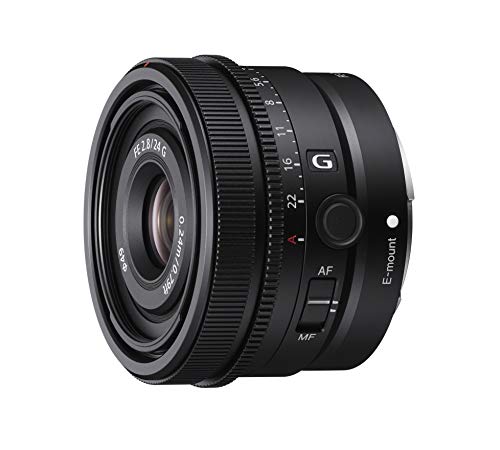
Sony’s FE 24mm F2.8 G is an ultracompact prime that packs G-series quality into a travel-friendly form. The lens uses an arrangement of aspherical elements to deliver edge-to-edge sharpness and minimized coma, even in night skies or architectural interiors. The F2.8 maximum aperture offers dependable performance in low light and helps isolate subjects with shallow depth of field when desired. Its light weight makes it a natural companion for street and documentary work on Sony’s full-frame systems.
Despite its small footprint, the lens maintains strong performance at all distances, and autofocus remains dependable on most Sony bodies. For photographers who prize portability without sacrificing image quality, the combination of size, speed, and rendering makes this lens a compelling pick for travel and daily shooting.
Nikon NIKKOR Z DX 24mm f/1.7

This DX-format prime is designed for Nikon Z DX cameras and offers a 24mm focal length with a bright f/1.7 aperture, packaged in a compact, lightweight design. The 24mm field on DX bodies equates to roughly 36mm on full-frame, delivering a versatile everyday wide-angle perspective. Short working distance, as noted in its features, enables closer subjects while preserving frame, making it excellent for environmental portraits and tabletop scenes. Autofocus is tuned for smooth, unobtrusive operation in both video and stills, with reliable consistency across typical shooting scenarios.
Although optimized for APS-C sensors, the lens produces crisp detail and natural colors. Its portability makes it a strong travel companion, and the fast aperture helps in low light or when you want a shallow depth of field at wide angles, offering a practical balance between size and performance.
Canon RF24mm F1.8 Macro

Canon’s RF24mm F1.8 Macro is a bright, fixed-focal-length wide-angle for EOS R-series cameras. The fast F1.8 aperture enhances low-light performance and depth-of-field control, while Canon’s optical design includes UD glass and aspheric elements to minimize ghosting and flare. A notable feature is the macro capability, enabling close focusing for small subjects and texture-rich landscape details, expanding creative options beyond standard wide-angle work. Build is solid, with reliable autofocus performance on Canon bodies, making this lens well-suited for architecture, interiors, and creative close-ups.
Coatings and processing deliver high contrast and color accuracy across the frame. The lens’ macro potential pairs nicely with the compact wide angle for versatile travel shooting, cityscapes, and nature textures, giving photographers a useful balance of distance, detail, and accessibility in a single lens.
Buying Guide
Camera System And Format
Choose a lens that aligns with your camera system and sensor size. Full-frame lenses (like the Sony SEL24F14GM and Canon RF24mm F1.8 Macro) deliver a true 24mm field on a full-frame body, while DX/APS-C options (like Nikon DX 24mm f/1.7) yield a wider field of view on smaller sensors but a different depth-of-field look. If you shoot primarily on APS-C, consider how a 24mm focal length translates to your equivalent field of view and whether you want a dedicated DX prime or a full-frame option on an adapter.
Prime vs Zoom Trade-offs
Prime lenses such as the Sony FE 24mm F2.8 G and Canon RF24mm F1.8 Macro offer consistent sharpness, lighter weight, and often faster focus. Zoom lenses like the Nikon Z 14-24mm f/2.8 S provide flexible framing without moving your feet, at the cost of size and weight. Your preferred shooting style—fixed focal-length simplicity or flexible composition—will drive the right choice for you.
Aperture And Low-Light Performance
Fast apertures (f/1.7–f/1.4) excel in dim interiors, dusk landscapes, and astro photography, enabling faster shutter speeds and shallower depth of field. However, ultra-wide zooms with constant f/2.8 maintain bright framing across the range, which is valuable for consistent exposure. Weigh how important a bright maximum aperture is for your typical subjects and whether the extra weight or size of a faster prime is acceptable in your kit.
Autofocus And Handling
Autofocus speed and accuracy matter in landscapes, architecture, and street photography. Some lenses emphasize quiet, smooth focus for video, while others prioritize speed for fast action. Consider the autofocus behavior on your camera body, as well as the weight and maneuverability of the lens for handheld shooting and long sessions.
Macro And Close-Focus Capabilities
Macro-capable optics like the Canon RF24mm F1.8 Macro add close-focusing versatility to a wide-angle package, enabling texture-rich details at short distances. If macro capability is not a priority, you may opt for a simpler wide-angle prime or zoom that excels at distant scenes with less overall magnification.
Build, Weather Sealing, And Practicality
Weather sealing, build quality, and weather resistance are important for outdoor use. Lenses designed for rugged use tend to perform better in rain, dust, and temperature swings. If you shoot in harsh environments, prioritize lenses with robust construction and sealing, even if they are a bit heavier.
Practical Comparisons Across The Five Lenses
Across brands and formats, you’ll find a balance between speed, size, and reach. For travelers, compact and lightweight options like the Sony FE 24mm F2.8 G are appealing. For professionals shooting landscapes or astrophotography, the Sony SEL24F14GM and Nikon Z 14-24mm f/2.8 S offer top-tier image quality and flexibility, albeit with greater weight. For APS-C shooters, the Nikon NIKKOR Z DX 24mm f/1.7 provides a bright, affordable option with a compact footprint. Canon’s RF24mm F1.8 Macro adds close focusing to a bright-wide-angle kit, delivering macro versatility alongside architectural and landscape capabilities.