Converting 35mm film and slides to digital files is easier than ever with dedicated film scanners and digitizing adapters. This guide highlights five reliable options that cover consumer-friendly standalone units, compact mini scanners, and camera-based digitizing systems. Whether you’re archiving old family photos or preserving vintage cinema, these tools help you digitize 35mm, 126, 110, Super 8, and more with varying levels of automation and image quality. Compare features, brightness, adapters, and screen sizes to choose the best fit for your needs.
| Product | Brand | Key Benefit |
|---|---|---|
| KODAK SCANZA Digital Film & Slide Scanner | KODAK | One-step scanning with multiple film inserts |
| Mobile Film Scanner 35mm (DigitConvert) | DigitConvert | Ultra-portable, foldable design for travel |
| KODAK Mini Digital Film & Slide Scanner | KODAK | Compact, multi-format compatibility with LCD |
| JJC Photo Slide & Film Digitizer (Adapter Kit) | JJC | Camera-based digitizing with macro lens compatibility |
| KODAK REELS 8mm & Super 8 Digitizer | KODAK | Large onboard display for hands-on operation |
Kodak Scanza Digital Film & Slide Scanner
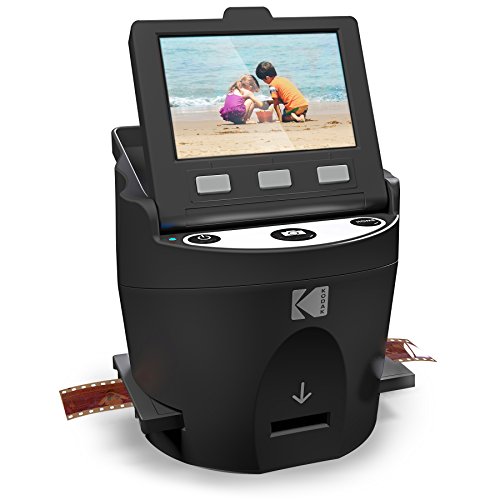
The Kodak SCANZA Digital Film & Slide Scanner is designed for quick conversion of 35mm negatives and slides as well as 126, 110, Super 8, and 8mm film. It provides a built-in 3.5-inch TFT LCD display for immediate viewing and editing, reducing steps between scanning and archiving. The unit ships with multiple adapters and inserts so you can load different film formats in one session, and its large display aids in precise framing and color assessment. One-touch scanning simplifies the workflow for casual users who want fast results.
Mobile Film Scanner 35mm by DigitConvert
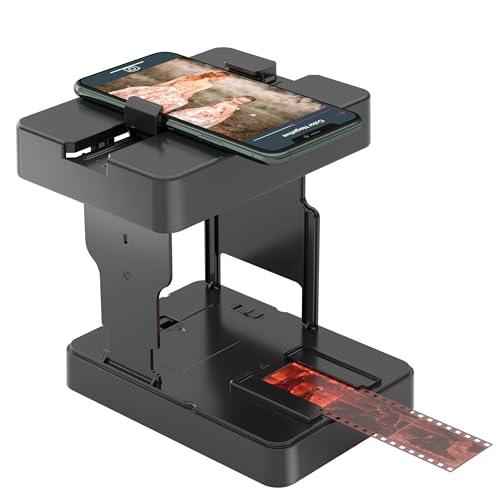
The DigitConvert Mobile Film Scanner emphasizes portability and travel-friendly design. It folds to the size of a small box, enabling easy transport in a backpack. It focuses on 35mm slides and negatives, converting them to digital JPEG images via a companion app. The free app is optimized for quick digitization, and the device is ideal for users who want to digitize on the go without significant equipment baggage. This option prioritizes convenience alongside decent image capture quality for travel or occasional use.
Kodak Mini Digital Film & Slide Scanner

The Kodak Mini is a compact, all-in-one scanner that handles 35mm, 126, 110, Super 8, and monchromatic negatives and slides. It focuses on a small footprint with a 2.4″ LCD and adjustable brightness to optimize legibility during scanning. With multiple adapters for rapid loading and a simple interface, it’s designed for users who want a portable device without sacrificing the ability to enhance brightness and color after capture. This unit emphasizes user-friendly operation for quick archiving tasks.
Upgraded 35mm Film Digitizing Adapter by JJC
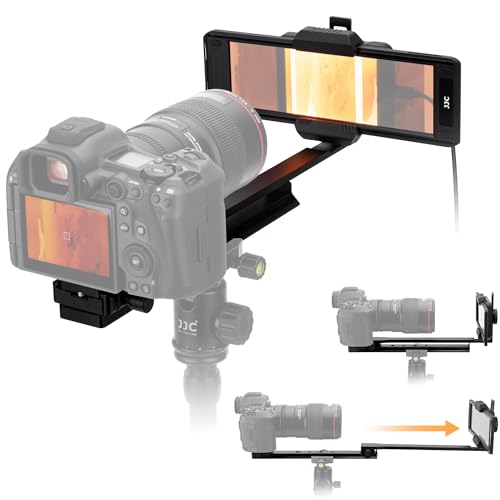
This JJC kit converts film using your existing camera and lens, enabling a camera-based digitizing workflow. It’s designed for 35mm and 120 film, with a sliding rail that offers adjustable focus distance from roughly 10.4″ to 18.5″. The package includes multiple lens adapters to support various macro lenses. A 11-level adjustable backlight ensures consistent illumination for sharp captures. This option suits photographers who already own a compatible camera and want maximum control over resolution and tonality.
Kodak REELS 8mm & Super 8 Digitizer

KODAK REELS is designed for 8mm and Super 8 film frames, offering a large 5-inch onboard LCD with touch controls for direct scanning, editing, and playback. It supports frame-by-frame digitization to MP4 on an SD card and emphasizes a user-friendly workflow with a straightforward on-device interface. The device transfers scans via micro USB for viewing on a computer or TV, enabling easy big-screen enjoyment. This option is ideal for film collectors who want a standalone, self-contained digitizing experience with a bigger screen.
Buying Guide: Key Purchase Considerations
When selecting a 35mm-to-digital solution, consider your workflow, film formats, and final use. Standalone scanners like Scanza and Mini provide quick, simple digitization with built-in displays, which is ideal for casual archiving and immediate review. If you already own a good camera and macro lenses, a camera-based kit such as the JJC adapter or similar systems can offer maximum control over focus, lighting, and resolution, at the cost of added setup steps. For cine film, options like the Kodak REELS deliver frame-by-frame digitization with a large screen, which is beneficial for precise edits and presentation. Portability matters for travelers, so foldable devices or compact scanners suit on-the-go digitization, while larger displays or HDMI outputs help when sharing footage on a TV or monitor. Lighting quality—brightness, color accuracy, and backlight consistency—directly impacts scan fidelity, so check adjustable backlighting or LCD brightness features. Finally, ensure supported formats (35mm, 126, 110, Super 8, 8mm, 120) align with your archive to minimize transfers between devices.
Compare storage options (internal memory, SD card support), ease of loading (one-step or multi-insert), and noise reduction or color correction features. If you plan to digitize frequently, a device with robust adapters and fast processing will save time. For multimedia archiving, prioritize devices that offer reliable color fidelity and a clear, glare-free display to verify captures accurately. Finally, beware of devices that require a computer or software for basic functionality if you prefer a plug-and-play experience. The right choice balances convenience, image quality, and your intended end-use—be it digital archiving, sharing online, or large-screen viewing.