Answering your search for a top-tier professional video conference camera, this guide evaluates five capable options tailored for corporate meetings, hybrid teams, and education settings. Each pick highlights who it fits best, how its features translate to real-world use, and a practical limitation to consider. Whether you need AI auto-tracking, 360-degree coverage, or simple plug-and-play setup, these cameras help ensure clear video and audio for remote participants.
The quick comparison below helps you identify the right fit at a glance. If you’re choosing for a small-to-medium meeting space, consider all-in-one solutions with built-in mics and speakers. For larger rooms, prioritize AI tracking and wider fields of view. For teams prioritizing ease of use, plug-and-play USB connectivity remains a strong advantage.
| Product | Best For | Key Strength |
|---|---|---|
| TONGVEO 4K Conference Room Camera System | Medium to large conference rooms needing AI tracking | AI auto-tracking with 4K and gesture control |
| PANOCORE360 All-in-One Meeting Camera | Hybrid meetings in small to medium rooms | 360° coverage with dual vision modes |
| TONGVEO All-in-One Conference Room System | Compact spaces needing integrated video and audio | HD 1080p with AI auto-tracking and USB3.0/HDMI |
| Owl Labs Meeting Owl 3 | Microsoft Teams-certified setups and quick deployment | 360° video with speaker-tracking |
| Logitech MeetUp | Small rooms or huddle spaces | Ultra HD 4K/1080p with practical audio coverage |
TONGVEO 4K Conference Room Camera System
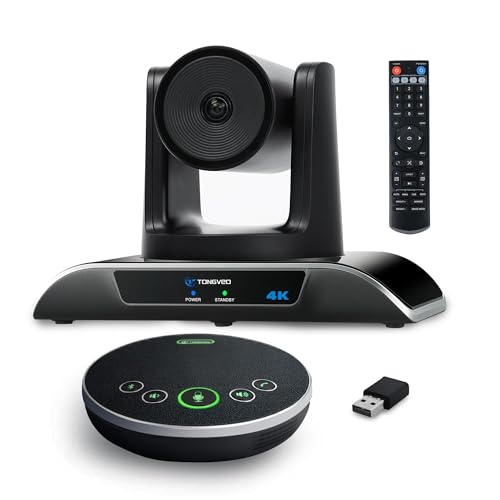
This system combines a 4K AI PTZ camera with gesture control and a built-in speakerphone. It supports Auto-tracking, 6 gesture controls, and a 120° wide FOV, with 350° pan and 180° tilt. USB3.0 plug-and-play ensures quick setup for Zoom, Teams, OBS, and more. Best for professionals who want precise speaker-following AI tracking and flexible control both via remote and gestures.
Best for: medium-to-large conference spaces needing AI tracking and flexible gestures. Caution: advanced gestures and tracking require configuration via the Menu; older systems may need compatible peripherals for full feature access.
PANOCORE360 All-in-One Meeting Camera
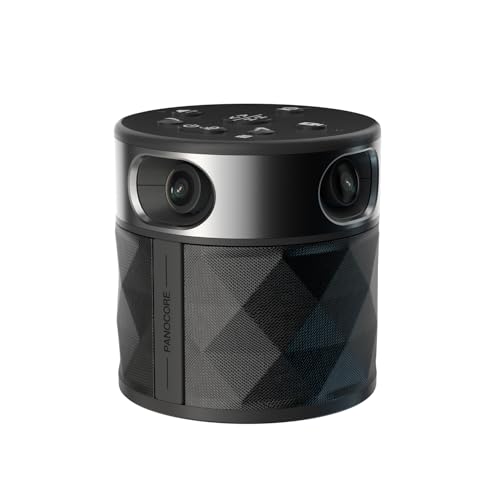
This 360° camera integrates four cameras, a microphone array, and a speaker into one compact unit. It outputs 1080p with a 4K capture merged into the stream and offers auto speaker focus with dual 180° modes to balance active speakers and full-room context. Ideal for small-to-medium rooms seeking easy setup and comprehensive room visibility in hybrid meetings.
Best for: rooms where full-room visibility and auto speaker tracking simplify collaboration. Caution: single-PC output at 1080p may limit detail in very large rooms or high-resolution display needs.
TONGVEO All-in-One Conference Room Video Camera System

This all-in-one setup combines a 1080p AI Auto-Tracking PTZ camera with a Bluetooth speakerphone. It includes HDMI and USB 3.0 outputs, supporting 60fps for smooth video and audio. The 1/2.8″ sensor helps with clear imaging and a broad 350° horizontal and 180° vertical range. A strong pick for small-to-medium spaces wanting integrated video and audio in a single package.
Best for: quick deployment in compact rooms. Caution: 1080p may be less ideal for very large rooms or high-detail presentation capture compared with 4K optics.
Logitech MeetUp Video Conferencing System
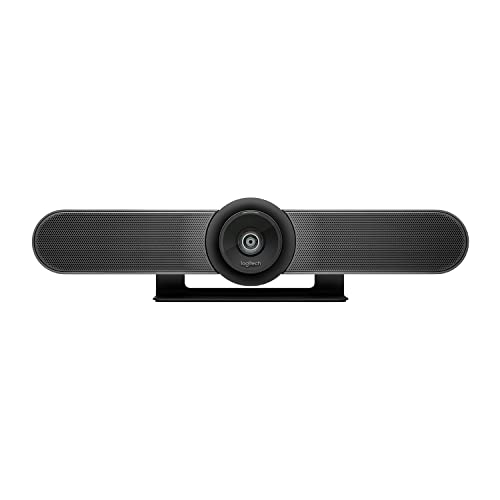
Designed for small rooms, MeetUp provides Ultra HD 4K/1080p/720p options with a wide 120° field of view and built-in microphones and speakers. It is plug-and-play on USB platforms and optimized for common collaboration tools. Suitable for compact spaces where simplicity and reliable performance matter most.
Best for: small rooms needing a straightforward, all-in-one solution. Caution: 4K capability may be underutilized in ultra-small spaces; ensure screen size supports the field of view without distortion.
TOUCAN 360-Degree Conference Camera
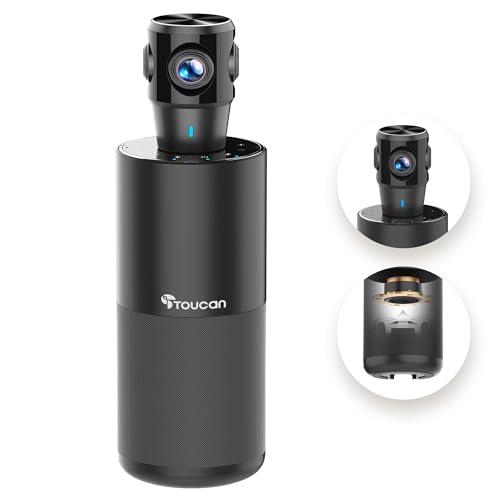
TOUCAN offers 360° omni-directional shooting with 1080p HD and four noise-reducing mics. It’s a straightforward, plug-and-play option with AI tracking that helps capture voices clearly and maintain a natural meeting flow. Best for teams prioritizing broad room coverage and easy setup over ultra-high resolutions.
Best for: offices needing broad room coverage with simple use. Caution: not all features may be as robust as higher-priced enterprise options in very large rooms.
Buying Guide
What should you consider when choosing a professional video conference camera system?
- Room size and layout: For medium-to-large rooms, opt for AI auto-tracking PTZ or 360° systems to maintain speaker framing and reduce manual adjustments.
- Video quality needs: If you frequently display high-detail content, prioritize 4K capture or at least 1080p with smooth frame rates and good low-light performance.
- Audio performance: Built-in mics and speakerphones improve experience in smaller spaces. For larger rooms, look for multiple mic arrays or expandability with additional mics.
- Connectivity: USB3.0 and HDMI outputs enable flexible connections to PCs, conferencing software, and displays. Plug-and-play simplifies setup, especially in mixed-OS environments.
- Tracking and control: AI auto-tracking, gesture control, and remote or app-based control help keep focus on speakers while reducing manual camera work.
- Deployment and management: Consider devices with management tools for fleet deployment if you scale across multiple rooms.
Frequently Asked Questions
- Which camera is best for small meeting rooms? The Logitech MeetUp and similar all-in-one systems excel in small spaces due to compact design and straightforward setup.
- Do I need AI tracking? For dynamic meetings with multiple speakers, AI tracking helps maintain the speaker in frame without manual pan/tilt adjustments.
- Is 4K necessary for video conferences? 4K offers higher detail on large displays, but 1080p with good color and exposure often suffices for most meetings.
- What is 360-degree coverage good for? It provides a complete room view, useful for hybrid meetings where remote participants want context of the entire space.
- Should I prioritize USB or HDMI outputs? USB3.0 is ideal for direct PC connections and plug-and-play use; HDMI is best for professional displays or conference room setups.
- Are these systems compatible with Teams and Zoom? All listed models advertise broad compatibility with major platforms like Zoom, Microsoft Teams, and WebEx.
This article highlights five practical options for professional video conferencing with clear criteria and rationale. Choose the system that aligns with your room size, collaboration style, and preferred workflow to optimize hybrid meeting experiences.